Solar Energy Transition: A Missed Opportunity for Farmers
When public funds are used to install solar panels and batteries on farms, the expectation is that the farmers will benefit through lower energy bills, genuine ownership, and true control over their energy sources. This encapsulates the ideal of the energy transition.
However, Western Power’s stand-alone power systems programme fundamentally undermines this promise. It leverages decentralised technology while perpetuating the financial dynamics of centralised utility control.
Initial Intentions: Addressing the Network’s Challenges
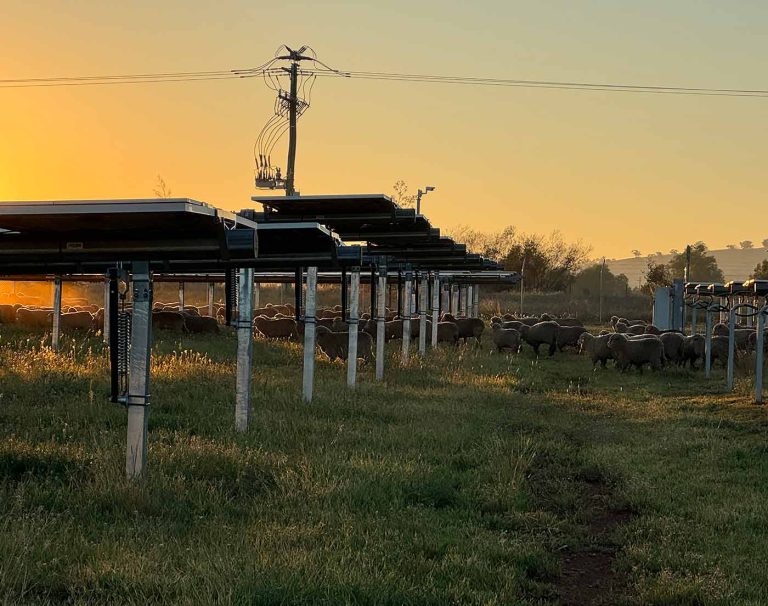
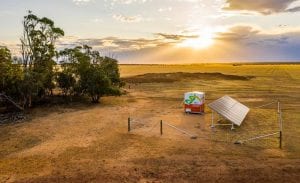
The programme was initially established to tackle a significant issue. Much of Western Power’s network services a mere 3% of customers via lengthy, exposed rural spur lines. These are not only expensive to maintain but also notoriously unreliable and pose a risk of igniting bushfires. Moving to on-site solar-battery-diesel systems presents a more cost-effective solution than refurbishment, with Western Power estimating potential savings of $400 million in maintenance alone.
This financial rationale dictated the programme’s design decisions throughout.
Utility Control: The Farmer’s Loss
Despite not investing any money upfront, farmers find themselves with no ongoing benefits; the Synergy retail tariff remains unchanged after the installation, while federal battery incentives go to Western Power as the asset owner. This leaves the farmer, as a non-owner, with no rights to any financial incentives.
The regulatory structure, established during 2020 and 2021, identified the programme as a network replacement service and permitted the recovery of costs via regulated tariffs. The predominant commercial motivation—serving the utility’s financial interests—remained unchallenged.
Lessons Ignored: Insights from Past Experiences
The 2016 Ravensthorpe pilot offered promising insights: six locations experienced a reduction of over 200 hours of outages in three years, with satisfaction ratings soaring from below 6 out of 10 to above 9. Yet the internal 2018 review of this pilot pointed out technical inadequacies, highlighting that under-sizing posed a risk. Regrettably, these lessons were disregarded, and the technical specification remained at 63A single-phase—sufficient for domestic homes but inadequate for the demands of an operational farm.
Modern farming requires three-phase power for irrigation, grain handling, shearing, and workshop operations, but this remains unfeasible without costly phase converters. Early systems also faced thermal management failures when exposed to temperatures exceeding 40°C. If a system experiences an overload, only an authorised Western Power contractor can reset it, leaving farmers to wait for hours.
Although Western Power indicated that auto-reset functionality would be prioritised for 2024, no progress has been reported.
Rolling Out the Programme: Goals Falling Short
The deployment of systems has significantly lagged, with only 321 systems installed against a target of at least 850 by 2025, and a long-term goal of 4,000 by 2031 appearing increasingly unrealistic. The Economic Regulation Authority has imposed penalties totalling $14.3 million for service standard failures for 2024/25, with performance across rural long feeder lines identified as the weakest area.
Recent Investigations: Exposing Systemic Issues
An ABC investigation this month highlighted the compounded failures: systems that overheat, break down in full sunlight, and result in numerous outages, leaving farmers unable to reset their own systems. While Western Power claims that 96% of customers have experienced improved reliability, this means there are still 13 customers who have not. Particularly notable are those with the oldest systems, who are suffering the most.
The cost implications worsen the situation. An average urban residential system comprising a 14 kW solar and 42 kWh battery typically costs around £14,000 after rebates. However, adapting this to the scale of a full off-grid farm system doubles the costs to about £140,000. Western Power’s reported figures of £150,000 to £200,000 far exceed this range and still yield only a single-phase, utility-owned asset.
Looking Forward: A Need for Redesign
The technology and economics have evolved considerably since 2016, yet the policy framework has remained stagnant.
The recent report from Farmers for Climate Action, titled “Energy Sovereignty for Regional Australia,” illuminates the potential: the five-year diesel bill for a 6,000 ha broadacre farm could match the upfront cost of a comprehensive solar-battery-electric system, which the farmer would own, leading to negligible ongoing energy costs.
Unfortunately, Western Power’s programme does not deliver this outcome.
A New Vision for Energy Programmes
My proposal would entirely rethink the programme with the public’s benefit in mind:
- Focus on the customer rather than the asset by providing capital subsidies for genuinely owned self-supply systems as an alternative to utility ownership.
- Ensure systems are appropriately sized for farms, offering expandable options that cater to complete farm electrification, beyond just the needs of a suburban home.
- Direct federal incentives to the farmers hosting the systems, rather than the utility owning them.
- Deliver significant savings; the integration of solar and battery technologies should lead to a tangible drop in farming costs. If it doesn’t, it cannot be regarded as an energy transition.
- Encourage community-based microgrids to maximise efficiencies that individual systems cannot achieve.
The programme was originally designed in 2016 to address a network maintenance issue. Now, ten years later, with reduced battery costs and available government incentives, alongside the push for farm electrification, it is crucial to remodel the programme around the interests of the farmers and end users.