Rooftop Solar and Batteries Challenge Fossil Fuel Industry
Rooftop solar installations coupled with home batteries are proving to be a significant challenge to Australia’s influential fossil fuel lobby, according to insights shared at a recent conference in Sydney. Hundreds of thousands of households are now integrating energy storage with millions of rooftop solar systems, resulting in a transformative shift in the energy sector.
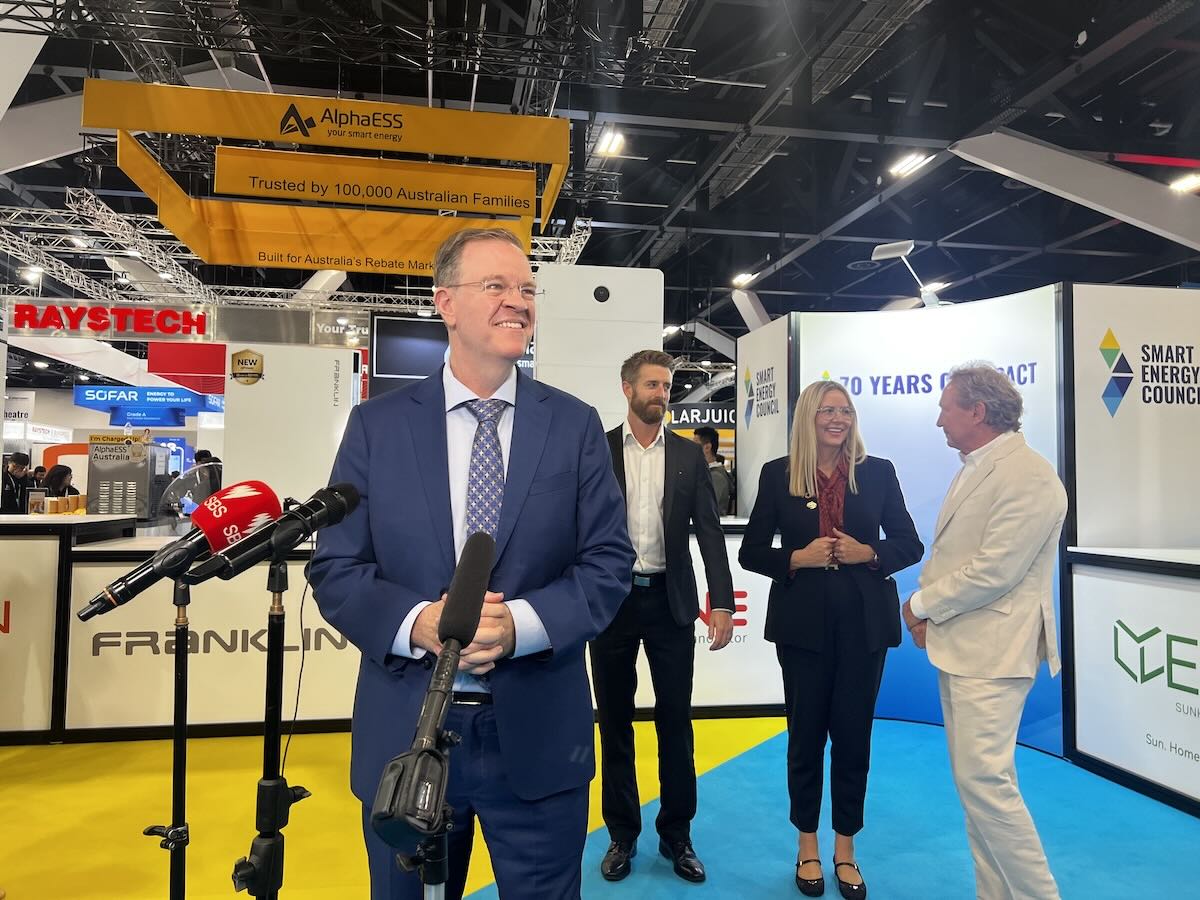
During his address at the Smart Energy Conference on Wednesday, John Grimes, the long-serving CEO of the Smart Energy Council (SEC), highlighted the political significance of rooftop solar, recalling how the national SRES scheme withstood the anti-renewables period under Tony Abbott back in 2014. “We just found our kryptonite,” he noted, reflecting on how this resilient movement signalled a turning point.
A Booming Energy Revolution
Fast forward to 2026, and the federal Labor government’s effective Cheaper Home Batteries initiative – a policy heavily championed and shaped by the SEC – has enabled the installation of over 380,000 energy storage systems nationwide, sparking a new surge in rooftop solar adoption.
“This represents the outcome of extensive research and development, alongside efforts in engineering, manufacturing, distribution, finance, installation, and retail,” Grimes explained. This conference marks one of his final public engagements before stepping down from his role on May 15.
He continued, “This success is a result of effective policy and advocacy, complemented by proactive government actions. All these elements have converged in a truly unprecedented manner here in Australia.”
Pioneering a Global Movement
Grimes expressed optimism regarding the impact of this consumer-led energy transition, which he believes could serve as a model globally. “We’re showing the world that a grassroots revolution, fuelled by individual and community efforts, can drive substantial change,” he stated.
He emphasised that this movement sidesteps traditional barriers such as transmission issues, social licensing, financing challenges, and environmental regulations. Instead, with installers active on rooftops across the nation, progress is being made at an unparalleled pace.
As Grimes prepares for his next role as head of the Renewable Energy Council Asia Pacific – a new organisation created by the SEC to advance its regional objectives – he asserted that the Australian approach to energy consumer empowerment should be replicated worldwide. “We have not only transformed the Australian energy framework but also empowered individuals through economic incentives, which is incredibly thrilling,” he remarked.
Grimes is confident that adopting the Australian model globally can facilitate a swift transition away from fossil fuel dependency. “This opens the door to dismantling the entrenched interests of fossil fuels, allowing for rapid empowerment and transition,” he added with enthusiasm.
In regard to the future of Australia’s energy sector, Grimes urged stakeholders to capitalise on the burgeoning consumer interest in solar and battery technologies. “While we mobilise support among those embracing battery use and home electrification, it’s crucial to deepen our engagement with this community – they are our greatest asset,” he advised.
With a population of 27 million Australians rallying behind this cause, Grimes believes that the grassroots movement has the potential to overpower the significant interests represented by a few major fossil fuel corporations.
Stay informed about the latest in clean energy by subscribing to our daily newsletter for free, joining over 29,000 others who receive updates straight to their inbox.
If you are interested in supporting independent media and ensuring accurate information, consider making a one-off donation or becoming a regular contributor to Renew Economy. Your contribution is greatly appreciated.