Renewables Surpass Fossil Fuels, Powering Half of Australia’s Grid
The Australian Energy Market Operator (AEMO) has shed light on the current electricity landscape with its recent Quarterly Energy Dynamics (QED) report. This latest edition reveals a significant shift towards renewable energy, which has now overtaken fossil fuels, capturing 51 per cent of the National Electricity Market (NEM) energy mix in the fourth quarter (Q4) of 2025.
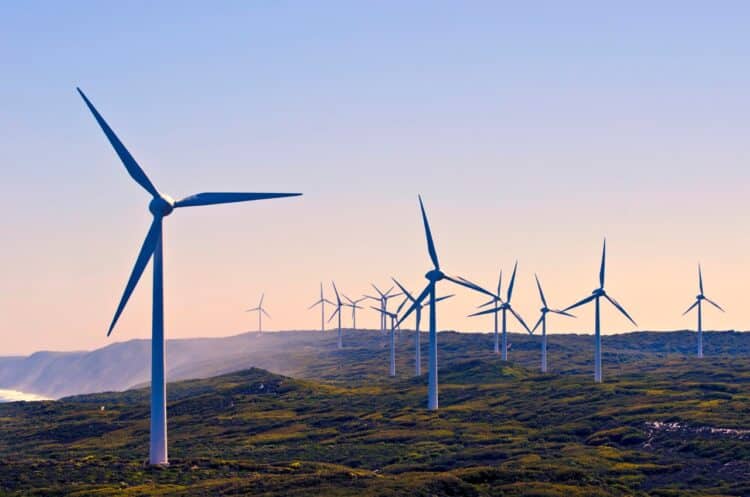
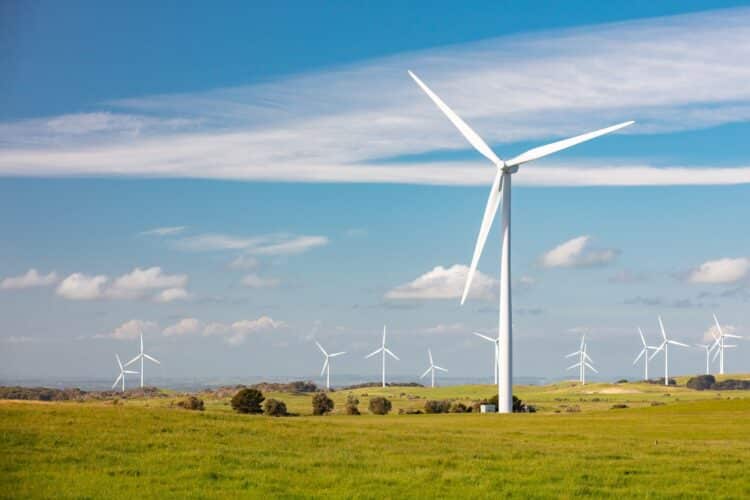
Wind power emerged as the standout performer for the quarter, boasting a remarkable 29 per cent increase in output, which now constitutes 16.3 per cent of the NEM’s supply mix—up by 3.3 per cent. When combining wind generation with grid-scale solar, which enjoyed a 15 per cent increase, the result was a record average quarterly output of 6,627MW for variable renewable energy.
Rooftop Solar and Battery Performance
The growth of rooftop solar also contributed significantly, providing the second-largest share of energy to the NEM at 17.6 per cent, second only to black coal. This surge in solar generation led to a historic low in minimum operational demand within the NEM, which dropped to 9,666MW, including South Australia reaching a negative figure of -263MW.
Moreover, battery usage witnessed dramatic growth, nearly tripling to an average of 268MW. This increase has been bolstered by the addition of 3,796MW/8,602MWh of large-scale battery capacity to the grid since the end of 2024.
Decline in Coal and Gas Generation
In stark contrast, coal-fired generation recorded an average quarterly output of 11,544MW—its lowest ever—marking a 4.6 per cent decrease from Q4 2024. Gas generation also saw a decline, hitting its lowest output since 2000, with an average of just 741MW.
Impact on Prices
The shift in generation sources had a notable effect on wholesale electricity prices, which averaged $50/MWh across the NEM in Q4 2025. This represents a significant drop of $39/MWh from Q4 2024 and a reduction of $37/MWh compared to Q3 2025.
The rise in wind generation and battery utilisation helped diminish reliance on gas and hydro during evening peak periods, contributing to lower average prices and reducing the frequency of high-price intervals (above $300/MWh).
In Queensland, wholesale prices decreased by 55 per cent to $58/MWh, while New South Wales saw a 48 per cent reduction, bringing prices down to $75/MWh. The lowest prices were found in South Australia and Victoria, with figures of $37/MWh, reflecting quarterly drops of 30 per cent and 18 per cent, respectively.
Price Volatility and Negative Pricing Trends
Price volatility in the wholesale electricity market decreased during Q4 2025, with the aggregated NEM-wide cap returns—indicating when spot prices exceed $300/MWh—falling from $86/MWh in Q4 2024 to just $13/MWh.
On the other hand, the occurrence of negative prices across the NEM reached a new high in Q4 2025, comprising 31 per cent of regional dispatch intervals, which is an increase from 23.1 per cent in the same quarter the previous year.
This trend was somewhat alleviated by lower prices for large-scale generation certificates (LGCs), which plummeted from $34 per certificate in Q4 2024 to $9 per certificate in Q4 2025. Consequently, the average price during negative intervals improved from -$41.3/MWh to -$19.4/MWh.
The QED report noted a decline in the NEM-wide negative price impact—an indicator of how negative pricing and their frequency affect quarterly average prices—from $9.5/MWh to $6/MWh in Q4 2025.
For comprehensive insights into the energy transition, subscribe to Energy and stay informed.