Record Home Battery Installations Surge Amid Rebate Changes
April witnessed an unprecedented surge in home battery installations, as new data disclosed that households hurried to acquire larger energy storage systems before significant changes to the federal rebate aimed at promoting smaller systems were implemented.
According to industry analyst SunWiz, the urgency to take advantage of the Cheaper Home Batteries rebate before the May 1 adjustments created a significant market frenzy, resulting in a remarkable addition of 2.4 gigawatt-hours (GWh) of new residential storage capacity for that month alone—a staggering 57 per cent increase compared to March.
Exponential Growth in Battery Installations
SunWiz noted that the growth observed cannot simply be described as linear. Instead, it resembles exponential growth, particularly highlighted by the leap from March to April, marking the first time such a high level of battery capacity has been recorded in the history of Small-scale Technology Certificates (STCs).
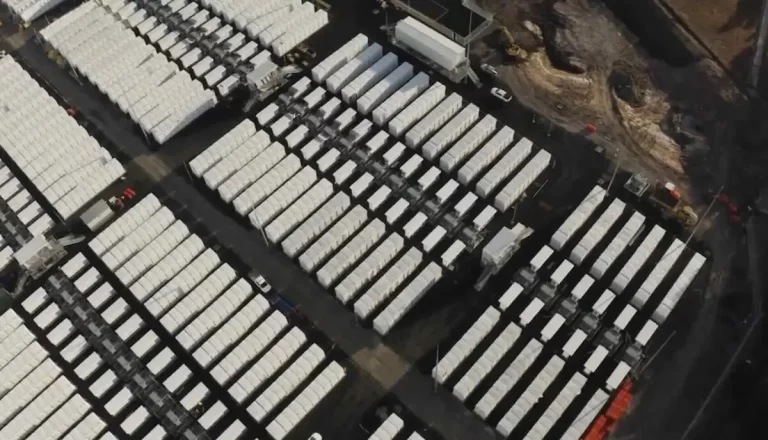
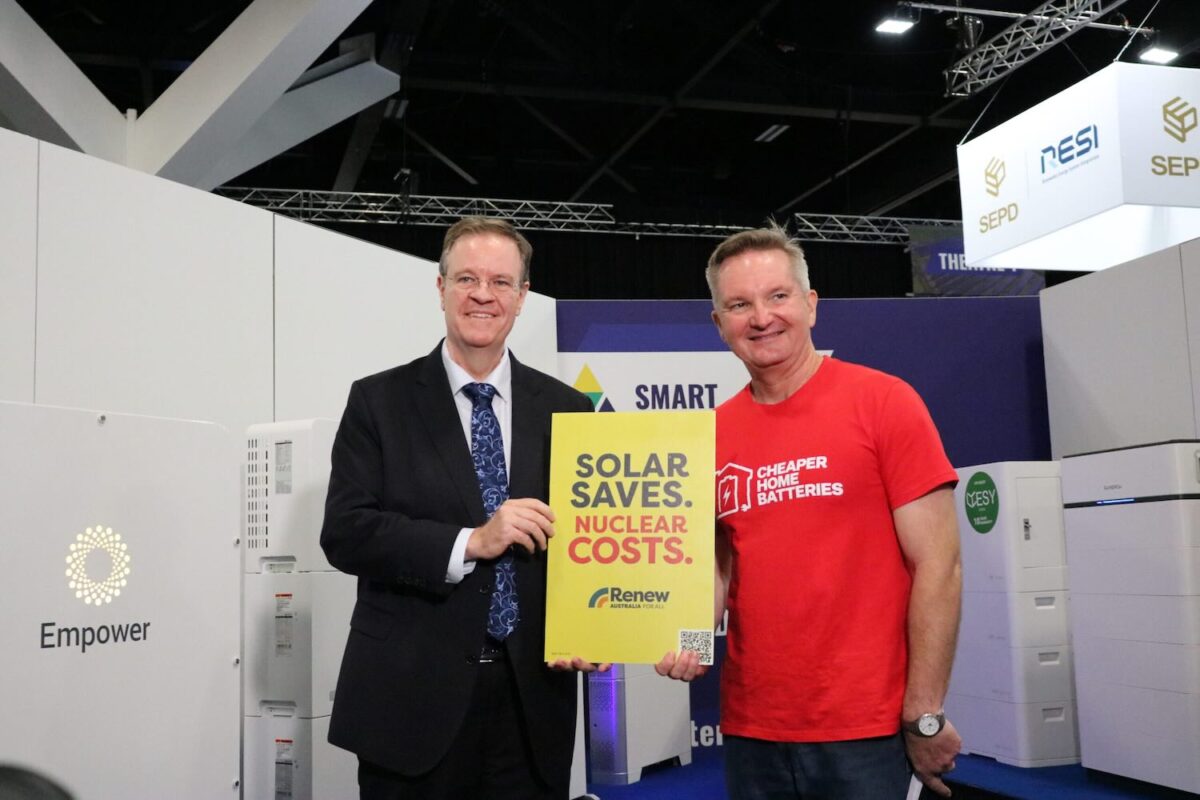
This data aligns with the latest statistics on the Cheaper Home Batteries initiative shared by federal energy minister Chris Bowen, indicating that over 360,000 systems have been installed under the programme since its launch ten months ago. In a LinkedIn update, Bowen remarked that the total energy storage installed now surpasses 10 GWh, which is equivalent to 70 times more than the initial Tesla big battery at Hornsdale.
Impact on Energy Demand and Pricing
Furthermore, a recent quarterly report from the Australian Energy Market Operator has attributed home battery systems, alongside large-scale battery storage, to a reduction in evening demand and a decrease in wholesale prices, which is expected to eventually lower bills for consumers.
“Distributed-scale batteries are performing remarkably well,” stated Johnston in an interview with Renew Economy. “They are propelling the energy transition forward at an impressive rate.”
The notable increase in battery installations was spearheaded by New South Wales, where a month-on-month growth of 60 per cent enabled the state to become the first in Australia to record over 1 GWh of new home battery storage capacity in a single month.
Improvements Across All States
“It’s only been since November that we reported a national home battery capacity surpassing 1 GWh for the first time,” Johnston added. “Now, New South Wales has achieved that in just one month.”
SunWiz reported gains in battery capacity across all states, with increases ranging from 35 per cent in Victoria to 74 per cent in Queensland and 80 per cent in Tasmania. Johnston elaborated on the observed trends, stating that the larger the capacity segment, the more significant the increase.
Notably, there was a 78 per cent uptick in installations for systems sized between 40-50 kWh, which will be significantly impacted by the impending rebate reductions come May 1.
Acceleration in Rooftop Solar Installations
Alongside the rise in battery uptake, there was also a substantial increase in rooftop solar installations, with 442 megawatts (MW) of new small-scale photovoltaic (PV) capacity registered nationwide in April. This equates to a 31 per cent rise compared to March, marking the strongest month in STC history according to SunWiz.
The impending rebate changes drove a significant surge in larger storage formats, necessitating proportionally larger solar arrays, resulting in growth across all states and nearly doubling installations in the 20-30 kW segment.
Recent data from SunWiz, presented in a webinar hosted by Renew Economy, revealed that only 7 per cent of rooftop solar installations are currently for panels exclusively, with the remainder being for systems incorporating both solar and batteries.
Record Volumes of Energy Generation
Johnston commented that there is an unprecedented volume of photovoltaic installations, which is double the amount compared to the same period last year, all spurred by the battery rebate incentives.
While the first quarter of 2021 marked the strongest for the past nine years, Johnston stated that the early months of 2026 surpassed even that achievement, reflecting a 35 per cent growth compared to the same period in 2025.
The result, Johnston reiterated, is a significant boost in energy generation and independence for households. “With these larger solar and battery systems, people will start to explore additional uses for that energy, such as powering electric vehicles and further electrifying their homes, creating genuinely beneficial ripple effects,” he concluded.