GenCost Report Reveals Significant Battery Cost Reductions
A recent report indicates that solar photovoltaic (PV) and onshore wind will represent the most cost-effective power generation options for Australia in the years 2030 and 2050. The draft GenCost 2025–26 report, compiled by the CSIRO in collaboration with the Australian Energy Market Operator (AEMO), evaluates the expenses associated with establishing new electricity generation capabilities across various energy sources, including renewables, nuclear, coal, and gas.
The analysis highlights notable cost reductions in battery storage technologies, the first rise in costs for large-scale solar in three years, and signs suggesting stabilisation in the costs of onshore wind energy.
Cost Projections for Renewable Energy
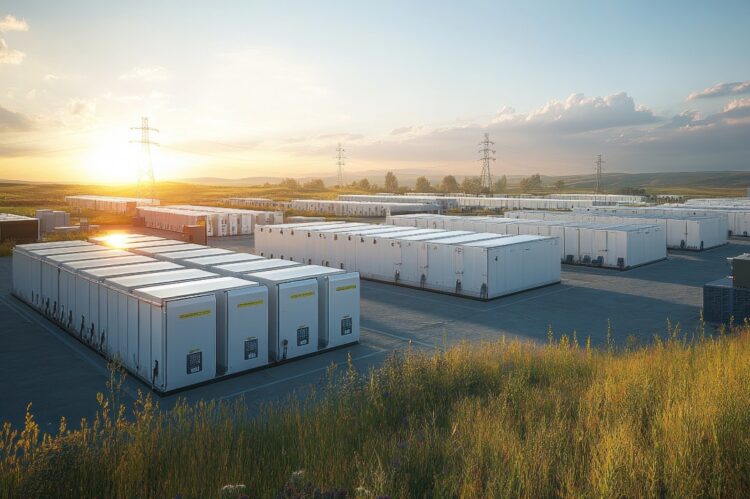
Future insights present a compelling picture, revealing that the capital costs for constructing renewable energy sources are significantly lower than those for coal and nuclear power. For instance, while the capital costs for two-hour battery storage are currently $525 per kWh in 2025, projections based on existing policies suggest they may decrease to $484 per kWh by 2030 and further to $358 per kWh by 2050.
In an ideal scenario, where Australia adopts policies in line with the International Energy Agency’s ambition for global net-zero emissions by 2050, two-hour battery storage costs could tumble to $295 per kWh by 2030 and plummet to $219 per kWh by 2050.
Solar Energy Cost Trends
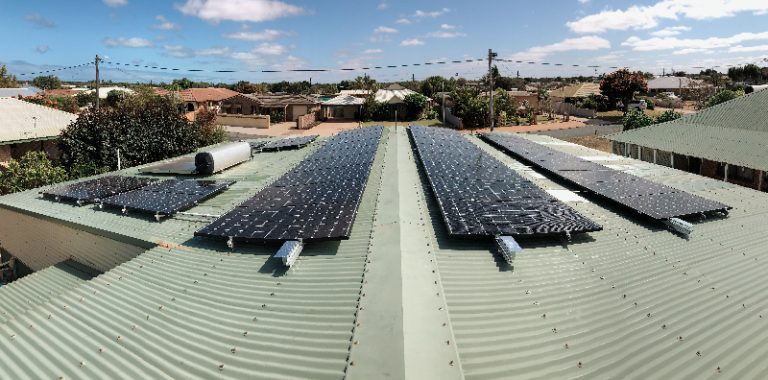
If the current trajectory of policies remains unchanged, capital expenses for large-scale solar PV are expected to fall from $1,621 per kW today to $1,239 per kW by 2030 and drop further to $851 per kW by 2050. Rooftop solar costs will similarly decrease from $1,216 per kW to $1,135 per kW in 2030, and to $1,091 per kW by 2050.
Under the Global NZE by 2050 framework, large-scale solar is projected to experience a notable capital cost reduction of 54.16 per cent by 2030, while the decrease in rooftop solar costs will be more gradual.
Wind Energy and Other Generation Methods
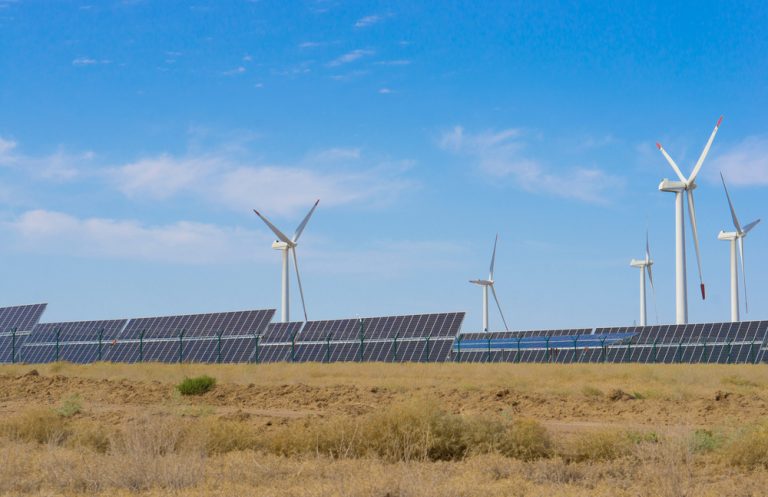
Onshore wind capital costs are anticipated to reduce from $3,248 per kW presently to $2,697 per kW by 2030, and down to $2,609 per kW under the aforementioned global policy scenario.
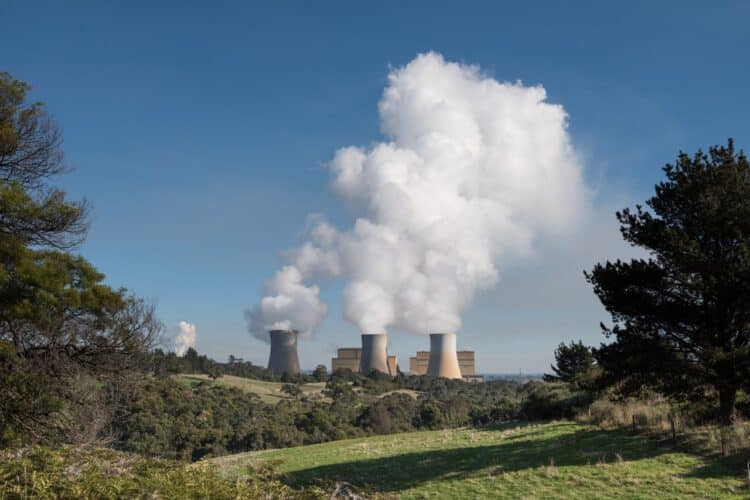
Additionally, while other generation methods, such as coal, large-scale open-cycle gas, and nuclear energy, are also expected to see capital cost reductions, these figures begin from substantially higher levels—black coal at $6,946 per kW, brown coal at $10,725 per kW, and large-scale nuclear at $10,332 per kW today.
The Future of Electricity Costs
The draft GenCost report estimates that achieving a target of 82 per cent renewable energy by 2030 will yield an electricity cost of approximately $91 per MWh, including transmission, and about $81 per MWh excluding transmission. The most economical large-scale generation mix to meet this target would comprise six per cent hydro, 41 per cent wind, 31 per cent solar PV, four per cent gas, and 18 per cent coal.
CSIRO and AEMO project that emissions intensity in the electricity sector must drop to between 0.02 and 0.05 tCO₂e per MWh to achieve net-zero emissions by 2050, a significant improvement from the current level of around 0.5 tCO₂e per MWh. The report indicates that reducing emissions in the electricity sector may be more expensive than tackling emissions in other sectors of the economy.
A New Approach to Cost Analysis
The draft GenCost report introduces a more detailed methodology which evaluates capital costs across various scenarios for reducing electricity emissions out to 2050, known as the system levelised cost of electricity (SLCOE) method. This approach is a shift from the previous levelised cost of electricity (LCOE) metric, which merely compared costs of different technologies.
CSIRO has made this analysis accessible for data scientists, engineers, and researchers through its innovative Simple Electricity Model (SEM). According to Paul Graham, CSIRO’s chief energy economist and project leader for GenCost, “GenCost has transformed from a source of verifiable cost data on separate technologies to a comprehensive tool that also models future generation mixes and wholesale electricity average costs.”
Dr Dietmar Tourbier, Director of Energy at CSIRO, emphasised the importance of the GenCost analysis. He remarked, “Regardless of the scenario, there are costs involved in building Australia’s future electricity system. GenCost is essential for producing and sharing reliable, evidence-based insights to help stakeholders understand these costs.”
By continually updating and publishing its data, modelling, and cost projections every year, GenCost aims to provide the most transparent and accurate guidance for Australia’s energy transition.
The draft of the GenCost report is available for formal consultation until 2nd February 2026.