CSIRO Reveals 43 Technologies Driving Australia’s Energy Transition
The CSIRO has released a detailed report examining the technologies and financial aspects that are driving Australia’s intricate transition to a sustainable energy future. Renowned worldwide for its technological advancements in sectors like healthcare, computing, and finance, Australia is also a hub for groundbreaking innovations such as Google Maps, Afterpay, and Wi-Fi, the latter invented by the CSIRO itself.
In its latest report, CSIRO stresses the essential role of research, development, and demonstration (RD&D) in facilitating this energy transition. Highlighting various sectors crucial to reducing carbon emissions, the report covers areas such as electricity production, low-carbon fuels, transport, carbon management, and related industries like iron and steel manufacturing.
Driving Forces Behind the Report
Dr Dietmar Tourbier, director of energy at CSIRO, explained the motivation for the report by underscoring the complexities of the energy transition. He stated, “Australia’s energy landscape is unique, presenting distinct challenges in melding industrial practices and technological advancements.” He pointed out that stakeholders often encounter a plethora of varying, sometimes conflicting information when trying to navigate these changes.
To aid in this process, CSIRO aims to offer unbiased and clear analyses of technologies, associated costs, and RD&D avenues that can help steer Australia towards an effective energy transition. “Our goal is to create a resource that stakeholders can rely on for informed decision-making,” he added.
Insights on the Electricity Sector
The shift in Australia’s electricity sector is already in progress, and the manner in which it embraces decarbonisation technologies will significantly affect other industrial sectors. The report notes, “The integration of renewables and electrification is fundamental to cross-sector decarbonisation strategies, necessitating rapid implementation of relevant technologies and infrastructural adaptations.”
Australia’s electricity system showcases a unique structure that embraces both interconnected grids and isolated networks, serving urban populations as well as remote areas. CSIRO emphasises that universal access to low-emission electricity technologies must be paired with affordability and reliability for all consumers through diligent technological integration and strategic planning.
Melissa Craig, a senior manager at CSIRO and co-author of the report, mentioned that energy storage represents a promising area within RD&D. She indicated that advancements in energy storage technologies mean that decision-makers need comprehensive data to select the most suitable options for various applications, especially in long-duration storage.
Exploring Low-Carbon Fuels
CSIRO’s report also highlights the importance of developing sustainable and cost-effective low-carbon fuels (LCFs), including hydrogen, biofuels, and synthetic fuels. These fuels play a critical role in reducing emissions in sectors that are not easily electrified, such as aviation, freight, and mining. Unfortunately, their uptake is often hindered by high costs and a need for investment in new infrastructure and technologies for production, storage, and utilisation.
For instance, for hydrogen to see commercial viability, RD&D on production methods, particularly various electrolysis systems, is essential. Enhancing cost efficiency and performance through optimised cell designs and utilisation of waste heat in production processes could also significantly impact hydrogen’s market potential. Craig pointed out that natural hydrogen reserves might offer an additional resource that requires further exploration and research.
Advancements in Transport
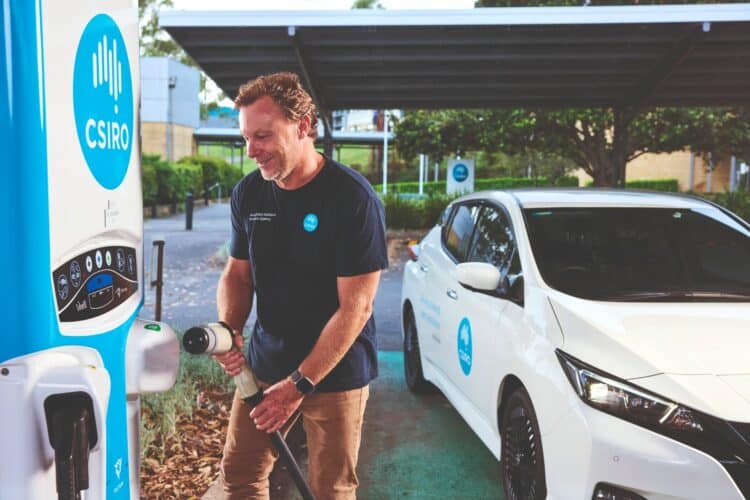
The Australian transport landscape is diverse, encompassing road, rail, maritime, and aviation, which presents a multitude of RD&D opportunities. The report underscores the significance of advancing technologies surrounding battery electric vehicles (BEVs) and hydrogen fuel cell electric vehicles (FCEVs), with a focus on robust charging and hydrogen infrastructure.
Vivek Srinivasan, CSIRO associate director and co-author, stated, “Achieving cost reductions is pivotal for the commercial viability of low-emission technologies in transport, especially in segments like shipping where current options still dominate.” Efforts to innovate in areas like methanol and ammonia combustion engines will require significant RD&D investment to make them competitive against traditional fuels.
Srinivasan also highlighted the manifold complexities inherent in Australia’s road transport system, which requires a holistic approach to deploying low-emission technologies. The widespread adoption of BEVs and hydrogen FCEVs will hinge on developing adequate infrastructure for charging and refueling throughout the entire transport ecosystem.
Decarbonisation in the Mining Sector
Despite being integral to Australia’s economy, the mining sector is also a significant source of emissions. The report examines technologies relevant to various mining sub-sectors, including iron and steel making and alumina refining. The findings reveal a challenging road ahead, as many technologies still require further investment before they can be commercially deployed.
Craig pointed out that from 14 assessed technologies, only three are ready for commercial application. A focus on developing pilot projects and demonstrating the capabilities of new technologies with Australian raw materials will be essential in moving these initiatives forward.
Strategic Carbon Management
Effective management of carbon emissions remains crucial for Australia to achieve its net-zero targets by 2050. CSIRO’s report delves into carbon capture, utilisation, and storage (CCUS) as a strategic pathway for mitigating greenhouse gas emissions linked to various industrial processes. Srinivasan emphasised the necessity of advancing existing carbon capture technologies while also striving to reduce their costs significantly.
By targeting key areas in direct air capture and point source capture, RD&D efforts can play a vital role in boosting the efficiency and effectiveness of these technologies, thereby supporting industrial decarbonisation and the burgeoning synthetic fuels landscape.
Ultimately, the report serves as a crucial reference for stakeholders aiming to navigate the complexities of low-emission technology deployment across diverse sectors, equipping them with the essential information required to make informed RD&D decisions.