Australia’s Solar Future: Robots and Drones Over Cheaper Panels
According to a recent report from the Australian Renewable Energy Agency (ARENA), achieving ultra-low-cost solar energy is increasingly reliant on more economical construction methods and efficient system integration rather than merely reducing the cost of solar cells and modules.
This report provides an update on ARENA’s ambitious 30-30-30 vision, which aims for 30 per cent efficiency in solar modules and an installed cost of 30 cents per watt by 2030, alongside solar electricity priced below $20 per megawatt-hour. This update follows the initial outline in the ‘Incredible ULCS – Ultra Low Cost Solar White Paper.’
Solar’s Rapid Growth and Efficiency Gains
The solar energy sector has seen remarkable growth, establishing dominance in global energy markets. In 2025, a record 664 gigawatts (GW) of new solar generation capacity was installed globally, representing a threefold increase in total photovoltaic (PV) capacity within just four years.
Technological advancements continue to progress as well, with universities and several major Chinese manufacturers persistently enhancing the efficiency of solar cells and panels while searching for alternative materials to replace key components in cell and panel production.
Addressing Cost Challenges in Large-Scale Deployment
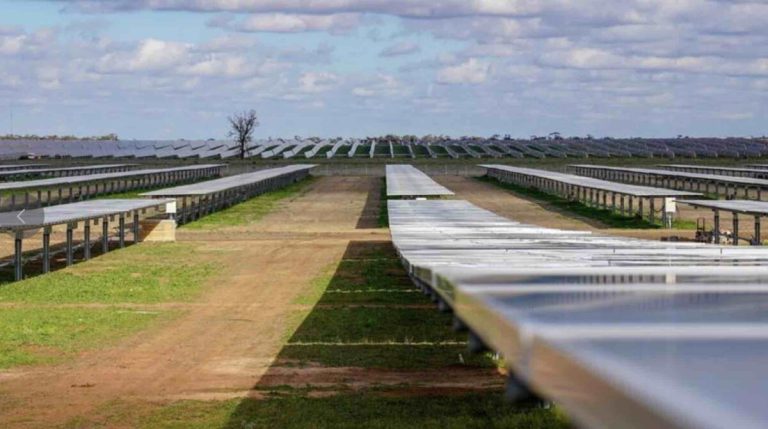
Despite the improvements in solar technology, the expenses associated with deploying large-scale solar projects in Australia have not decreased as swiftly, primarily due to escalating civil construction costs impacting various energy technologies. ARENA suggests that the industry must pivot its focus to restore the cost component of the 30-30-30 initiative.
“Australia must shift its focus towards how solar projects are executed, not just what equipment is installed,” states ARENA chief Darren Miller. “Without a change in how large-scale solar is constructed, financed, and integrated, we risk failing to reduce costs sufficiently for the forthcoming phase of the energy transition.”
Coordinated Efforts for Cost Reductions
The report underscores that achieving substantial cost reductions demands collaboration across construction methodologies, workforce efficiency, system integration, and market strategies. “These challenges reflect the evolving emphasis of ARENA’s ultra-low-cost solar portfolio,” the report notes, indicating a growing investment target on the comprehensive cost factors of solar deployment.
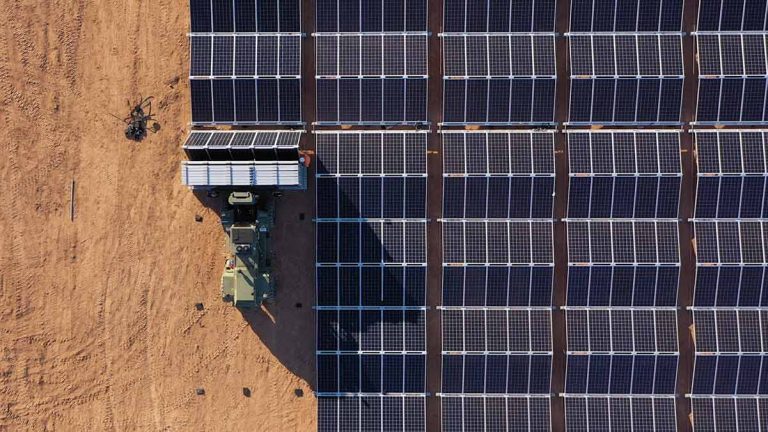
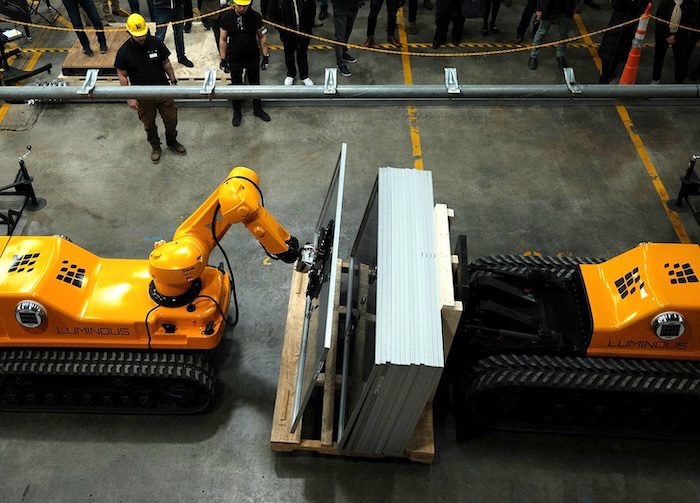
On the construction front, the white paper cites four ARENA-supported companies dedicated to enhancing productivity and minimising risks through repeatable construction methods. Among these is Adelaide-based 5B, known for creating prefabricated, modular solar systems that significantly decrease construction time and costs.
Innovations in Operations and Maintenance
In terms of operations and maintenance, the emphasis lies on fostering innovations that can enhance monitoring, fault detection, and predictive capabilities. Lab360, for instance, is developing advanced diagnostics to identify faults and improve asset performance.
Arena is also focusing on supporting projects that can showcase multiple innovations in integrated, real-world deployment scenarios, as exemplified by the Fortescue Solar Innovation Hub in the Pilbara.
Ongoing Enhancements in Cell Efficiency
Maintaining momentum in improving cell efficiency remains crucial to reducing costs effectively. The report highlights, “A 10 per cent enhancement in module efficiency translates to a 10 per cent decrease in the usage of concrete, steel, labour, and land for the same energy output from a solar farm.”
Higher efficiency modules can lessen the required land, mounting structures, cabling, and related infrastructure per energy unit generated, thereby contributing to lower levelised costs. These strategies are designed to ensure that ongoing efficiency advances significantly impact system-wide costs by 2030.
Support for Next-Generation Technologies
To further this aim, ARENA continues its backing of the Australian Centre for Advanced Photovoltaics (ACAP)—a partnership among research institutions dedicated to exploring next-generation solar technologies.
As reported by Renew Economy, ARENA recently prolonged its funding for ACAP to 2033, contributing an additional $95.4 million towards a $220 million national research initiative, which is bolstered by co-investments from ACAP’s seven member universities and industry partners.
This funding extension will facilitate ongoing research into high-efficiency cell designs, advanced materials, and novel manufacturing techniques that could promote efficiencies beyond current commercial capabilities.
Innovative PV Technologies on the Horizon
Moreover, ARENA is supporting SunDrive’s innovations, whose photovoltaic technology aims to achieve solar installation costs 20-30% lower than those of other high-efficiency cells by utilising copper instead of silver for PV cell metallisation.
Australia boasts a solid foundation in solar energy, yet the ability to translate innovation into industrial application will be pivotal in the next phase of advancement. “The progress we are witnessing today fuels our confidence in what is achievable, but the coming years will be vital for realising this potential,” Miller remarked.
The Ultra Low-Cost Solar White Paper Update can be accessed on ARENA’s website.