Australia’s Solar Export Innovations Provide Global Insights
Research backed by CSIRO is making significant strides in enabling electricity networks to enhance renewable energy use through existing infrastructure, marking Australia’s position as a leader in the evolution towards smarter, more adaptable energy systems.
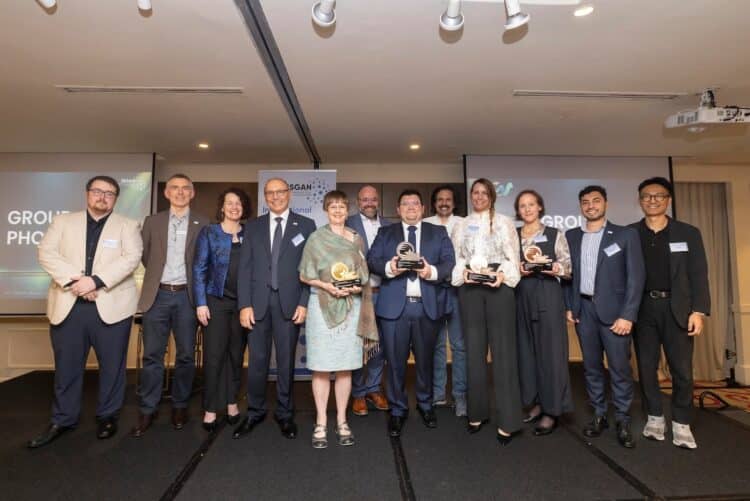
In recognition of its innovative contributions, CSIRO has received the esteemed 2026 International Smart Grid Action Network (ISGAN) Award of Excellence, particularly for its groundbreaking work aiding networks in accommodating increased rooftop solar energy integration.
Recognising Innovation in Energy Systems
The award is a tribute to a detailed casebook submission from CSIRO that illustrates Australia’s advancement in the development and application of Dynamic Operating Envelopes (DOEs). This casebook highlights the collaborative research, innovation, and partnerships that have enabled DOEs to transition from theoretical concepts to practical applications.
This submission encapsulates extensive years of research, trials, and collaborative efforts among various Australian stakeholders, aiming to optimise renewable energy harnessing via existing electricity network frameworks.
A Collaborative Effort Towards Smart Solutions
Dr Nanduni Nimalsiri, a senior research scientist at CSIRO with a focus on power systems and renewable energy integration, remarked, “This award pays tribute to years of teamwork tackling a shared challenge as electricity systems evolve alongside increasing levels of renewable energy.”
This casebook draws on a broad spectrum of Australian contributions, engaging industry, academic institutions, and research entities, and provides insight into Australia’s journey with DOEs for an international audience. It was chosen from a diverse pool of smart grid nominations from ten countries.
The Concept Explained
Dr Nimalsiri acknowledges that the title of the submission is quite a mouthful: Dynamic Operating Envelope Integration Via An Interoperable Utility-Distributed Energy Resource Communication Standard. “While the terminology may seem complex and the technology intricate, the core idea is actually straightforward,” he explained. “Australia boasts one of the highest rates of rooftop solar adoption globally. On bright days, households and businesses often generate surplus electricity which can be returned to the grid.”
However, there is a limitation. In various regions, local electricity networks are unable to accept more than a specified amount of solar energy exports at set times.
Dr Nimalsiri elaborated, “Historically, electricity networks have managed this by enforcing fixed export limits, restricting the volume of solar energy that consumers can send back to the grid, regardless of whether additional capacity is available.”
Embracing Flexibility with Dynamic Operating Envelopes
Employing DOEs allows for adaptive export limits that can shift throughout the day based on the current network conditions. Sometimes referred to as flexible export limits or dynamic connection arrangements, these limits enable solar customers to export more energy when the network has spare capacity. Conversely, during peak demand times, export limits can be reduced temporarily to ensure reliability.
“You can think of it as adjusting the speed limit for solar exports,” Dr Nimalsiri suggested. “Australia’s journey with DOEs illustrates that we can derive more benefits from our existing electricity networks while promoting the growth of rooftop solar.”
Instead of adhering to rigid thresholds, real-time data is utilised to best align solar energy exports with the available capacity of the network. This enhancement allows users to send more renewable energy into the grid when there’s capacity, preserving reliability for all users.
Technical Innovations Behind the Success
DOEs are facilitated by the Common Smart Inverter Profile-Australia (CSIP-AUS), a communication standard that ensures secure communication between electricity networks and consumer-owned energy systems like solar inverters.
This behind-the-scenes technology enables networks to convey dynamic operating limits to solar inverters and other devices, allowing them to adjust their functions based on available capacity without the need for constant consumer monitoring or manual adjustments.
Pioneering Trials and Future Prospects
One notable trial that exemplified this standards-driven DOE methodology was the Flexible Exports for Solar PV Trial. CSIRO played a key role in the research, modelling, and technical validation that supports DOEs and assisted in fostering industry collaboration on implementing CSIP-AUS.
Dr Nimalsiri states, “Australia’s experience with Dynamic Operating Envelopes is a testament to how smarter, more transparent operations within networks can help realise the untapped potential of rooftop solar.”
“Optimising network capacity can enable greater clean energy exports without necessitating extensive infrastructure enhancements. As numerous countries wrestle with integrating distributed energy resources like rooftop solar, Australia’s experience provides essential insights for the development of global smart grids.”
As Australia’s national science agency, CSIRO continues to disseminate valuable lessons learned from these innovations, addressing challenges encountered and highlighting how dynamic, standards-based strategies can lead to a more flexible electricity system while facilitating additional clean energy flow into the grid.
The full casebook, created by Dr Nanduni Nimalsiri, Mr Thomas Wearne, Dr Thomas Brinsmead, Mr Michael Elliott, and Ms Terijo Lovasz from CSIRO, is accessible on the ISGAN website.