Australia Faces Pressure to Legalize Balcony Solar Following UK Sales
Balcony solar has officially become legal in the UK, with plug-in panels and batteries available for purchase from Thursday, including offerings from one of the nation’s largest retailers, Argo. Prices for single panel units commence at £599, with buy-now-pay-later options or monthly payment plans available starting at just over £24.
The UK now aligns with Spain and Germany in adopting plug-in solar technology. Germany, credited with coining the term “balkonkraftwerk” – or balcony power plant – has seen a significant number of apartment residents utilising these systems to harness solar energy from their terraces and reduce their electricity bills.
Rapid Progress and International Observations
The swift implementation of plug-in solar in the UK is notable, having been prioritised in March as part of broader measures aimed at enhancing national energy security amidst ongoing fuel crises. This has drawn attention from Australia, where advocacy groups like Solar Citizens are urging both federal and state governments, as well as relevant regulatory bodies, to consider introducing similar balcony solar systems within just a year.
New Zealand is also in the race; a recent government review indicated that legalising plug-in solar could be feasible within 9 to 12 months due to ongoing efforts to refine necessary standards. For plug-in solar to become a reality in Australia, legislation that ensures safe usage of the technology needs to be established.
Simple Steps Towards Implementation
Glenn Morris, general manager of Smart Energy Lab, emphasised that the concerns surrounding plug-in solar do not necessitate new technology. Instead, what is required is a clear framework delineating the acceptable parameters of use. According to him, “The path to safe plug-in solar is straightforward.”
Morris pointed out that Germany has successfully integrated over a million such systems for years, and the UK has recently clarified its regulations. He believes that Australia can leverage existing international practices, adding, “We simply need to establish a product standard ensuring the inverter cuts off immediately when unplugged, limit output to around 800 watts to prevent circuit overload, and a straightforward registration process with the energy network.”
This approach could be streamlined by the groundwork currently being laid in New Zealand, where shared electrical and safety standards would facilitate the implementation of plug-in solar systems across Australia.
Calls for Regulation and National Consistency
Heidi Lee Douglas, CEO of Solar Citizens, noted that while the use of plug-in solar and batteries remains illegal in Australia, the equipment is readily available for purchase. This makes it even more critical to establish uniform, clear regulations at a national level. “It’s astonishing that over three million Australians could take advantage of portable plug-in solar but are missing out due to outdated regulations,” she stated.
Douglas highlighted the progress made by the UK, Germany, and New Zealand in making plug-in solar accessible, urging Australian lawmakers and regulators to take decisive action, saying, “If it’s good enough for the Kiwis and the Brits, it should be good enough for us.”
Understanding Plug-in Solar
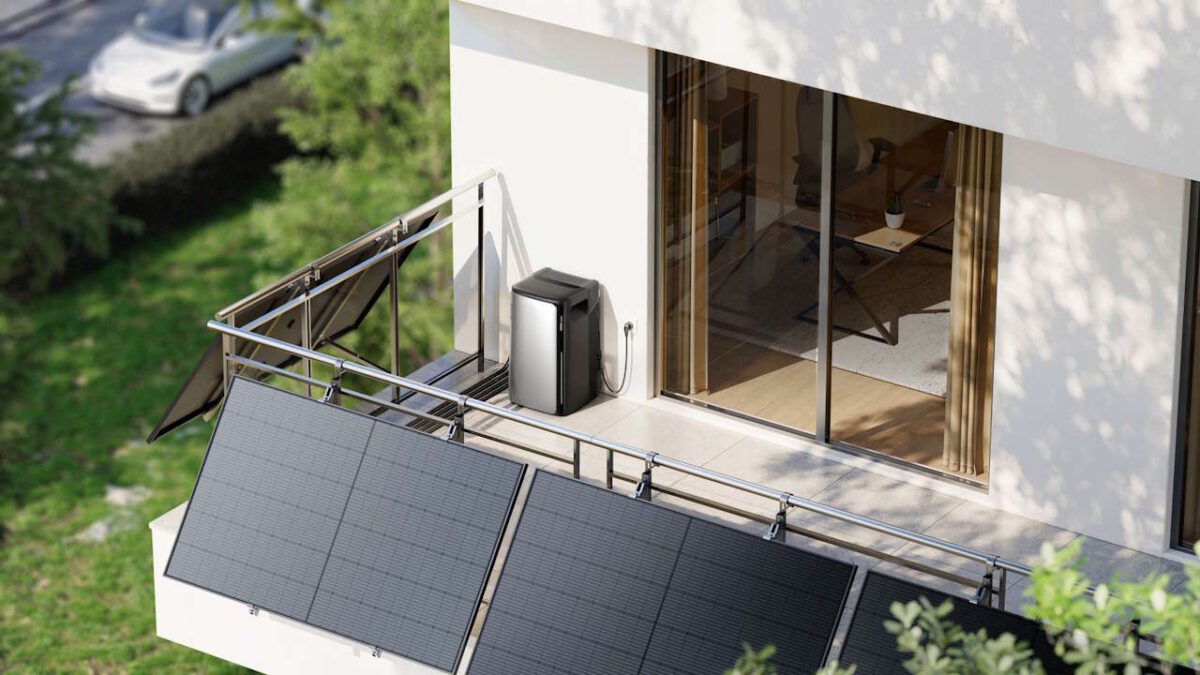
As described by Solar Citizens, plug-in solar consists of portable panels and batteries that can be easily connected to standard power points, helping to mitigate the energy costs associated with everyday household appliances. In Australia, these modules would likely deliver between 600 to 800 watts of power, priced approximately between $650 and $1300 AUD.
These adaptable solar panels can be mounted on balcony spaces or used in gardens and are beneficial for renters who can take them along when moving. Morris mentioned that, “An 800-watt plug-in system on a balcony or backyard receiving decent sunlight can generate around 1,000 kilowatt-hours annually across most regions of Australia.”
This capacity could significantly offset energy costs, with potential savings of $300 to $400 a year, depending on current electricity rates. He also added, “A kit priced around $1,000 could pay for itself within three years, lasting for about 20 years. For many renters, this is the only viable solar option they can possess, and they can easily take it when they relocate.”
To stay updated on the latest developments in clean energy, consider subscribing to our free daily newsletter.
Support independent journalism and help combat misinformation about the energy transition by considering a donation or becoming a regular supporter of Renew Economy.