AI Innovations in Solar Recycling: Unlocking Non-Toxic Solutions
The quest to enhance the value extraction from decommissioned solar equipment is intensifying, driven by the need to improve recycling economics and mitigate the landfill disposal of significant quantities of materials.
Components such as glass, silver, and copper can be salvaged from systems that have reached the end of their operational life. However, the extraction of high-purity silicon suitable for the production of new panels remains a challenging task.
Harnessing AI for Efficient Silicon Extraction
Silicon wafers, which capture light in solar panels, are incredibly valuable and must be safeguarded from environmental factors by firmly adhering them to substrate materials. A research team from the University of New England is now leveraging artificial intelligence to efficiently separate pure silicon from these substrates.
The newly established Institute for Strategic AI has implemented this technology to automate the identification and evaluation of solvents capable of isolating the various components within silicon wafers.
Revolutionising the Discovery Process
The application of three distinct types of AI—predictive, generative, and agentic—allows the system to propose effective solvents and subsequently analyse the outcomes of practical laboratory trials. Amir Karton, the director of the Institute, shared that this approach has significantly accelerated the discovery process.
“Previously, a hypothesis would be established, followed by testing possibly a thousand different solvent combinations and reaction conditions in the lab, a process that could extend over years,” Professor Karton explained to AAP.
The research remains in progress, yet Professor Karton expresses optimism about developing a solvent that can extract silicon in a manner that is cost-effective, scalable, efficient, and non-harmful.
“Recycling these critical minerals and high-purity materials would play a substantial role in making the entire recycling process economically viable,” he added.
The Current Landscape of Solar Recycling
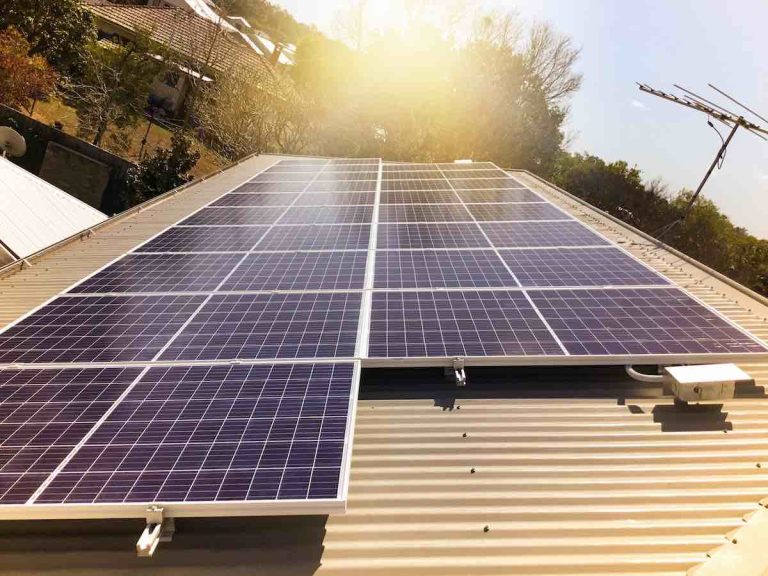
According to the Clean Energy Regulator, Australian households and small businesses have enthusiastically adopted rooftop solar, installing over 4.3 million systems. Despite this, the recycling rates are still disappointingly low.
Challenges include limited processing capacities along with high logistics and recycling expenses. Government forecasts suggest that by 2030, solar panel waste could increase by nearly 30,000 tonnes, reaching about 91,000 tonnes annually as the initial generation of systems approach the end of their 25-year lifespan.
Initiatives to Overcome Recycling Challenges
Efforts are already in motion to address the challenges faced in the recycling sector, including a federally supported pilot program worth $24.7 million that aims to gather valuable feedback for shaping a national strategy and product stewardship initiative.
Professor Karton stated that the solar recycling research represents a cornerstone project for the new unit, with plans to collaborate with industry and government to enhance recycling capabilities in this renewable energy zone.
“We aim to develop local recycling technologies so that solar panels can be recycled at their point of energy production,” he remarked.