Western Australia Surpasses National Grid in Renewable Energy Transition
A surprising trend has emerged as Western Australia, home to the largest isolated electricity grid in the world, now stands ahead of the rest of the nation in the shift towards renewable energy sources.
In recent months, the South West Interconnected System in Western Australia has surpassed the National Electricity Market (NEM) with a renewable energy contribution of 50.7 per cent, compared to the NEM’s 49.9 per cent.
Record Renewable Energy Shares in December
December was particularly noteworthy, with Western Australia’s grid reaching a remarkable 53.9 per cent share of renewables, while the NEM managed 50.4 per cent, marking both as new monthly highs.
What makes Western Australia’s achievement even more impressive is its isolation; the state lacks transmission links to other states or countries, meaning it cannot export or import electricity when necessary.
Additionally, the grid does not utilise pumped hydro or any form of hydroelectric power, relying solely on wind and solar energy for its renewable share, with storage provided entirely by batteries, both at household and grid levels.
Navigating Challenges with Innovative Solutions
Not too long ago, Western Australia’s primary concern was the solar duck curve during peak daylight hours, largely due to the significant uptake of rooftop photovoltaic (PV) systems across Perth and nearby regional areas.
Unlike interconnected systems like South Australia, Western Australia’s isolated grid faces limitations that prevent it from allowing rooftop solar output to meet 100 per cent of local demand. In contrast, South Australia has succeeded in reaching this milestone on two occasions during Christmas.
To mitigate the challenges posed by the solar duck curve, the state has rapidly expanded its big battery storage capabilities, featuring Australia’s two largest batteries, both situated in Collie, a coal industry hub, each capable of storing over 2 gigawatt hours.
A Bright Future for Renewable Energy
Jai Thomas, the co-ordinator of energy policy at Energy Policy W.A., likens the progress made over the last decade to a crocodile’s head that represents renewables outpacing coal and gas, with the remaining coal-fired power stations expected to close by the decade’s end.
He shared his insights on LinkedIn, noting that ongoing transmission investments and renewable energy projects in development are poised to further enhance this progress.
The large batteries have notably reduced potential curtailment levels, contributing to the rise of Western Australia’s wind and solar farms as leaders in performance across the nation.
Top Performers in Wind and Solar Energy
David Dixon from Rystad Energy compiles monthly assessments of the country’s best-performing wind and solar farms, indicating that three of the top-performing wind farms in December were located in Western Australia.
The Badgingarra wind farm led with an average capacity factor of 60 per cent, surpassing most coal-fired stations in the NEM. It was closely followed by Yandin at 59.9 per cent and Warradarge at 56.4 per cent, with the Collgar and Emu Downs wind farms also securing fourth and fifth positions.
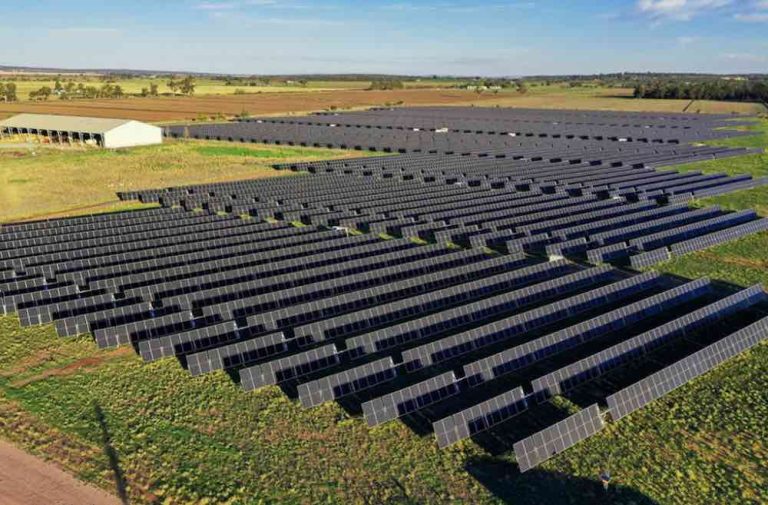
Additionally, the Merredin solar farm was the standout in December, boasting a capacity factor of 45.2 per cent, while facilities in New South Wales followed closely behind with capacity factors of 40.1 per cent and 39.7 per cent.
Significant Milestones in Renewable Generation
Dixon’s analysis reveals that solar farms in New South Wales dominated the performance rankings, with 11 out of the 20 top solar facilities in Australia achieved during December. Notably, New South Wales became the first state to generate over 1 terawatt hour (TWh) from utility-scale solar in a single month, producing 1.05 TWh and an additional 626 gigawatt hours (GWh) from wind energy.
Total renewable generation across the NEM for December reached 9.5 TWh, with curtailment levels recorded at 6.3 per cent, according to Open Electricity.
Furthermore, the data shows that December marked the eighth-lowest month for coal generation since 2011 and the fourth-lowest for gas generation, a trend expected to persist with the increasing use of household and grid-scale batteries.
Indeed, the capacity of grid-scale batteries has surged more than three-fold over the past year in both the NEM and the South West Interconnected System, with NEM batteries discharging 248 GWh in December 2025, compared to 68 GWh in the previous year. In Western Australia, the main grid’s big batteries discharged 102 GWh, up from 32 GWh in December 2024.
Record Levels of Negative Pricing in December
According to Dixon, December also witnessed a record number of hours with negative prices across all NEM states, except Tasmania. In fact, South Australia experienced 351 hours of negative pricing, representing 47% of the month, followed by Victoria with 290 hours, Queensland with 189 hours, and New South Wales at 159 hours.