Western Australia Surpasses National Grid in Renewable Energy Transition
In an unexpected turn of events, Western Australia has emerged as a frontrunner in the shift towards renewable energy, surpassing the rest of the nation. Known for having the largest isolated electricity grid globally, the state’s South West Interconnected System (SWIS) has recently boasted a renewable energy share of 50.7 per cent, eclipsing the National Electricity Market (NEM) which stands at 49.9 per cent.
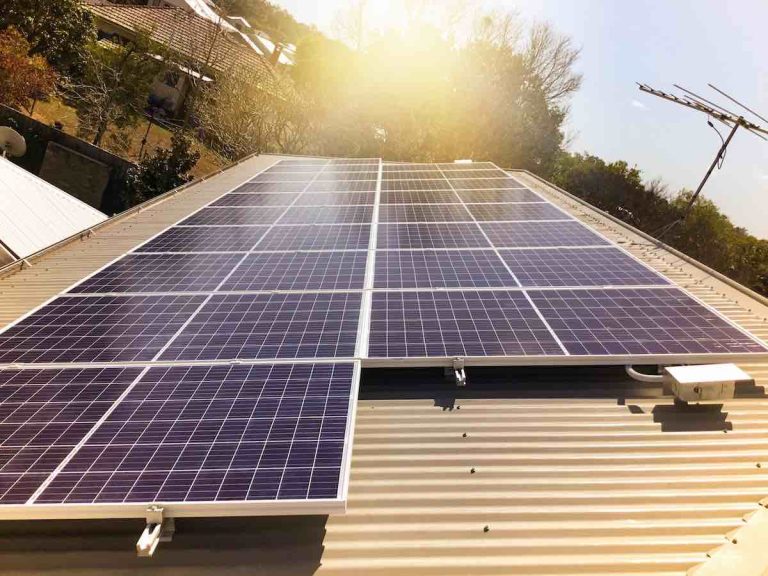
December proved particularly noteworthy, as SWIS achieved a remarkable 53.9 per cent renewable share, compared to 50.4 per cent for the NEM, both of which set new monthly records. This achievement is even more astonishing given that Western Australia operates an isolated grid without the capacity to swap power with other states, lacking any pumped hydro or traditional hydroelectric resources. The state relies solely on wind and solar energy, with energy storage provided by batteries at both the household and grid scale.
The Challenges and Solutions of an Isolated Grid
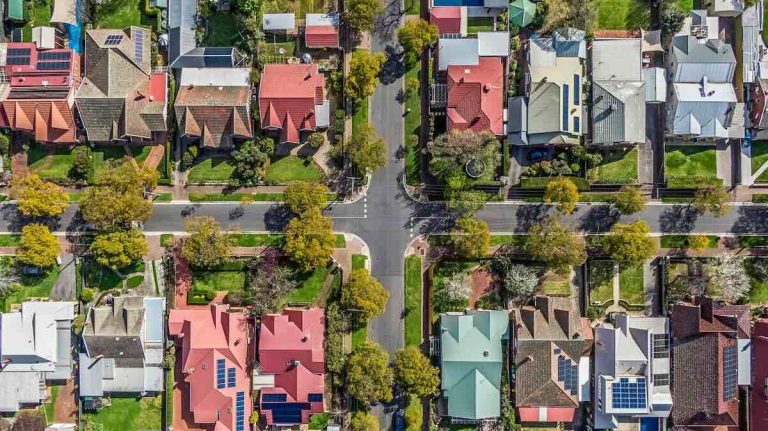
Just a few years back, Western Australia faced challenges associated with the solar duck curve, a phenomenon caused by the significant increase in rooftop solar installations in Perth and surrounding regions. Unlike South Australia, which has successfully enabled rooftop solar to meet 100 per cent of local demand on occasion, Western Australia’s isolated grid prevents it from achieving similar feats.
To tackle the solar duck curve, the state has accelerated its investment in large-scale battery storage, introducing Australia’s two largest batteries located in Collie, each with over two gigawatt hours of storage capacity. Jai Thomas, coordinator at Energy Policy WA, metaphorically described the state’s progress as resembling a crocodile’s head, with renewables now emerging ahead of coal and gas, and anticipates the closure of the remaining coal-fired generators by the decade’s end.
Leading the Pack in Performance
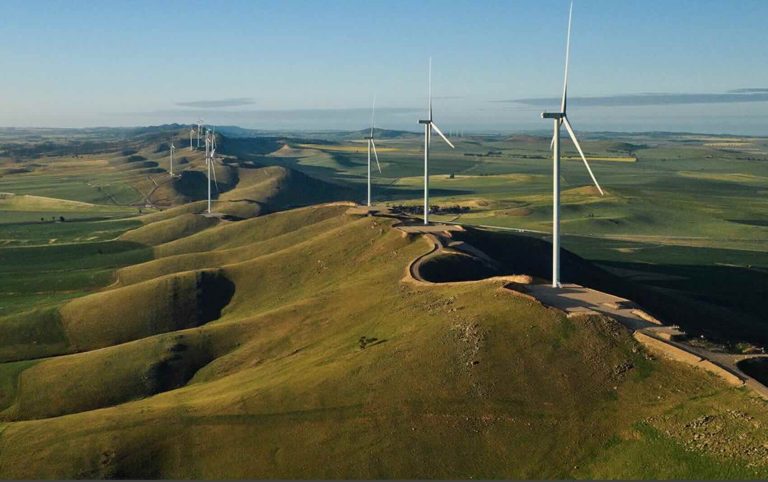
These large batteries have significantly mitigated potential curtailment, leading to Western Australia’s wind and solar farms consistently ranking as the best performers nationwide. David Dixon from Rystad Energy, who tracks the monthly performance of renewable facilities, noted that three out of the top-performing wind farms in December were found in Western Australia. The Badgingarra wind farm achieved an impressive average capacity factor of 60 per cent, significantly outperforming many coal-fired stations in the NEM, while Yandin and Warradarge followed closely.
In terms of solar energy, the Merredin facility in Western Australia stood out as the best-performing solar farm in December, boasting a capacity factor of 45.2 per cent. Comparatively, two solar facilities in New South Wales – Griffith and Moree – came in behind with capacity factors of 40.1 per cent and 39.7 per cent, respectively.
New South Wales Makes Headway
Additionally, New South Wales made history by becoming the first state to generate over 1 terawatt hour (TWh) from utility-scale solar in a single month, recording 1.05 TWh from utility PV in December, alongside an additional 626 gigawatt hours (GWh) from wind energy. Total renewable generation across the NEM reached 9.5 TWh with a curtailment level of 6.3 per cent for the month, according to Open Electricity.
Dixon also highlighted December as having the eighth lowest coal generation since 2011, and the fourth lowest for gas generation, a trend expected to persist with the ongoing expansion of household and grid-scale batteries. In fact, the capacity of grid-scale batteries more than tripled over the past year in both NEM and SWIS, with December seeing NEM batteries discharging 248 GWh, compared to just 68 GWh the previous year. In Western Australia, batteries discharged 102 GWh, rising from 32 GWh in December 2024, marking a significant milestone.
Record Low Prices and Future Prospects
December also set a record for the number of negative pricing hours across all NEM states, except Tasmania. South Australia logged 351 hours of negative prices, or 47 per cent of the month, followed by Victoria and Queensland with 290 hours (39 per cent) and 189 hours (25 per cent), respectively. New South Wales similarly experienced negative pricing for 159 hours, amounting to 21 per cent of the month.