Transforming Energy: My Journey to Home Battery Installation
As one of the 500,000 Australians who have embraced battery technology for homes and businesses, I am part of the ongoing shift in how we generate, store, and trade electricity.
This experience, while personal, highlights the rapid advancements in battery technology and economics, showcasing promising prospects for the future of our electricity grid.
Transforming My Perspective on Batteries
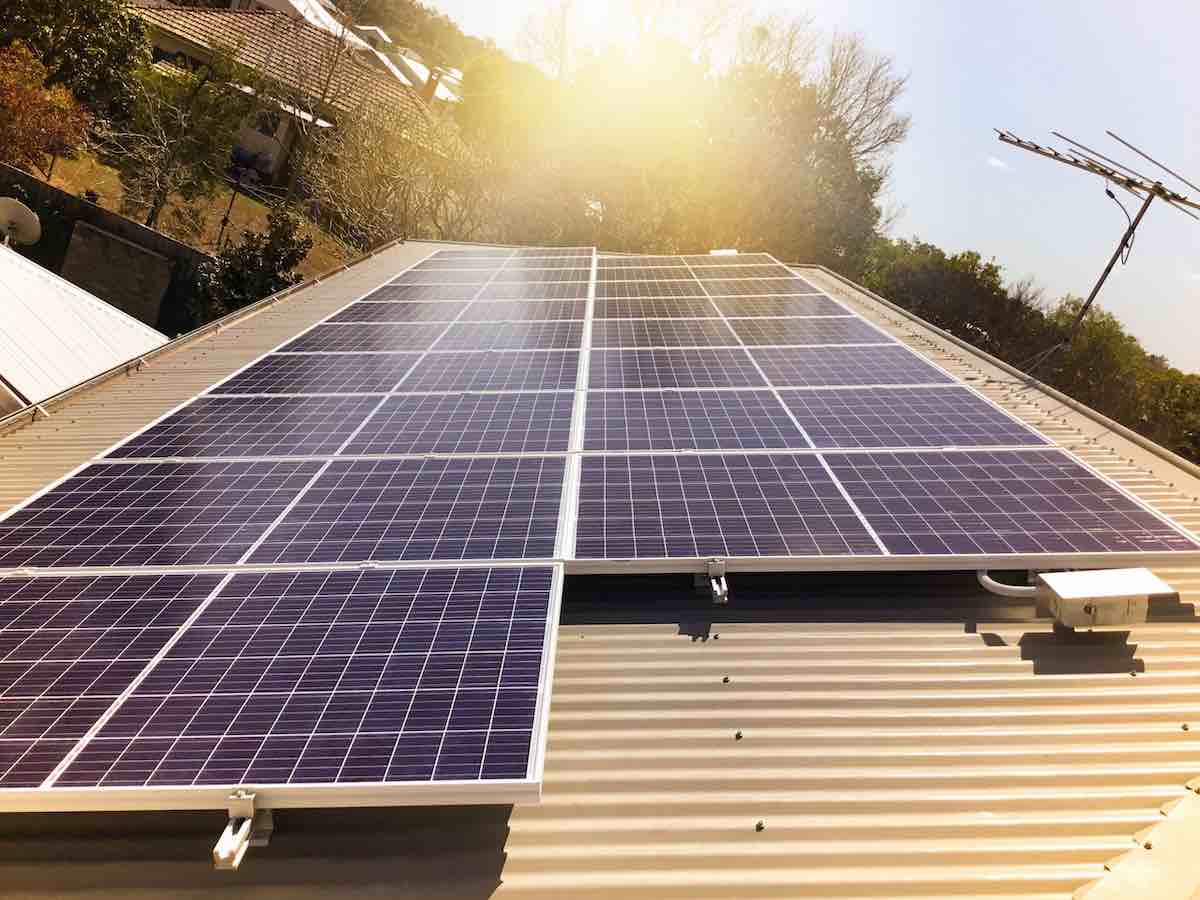
Until fairly recently, I hadn’t considered acquiring a household battery. Even with solar panels atop my roof, the financial appeal just wasn’t there; the batteries were small, prices were high, and payback periods looked daunting.
My plan was to hold out for an electric vehicle proficient in vehicle-to-grid technology, providing larger storage solutions at a minimal additional cost, despite friendly nudges from colleagues who already owned batteries.
However, things took a turn when the government introduced a 30 per cent subsidy for home batteries, coupled with a significant drop in battery prices.
Discovering an Attractive Offer
A particular online ad featuring a 50 kilowatt-hour (kWh) battery for just $3,999 piqued my interest. Initially, I was sceptical, suspecting there might be hidden costs, but curiosity got the better of me.
Upon reaching out to the advertiser, I learned that price was for a single-phase system; I needed a three-phase one, amounting to $6,999. Still, it felt like a worthwhile investment.
After thorough research and calculations, I confirmed that my 8 kW solar panel setup could cover my daily energy needs for the majority of the year when complemented by battery storage. Any additional winter consumption could be supplemented by the government’s upcoming Solar Sharer Offer, which provides three hours of free electricity daily.
In no time, I had my 54 kWh battery and a 12 kW inverter installed.
Optimising My Energy Costs
Next on my list was figuring out the best retail arrangement for my situation.
Following advice from my colleagues, including Daniel Middlemiss from Battery IQ, I made a switch from a traditional retailer, where customer service teams struggled with the concept of energy arbitrage, to one of the emerging retailers focused on battery owners.
The plan I opted for offers free electricity from 11 am to 2 pm while rewarding me with $1 for every unit of energy I avoid importing between 6 pm and 8 pm, in addition to 15 cents per kWh for the first 10 kWh I export during that peak time.
With this arrangement, I anticipate that my bills will consistently show a credit balance, particularly as the earnings from peak exports are likely to substantially exceed the $1.28 daily supply charge.
I’m set to save around $1,500 on annual electricity expenses, earn about $900 from peak exports, and could potentially add another $500 or more when my inverter is activated for participation in a Virtual Power Plant (VPP).
The expected payback period is impressively under two and a half years!
Cost Comparisons: Household vs Grid Storage
Intrigued, I compared the costs of my home battery system against large-scale grid storage, anticipating that it would be much pricier.
For this comparison, my home system provides four hours of storage (54 kWh divided by 12 kW) but can power my home for over three days without a hitch. Without the government’s 30 per cent subsidy, the installed cost works out to approximately £830 per kilowatt.
In contrast, the current pricing of four-hour grid batteries stands at around £1,548/kW (according to the AEMO Draft 2026 ISP Inputs and Assumptions Workbook), nearly double the cost of my home system! Surprisingly, AEMO does not expect grid battery prices to decrease to £830/kW until post-2050.
Implications for Future Energy Systems
While this comparison is simplistic and only offers a glimpse into the broader dynamics at play, the notable gap in costs raises questions about AEMO’s projections and assumptions. It indicates a possibility that the adoption of both grid and household battery systems could surpass expectations, potentially bringing immediate and significant changes to the electricity landscape.
Similar to the trajectory of solar photovoltaics, chemical batteries are experiencing rapid advancements in technology, significant cost reductions, and a surging adoption rate.
Only in 2017 did Australia see its first grid-scale battery, the Hornsdale Power Reserve, which was also the largest lithium-ion battery globally at the time. Back then, household batteries were scarcely present.
Fast forward nine years, and we now have 53 grid-scale battery units in the National Electricity Market (NEM), with a collective capacity of 7.5 GW/16.6 GWh, including 19 units activated in 2025 alone. While there’s no official data on household batteries, they roughly amount to 2.5 GW/7.5 GWh in combined capacity.
The adoption rate of batteries has been nothing short of revolutionary, and there are no signs of a slowdown.
— Ted Woodley, former Managing Director of PowerNet, GasNet, and EnergyAustralia.