Top End Solar and Battery Project Seeks Federal Approval
A significant solar and battery initiative in the Top End has entered the federal environmental approval process after a short-lived and challenging stint in the courts.
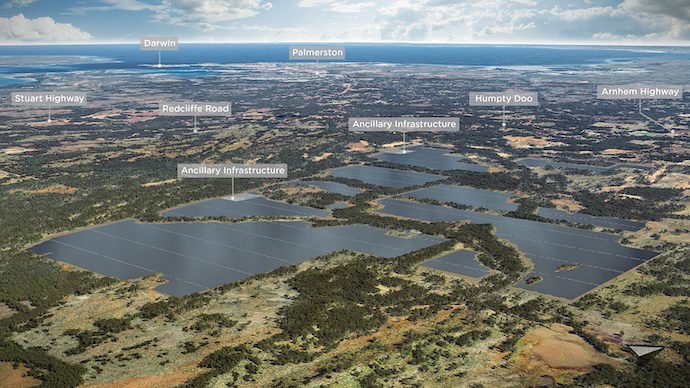
The Wak Wak solar project aims to establish a 2.7 gigawatt (GW) solar farm paired with a 6 gigawatt hour (GWh) battery on the Koolpinyah station, a pastoral lease located near Humpty Doo, approximately 48km south of Darwin.
Environmental Assessments and Legal Developments
The 56-page EPBC referral outlines the project’s potential environmental implications, which encompass seven federally-listed species of birds, animals, and reptiles, alongside various landscapes in the area. The developer, TotalEnergies and its subsidiary, TE H2, withdrew a legal claim last month that sought to assert the absence of native title over the land. According to TE H2, the intention behind the legal action last year was to engage with the rightful Indigenous owners, rather than to annul any native titles. The suit was terminated after they identified additional Indigenous families in the region for negotiations.
The project is set to commence work around May 2027 and will affect up to 3,400 hectares, with approximately 2,500 hectares of land being disturbed. TE H2 had initially proposed a construction timeline beginning in 2028, but officials note that these figures are conservative estimates intended to showcase the maximum expected development footprint.
Connections to Energy Infrastructure
The ambitious project will tie into a proposed high-voltage overhead transmission line, known as the Territory Energy Link, being developed by the Northern Territory government. This will extend to the Middle Arm Peninsula industrial hub. TE H2 envisions that Wak Wak will eventually supply energy to a hydrogen facility in this industrial area, necessitating its integration into the transmission line’s plans.
At-Risk Species and Environmental Concerns
The environmental impact assessment encompassed a broader area than the immediate project site, spanning 5,000 hectares, and highlighted the presence of seven at-risk species, including the black-footed tree-rat, bare-rumped sheath-tailed bat, and the northern brushtail possum. The assessment also identified various landscape types, including low hills and savannah-like woodlands, as well as regions within the Adelaide River coastal floodplain.
The report notes that previous burn-offs have significantly damaged the ecological conditions of much of the proposed site, resulting in diminished midstorey and Gamba Grass infestations. Since 2000, much of the project area has been burned over 20 times, although certain sections aligned with watercourses and drainage lines have experienced fewer burns. Moreover, the northern part of the site has undergone significantly more late-season burns compared to the southern region.
To mitigate the impact on biodiversity and threatened species, the project area was strategically selected to minimise disruptions, focusing on areas of lower habitat quality. Construction-related activities pose risks to local fauna, but surveys revealed that black-footed tree-rats were only found in one area outside the disturbance zone in the southwest. The bare-rumped sheath-tailed bat was identified in five locations, including one spot within the proposed construction site.
Key Species Findings and Habitat Concerns
Three separate locations on the site yielded sightings of the northern blue-tongued skink, one of which falls within the projected disturbance area. TE H2 asserts that the habitat affected by the project is of “the lowest quality” and that establishing wildlife corridors will enhance the bushlands favoured by the skinks. Additionally, the company does not anticipate an increase in cane toad populations, which pose a risk to these reptiles.
The northern brushtail possum could present a greater challenge, as it was observed throughout the Wak Wak site, alongside the partridge pigeon, which was found in eight locations within the lease area. Notably, the habitats for Merten’s and Mitchell’s water monitors do not coincide with the regions designated for construction.
For those interested in keeping abreast of clean energy developments, joining over 29,000 subscribers for our free daily newsletter is a great way to stay informed.