Sunshot Program Funds Solar Panel Manufacturing in Australia
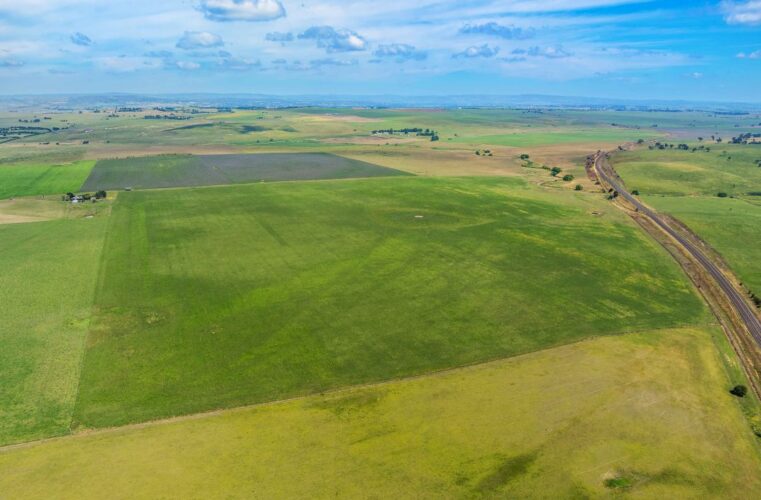
A renowned figure in Australian solar research, Zhengrong Shi, has led his company to secure over $150 million in federal funding through the Solar Sunshot initiative. This investment is aimed at establishing a commercial-scale photovoltaic (PV) panel manufacturing facility in the Hunter Valley, a prominent coal region in New South Wales.
A joint announcement from the federal and NSW Labor governments on Tuesday confirmed a co-investment of $171 million for the Hunter Valley Solar Foundry project, driven by the Sunman Group. The factory will produce high-quality Australian-made PV modules targeting both local and export markets.
About Sunman and its Innovations
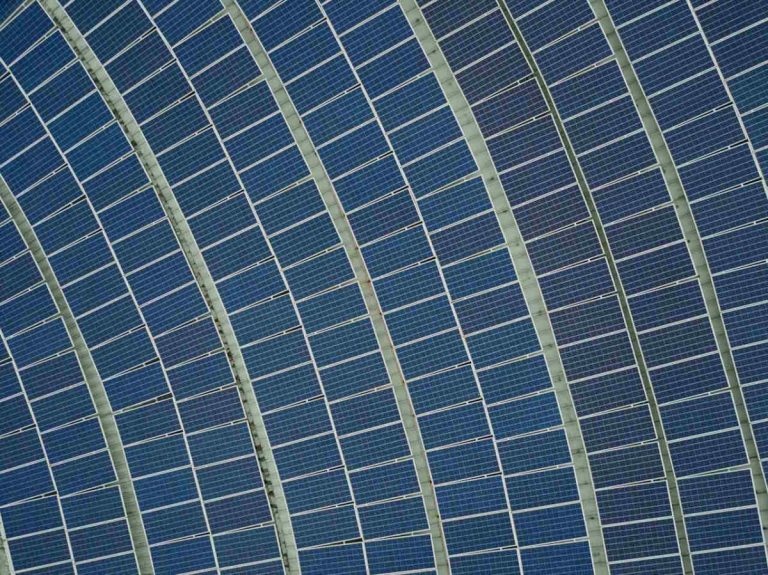
Zhengrong Shi, who graduated from the University of New South Wales, earned the moniker “Sun King” for his groundbreaking contributions to PV technology and for founding Suntech, which at one time was one of the largest solar firms globally until it faced collapse. In recent years, Shi has focused on commercialising Sunman’s flexible solar panels, known as “eArc” panels, which feature a polymer-based “skin” making them lightweight and pliable.
Sunman is already operating two significant facilities – one with a capacity of 1 GW located in China that launched in 2022, and another smaller 500 MW facility currently under construction in Indiana, USA. Last year, Shi expressed ambitions to bring a large manufacturing centre to Australia.
Bringing Manufacturing Back to Australia
Reflecting on his earlier ventures overseas, Shi remarked in a Renew Economy interview: “We ventured to China to establish Suntech, and there was much discussion about why Australia did not support my efforts.” He indicated that the time is now ripe to develop such capabilities in Australia.
With this initiative, support is now on the table — the project benefits from $151 million in conditional funding from the federal government’s $1 billion Solar Sunshot programme, alongside $20 million from the New South Wales government’s Net Zero Manufacturing programme. The funding will facilitate the establishment of a 500 MW annual manufacturing facility producing Sunman’s advanced solar panels as well as glass solar modules using domestic materials.
Economic and Employment Opportunities
The Hunter Valley Solar Foundry, as this new facility is named, will not only serve local manufacturers but is expected to produce around 800,000 solar modules annually. This venture is anticipated to generate approximately 200 jobs during the construction phase and more than 100 ongoing positions once full operations commence. Additionally, plans are in motion to develop an advanced manufacturing training initiative in collaboration with TAFE NSW, featuring a strategy for First Nations recruitment and scholarship opportunities.
On-site at the future Hunter Valley facility, federal energy minister Chris Bowen remarked, “It’s fitting that the Hunter, which has been a vital source of power for Australia, will now be central to our manufacturing future.” He celebrated Australia’s historical role in solar technology development, stating, “We’ve invented the modern solar panel, yet we have largely missed out on the intermediate manufacturing phase.”
Significance of the Project
Arena CEO Darren Miller described the Hunter Valley Solar Foundry project as a clear example of Solar Sunshot’s objectives, and a significant homecoming for Dr Shi, who began his solar career in Australia. “This initiative builds on Australia’s renowned solar research to enhance manufacturing capability, fortify supply-chain resilience, and foster local employment and skills,” Miller added.
Dr Shi expressed pride in establishing large-scale renewable manufacturing in Australia, highlighting that once operational, the Hunter Valley Solar Foundry will be the nation’s largest producer of solar photovoltaic modules and the only such facility in New South Wales. He emphasized the ambition to form a comprehensive solar supply chain in Australia, viewing this facility as a crucial step in the nation’s energy transition.
Government Funding Initiatives
The federal Labor government initially introduced its Solar Sunshot policy in March 2024, pledging $1 billion towards production incentives and grants to build a solar supply chain domestically. Prime Minister Anthony Albanese highlighted that Australia should not merely serve as the last link in an international supply chain built on Australian innovations.
Round 1A of funding was launched in September 2024, with up to $500 million earmarked for module manufacturing, while Round 1B allocated $50 million for feasibility studies, remaining open until November 2026. A second round offering a portion of $150 million is aimed at manufacturers producing module frames, glass, junction boxes, and deployment technologies.
Currently, solar panel manufacturing in Australia is largely limited to Tindo Solar in South Australia, which recently secured $34.5 million in funding from the first Solar Sunshot round aimed at significantly boosting production capabilities.
Meanwhile, SunDrive, another key player in the domestic solar manufacturing scene, has not yet accessed Sunshot funds but recently received $25 million from Arena to advance its copper-based PV technology. SunDrive, together with Chinese PV leader Trina Solar, applied for a share of the initial Sunshot funding focused on setting up a module manufacturing plant in Western Sydney.
Minister Bowen reassured that discussions with SunDrive regarding their Sunshot application are ongoing, with further announcements expected in due course.