SunCable Prioritizes Local Data Centres for Solar and Battery Project
SunCable has announced a strategic shift in its plans, aiming to supply electricity to data centres by the late 2020s. The company will now prioritise earlier electricity sales to customers located near its project site, before extending its services to industrial users in Darwin and subsequently Singapore.
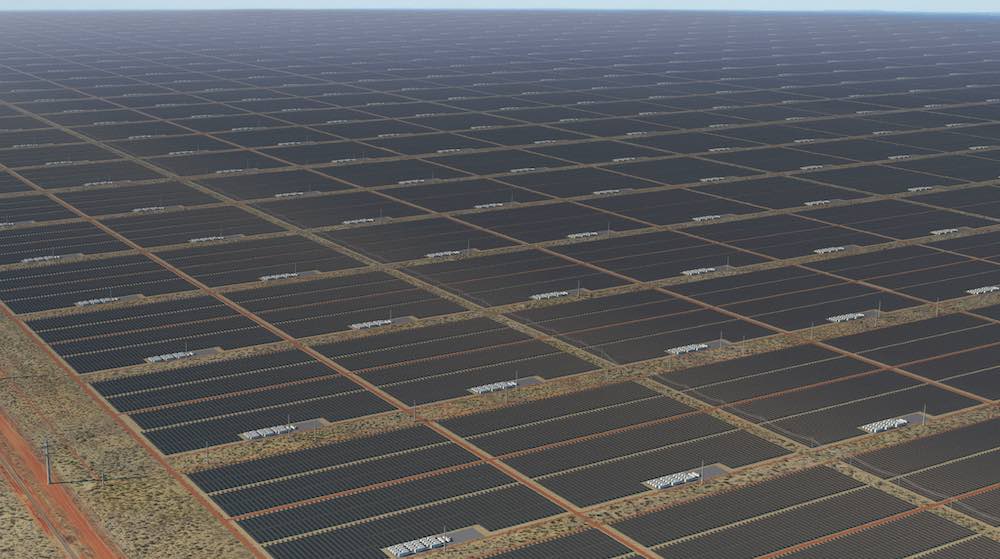
The ambitious project, which boasts a capacity of 20 gigawatts (GW) of solar energy and up to 35 gigawatt-hours (GWh) of battery storage in the Northern Territory, initially intended to first deliver power to clients in Darwin, followed by those in Singapore.
New Direction for SunCable
During a conference in Darwin, Ryan Willemsen-Bell, the newly appointed CEO of Australia-Asia Power Link (AAPL), revealed the updated strategy. He emphasised the untapped resources available in the region, stating, “The heart of this project is the incredible resource that sits untapped in the middle of this Territory, a resource that we should harness, not just for our benefit here, but for our benefit over the entire region,” as reported by the NT News.
This pivot towards data centres means that SunCable aims to provide power to nearby customers sooner than the previously anticipated early 2030s. Willemsen-Bell noted that there is a demand for electricity to be operational within the next 24 to 36 months.
Capitalising on Data Centre Demand
Data centres are known for their significant energy requirements, and the decreasing costs of solar energy and battery storage have made solar-battery hybrids a competitive and easily deployable option. A revised plan presented in August last year projected a final investment decision in 2027, with electricity deliveries to Darwin commencing in the early 2030s, followed by the construction of the AAPL transmission line to export power to Singapore in the late 2030s.
Despite this long-term vision, the company is keen to demonstrate its capabilities by supplying electricity to customers in the Barkly region sooner. A spokesperson for SunCable explained to Renew Economy that this approach would help build confidence in the project while continuing to advance plans for power supply to Darwin and Singapore.
“Our immediate focus is a pragmatic one: building generation and storage capacity that can begin supplying customers in the near term, while laying the foundations for a larger, long-term energy export system,” the spokesperson added. They also mentioned that discussions are ongoing with various potential customers, including those in the data centre sector, highlighting the digital industry’s eagerness to transition to large-scale renewable energy sources.
Challenges and Opportunities Ahead
The shift towards targeting data centres as an initial customer segment comes as SunCable seeks additional funding. In August, the company had to address concerns regarding its fundraising efforts, clarifying that data centres had always been considered a potential part of its customer base.
Willemsen-Bell acknowledged the challenges of marketing a power source located 800km from the nearest major centre to American clients, stating, “FIFO is not something the US understands and we would have to work well collectively to demonstrate we can execute that way.”
Interestingly, unlike other data centre services, those focused on AI training or inferencing do not require proximity to their customers but do demand a stable and substantial energy supply.