Shared Solar Reduces Diesel Use in Remote Aboriginal Communities
A groundbreaking initiative is transitioning Aboriginal communities in the remote Kimberley region of Western Australia from diesel-powered electricity to a cleaner energy solution centred around shared rooftop solar systems, resulting in annual household energy savings of nearly £500.
The Kimberley Communities Solar Saver (KCSS) programme is a partnership between Horizon Power, a government-owned regional energy provider, and the state department of communities, with financial backing from both state (£12.6 million) and federal (£7.3 million) sources.
Programme Overview
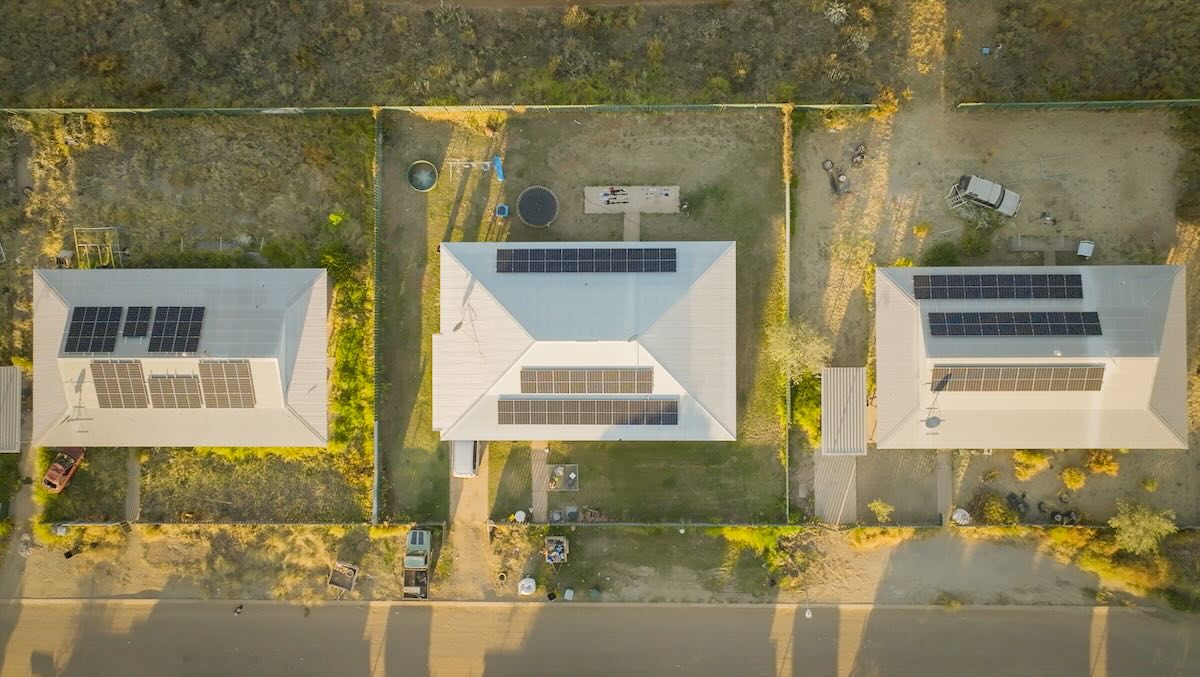
Launched in 2023, the KCSS programme aims to install up to 300 rooftop solar systems, generating a total capacity of approximately 2 megawatts (MW) across five communities. This initiative is expected to provide an average annual energy bill reduction of around £450 for about 430 households.
To date, Warmun, a township located in the northeast of WA, has seen the installation of 422 kilowatts (kW) of rooftop solar, benefiting 78 properties and generating nearly £30,000 in energy savings since August 2024. Meanwhile, in Bidyadanga, the largest remote Aboriginal community in the state, 356.4 kW of solar has been installed across 33 properties, benefiting 133 households and yielding energy savings of approximately £33,000.
Current Developments
Efforts are currently underway to install solar systems in the Dampier Peninsula community of Ardyaloon, where around 21 homes will receive rooftop solar, benefiting approximately 85 households.
Dylan Hearty, Horizon’s customer programmes manager, explains that the initiative was created to tackle the rising costs and risks associated with diesel reliance in these remote communities, alongside a strong community desire for a “cleaner country.”
“We engage with these communities, and there’s a significant interest in renewable energy, not just for environmental reasons but also to reduce the noise from generators and the movement of fuel,” Hearty notes. “Ultimately, this also helps lower the annual energy costs for these communities, which are heavily subsidised by the state.”
Shared Solar System Benefits
Hearty elaborates on the shared solar system model, stating that the solar energy produced is gross metered, meaning it does not affect individual consumption readings. Instead, the savings from reduced diesel usage are distributed back to the community as credits on their energy bills.
“Every two months, residents receive a credit based on their energy usage, which is a direct benefit of the solar systems,” he explains. “We also have a contract to monitor the performance of these systems and maintain them as necessary.”
Electricity Access and Payment Systems
In many remote Aboriginal communities, electricity access is typically managed through a prepayment meter system. While this system is not mandatory in WA, it has sparked debate due to its potential to create challenges for residents who must purchase top-up credits to maintain their power supply.
“This topic can be quite divisive, as some view it as punitive,” Hearty acknowledges. “However, many customers find it a useful way to manage their finances and avoid debt.” He adds that the KCSS programme aims to further explore the pre-paid versus post-paid debate, gathering insights from community feedback and industry experts.
Future Considerations
The team is also contemplating the integration of battery storage to further reduce diesel dependency, although Hearty notes that current costs and operational complexities pose challenges.
“We considered incorporating batteries into the project, whether as individual residential systems or community batteries, but maintenance concerns are significant,” he states. “While adding storage is undoubtedly beneficial, we need to ensure that someone is willing to cover the costs.”
Despite these challenges, Hearty expresses pride in the success of the shared rooftop solar initiative. “It’s been a collaborative effort to ensure that the community understands the benefits of solar energy and to build energy literacy,” he says. “Establishing trust and strong relationships with these communities is crucial.”
Hearty highlights the swift progress made, noting that within a year of initial discussions with Warmun, a 430 kW solar farm was operational, providing benefits to all involved. “This is likely the fastest way to deploy renewable energy assets in a remote community,” he concludes.