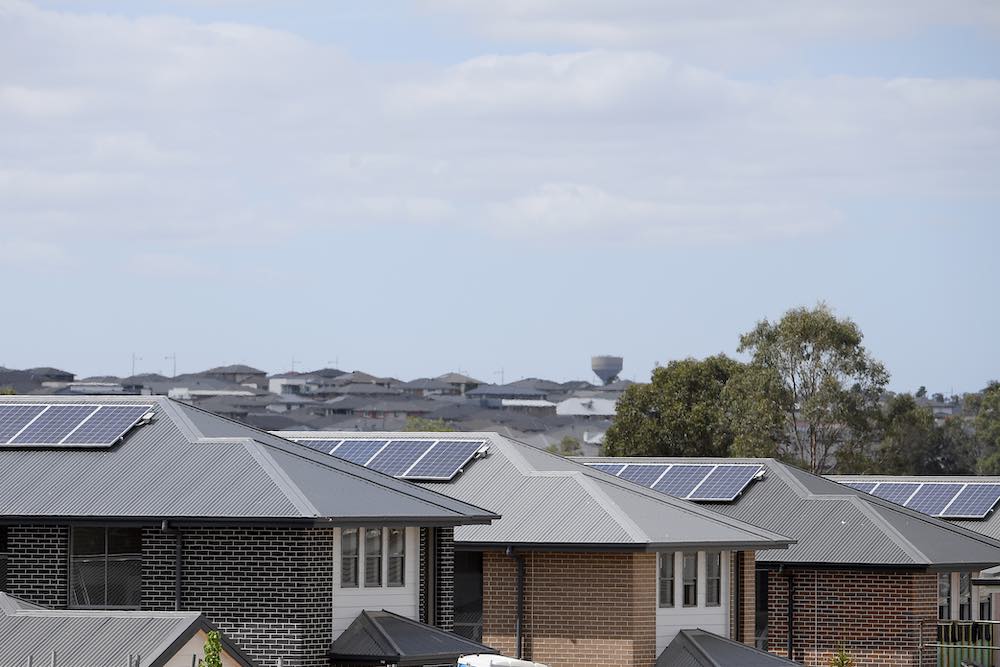
Rooftop Solar Hits Record Installations Driven by Home Battery Demand
Rooftop solar has achieved an impressive milestone in Australia, marking a record month for newly installed capacity. This comes as a remarkable turnaround in a market that previously seemed to be on a slow decline, particularly with the growing focus on affordable battery storage.
According to the latest figures from industry experts SunWiz, small-scale solar systems with a capacity of less than 100 kilowatts reached a new high this March, registering an astounding 341.6 megawatts (MW). Warwick Johnston, the managing director of SunWiz, highlighted that this unprecedented volume of monthly registrations surpasses the former record of 328 MW set back in December 2025, which is a rare occurrence for the first quarter of the year.
Interesting Developments in Solar Installations
While the total number of rooftop solar installations has not hit a record high this year—2020 still holds that title—the significant influx of solar systems being installed by homes and businesses across Australia presents a fascinating narrative. The surge in monthly PV capacity can be attributed to the boom in Cheaper Home Batteries, prompting homeowners to either upgrade their existing solar systems or install panels for the first time.
Upcoming data from SunWiz’s Annual Battery Market Report is expected to reveal that the trend of consumers opting for solar and battery installations simultaneously is almost evenly divided between upgrades and new systems, as noted by Johnston.
Boost in System Upgrades Driving New Installations
The rise in system upgrades is intricately linked to an unexpectedly strong demand for larger home battery systems, leading to adjustments in the Cheaper Home Batteries rebate programme, which will take effect in May. “People are beginning to understand that to fully utilise a sizeable battery, it’s essential to have a sufficiently large solar system in place,” Johnston remarked.
“Thus, while March 2026 didn’t set a record for the sheer number of solar installations, the average size of the systems being installed was quite significant, which resulted in a record monthly volume overall.” Johnston believes that one of the advantages of the Cheaper Home Battery initiative has been the revival of solar installation rates, reversing a previously observed downward trend.
The uptake of home batteries continues to soar, and the forthcoming monthly battery report will likely reflect this upward trajectory. Earlier this week, federal energy minister Chris Bowen announced that the programme has successfully surpassed the 300,000 mark, with more than 300,000 households and businesses taking advantage of the home battery rebate since its inception in July 2025.
“What benefits the environment also benefits our wallets,” Bowen commented on LinkedIn. “These batteries have provided everyday Australians with protection against international economic fluctuations.” Johnston asserts that the latest rooftop solar data indicates that this message is resonating with the public.
“In a time when Australia is increasingly mindful of its reliance on foreign energy sources, it’s encouraging to see homes becoming more self-sufficient in their energy consumption through the combination of large solar systems and batteries,” he stated in an interview with Renew Economy.