Renewable Energy Consortium Proposes Major Inland Zone for Coal-Free NSW
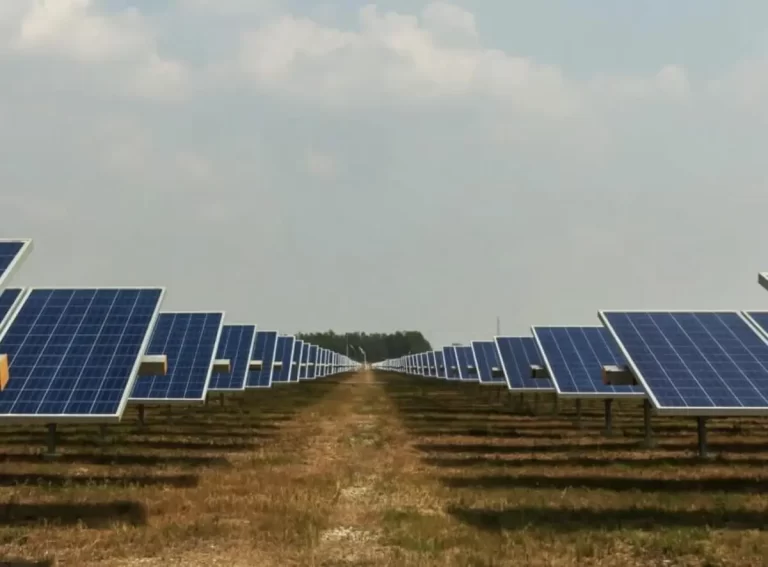
A proposal to create vast gigawatt-scale renewable energy zones in the remote and sparsely populated areas of inland New South Wales has made a comeback, this time with the support of several influential global and local renewable energy developers.
A coalition of six companies, including Tilt Renewables, Squadron Energy, Iberdrola, Acciona Energía, Ark Energy, and Voyager Renewables, has submitted a proposal for the “Inland Renewable Energy Region” to the Australian Energy Market Operator (AEMO) as part of its Draft 2026 Integrated System Plan.
A Call for Enhanced Transmission Capacity
The joint submission, details of which were shared with Renew Economy on Tuesday, advocates for upgraded transmission infrastructure in areas across Far North West and Western NSW. This would enable the development of a significant renewable energy region characterised by strong resource availability, minimal development constraints, and supportive local communities.
The consortium believes this outback region could potently generate over 10 gigawatts (GW) of renewable energy when fully realised, with a first phase projected to reach between 2 to 4 GW by 2035, and aiming for 6 GW by 2040.
National Significance of the Inland Renewable Energy Zone
The submission emphasises that the Inland Renewable Energy Region could serve as a critical backbone for Australia’s energy needs, providing a reliable and scalable source of renewable power as traditional coal resources decline.
It points out that existing renewable zones are limited by factors such as social acceptance, land usage restrictions, and hosting capacity, while offshore wind projects incur significant costs and lengthy timelines. This highlights the necessity of exploring new inland areas that possess strong development fundamentals and fewer hurdles.
Alignment with Previous Proposals
This proposal aligns with earlier recommendations from Transgrid, which, in its 2024 Transition Annual Planning Report, suggested leveraging excellent solar and wind resources on less populated and underused lands, as a more effective approach to replace coal and meet future energy demands than pursuing offshore wind development.
Transgrid had identified three potential “remote” renewable energy zones in NSW, located around Broken Hill, Noona, and the north-west, proposing to connect these regions with new high-voltage direct current (HVDC) transmission lines. The report highlighted that these areas boast some of the finest solar and wind resources within the National Electricity Market (NEM), presenting an exceptional opportunity to diversify electricity generation in NSW.
Collaborative Efforts for Feasibility Studies
The consortium has ventured to sign a memorandum of understanding to jointly explore the viability of a new transmission link to the Cobar region, situated approximately 300km north-west of Dubbo. They are urging AEMO to prioritise this new transmission line in its upcoming 2026 Integrated System Plan, which is expected to be released in June. According to the group, the Inland REZ could contribute an initial capacity of 2-4 GW by 2035 and reach 6 GW by 2040.
Infrastructure and Future Development Potential
With the right transmission support, the region holds the potential for long-term renewable capacity exceeding 10 GW, establishing a significant inland corridor that could facilitate future connections to South Australia, Queensland, and Victoria.
The companies have conducted technical evaluations that reveal possible connection points for various HVAC and HVDC configurations, including locations like Broken Hill, Mt Piper, Bannaby, and Wollar, indicating that these offer credible pathways for integration into the existing energy network.
As the corridor develops, future stages could align with additional interconnection opportunities as identified in AEMO’s planning processes.
Industry Involvement Beyond the Consortium
While Transgrid is not part of the consortium advocating for the Inland Renewable Energy Region and has clarified to Renew Economy that it has not played a formal role in formulating the new proposal, it continues to collaborate with Acciona’s infrastructure unit to implement the eastern segment of the $1.4 billion HumeLink transmission project in New South Wales.
Additionally, Iberdrola is also active in Australia’s transmission sector, having secured a contract in November to develop the Victorian portion of the Victoria to New South Wales Interconnector West.
Recommendations for Timely Implementation
The proposal urges AEMO to adopt the Inland Renewable Energy Region transmission project in its Optimal Development Path and to ensure that the regulatory and planning frameworks enable timely execution, providing clear guidance on sequencing, cost-benefit assessments, and integration with current and future ISP projects.
The recommendations aim to support AEMO in determining a practical, least-risk approach that bolsters the resilience of both NSW and the NEM while accommodating rising demand and accelerating the shift towards renewable energy.
With its strong resource base, advanced preparatory efforts, and commitment from industry stakeholders, the Inland Renewable Energy Region presents a timely and significant opportunity to fulfil Australia’s needs for reliability, cost-effectiveness, and decarbonisation.