Queensland Council Imposes $100,000 Annual Road Fee on Renewable Developers
A council in Queensland has introduced a new fee structure aimed at renewable energy developers, requiring payments of up to $100,000 per road for maintenance during project construction.
Developers operating within the Banana Shire will be obliged to contribute an annual road maintenance fee to the local council throughout their construction activities. This payment will serve as a financial guarantee, with a standard fee set at $100,000 per road unless both parties arrive at a mutually agreed estimate of required costs. Any leftover funds will be rolled over into the subsequent year’s contributions or refunded once the project is completed.
Details of the New Fee Structure
The council officially approved this initiative last week. According to council documentation, “The quantum of the guarantee will be based on an annual estimate of work required to maintain the standard of road agreed between Council and the proponent. If an amount cannot be agreed, the amount will default to $100,000 per road.” Banana Shire councillors Kerrith Bailey and Terri Boyce are the architects of this plan, having first proposed it in late 2025 before it was presented to the council in March.
Concerns from the Queensland Renewable Energy Council
In response, the Queensland Renewable Energy Council (QREC) has remarked that the updated guidelines for renewable energy projects already place the responsibility for road maintenance during construction and operation solely on developers. “Wind farm developments typically necessitate road enhancements. The Banana Shire region, in particular, has a heavy usage of roads from agriculture, resources, and other energy sectors,” commented QREC chief Katie-Anne Mulder.
She added, “The existing Code for wind farms mandates that any road impacts must be pre-emptively managed as part of the wind farm’s approval conditions. QREC intends to maintain a collaborative relationship with the Banana Shire Council.”
The Challenge of Road Damage
This new fee comes in the wake of various media reports from Queensland and New South Wales (NSW) highlighting the damage to local roads caused by traffic from energy projects. The Banana Shire has also experienced considerable road washouts and closures following heavy rains in March.
Earlier in February, the ABC reported that several councils in NSW along the newly established interstate EnergyConnect transmission line were frustrated by the deteriorating condition of roads due to negligence from Transgrid and its roadwork contractors. An article from Central Queensland Today last November detailed complaints regarding the roads leading to Squadron Energy’s Clarke Creek wind project, which ultimately laid the groundwork for the new contribution implemented by the Banana Shire council.
Renewable Energy Projects in the Region
Banana Shire has emerged as a significant hub for renewable energy initiatives, with the council identifying 25 ongoing projects that are collectively valued at approximately £40 billion as of April last year. During the last quarter of 2025, a total of 25 projects across Queensland reached financial closure or were in the construction phase, amounting to £9 billion, based on the quarterly report from the Clean Energy Council.
Yet, unlike NSW, which recently allocated an additional £180 million to enhance roads used for transporting large equipment for wind, solar, and battery projects, the responsibility for road maintenance has largely been left to local councils in Queensland.
The state government commenced funding for Renewable Energy Zones (REZs) in 2024, which included road improvements, but the current Crisafulli administration has not maintained specific financial support aimed at repairing roads used during the construction of renewable energy projects.
Long-standing Issues with Heavy Traffic Transport
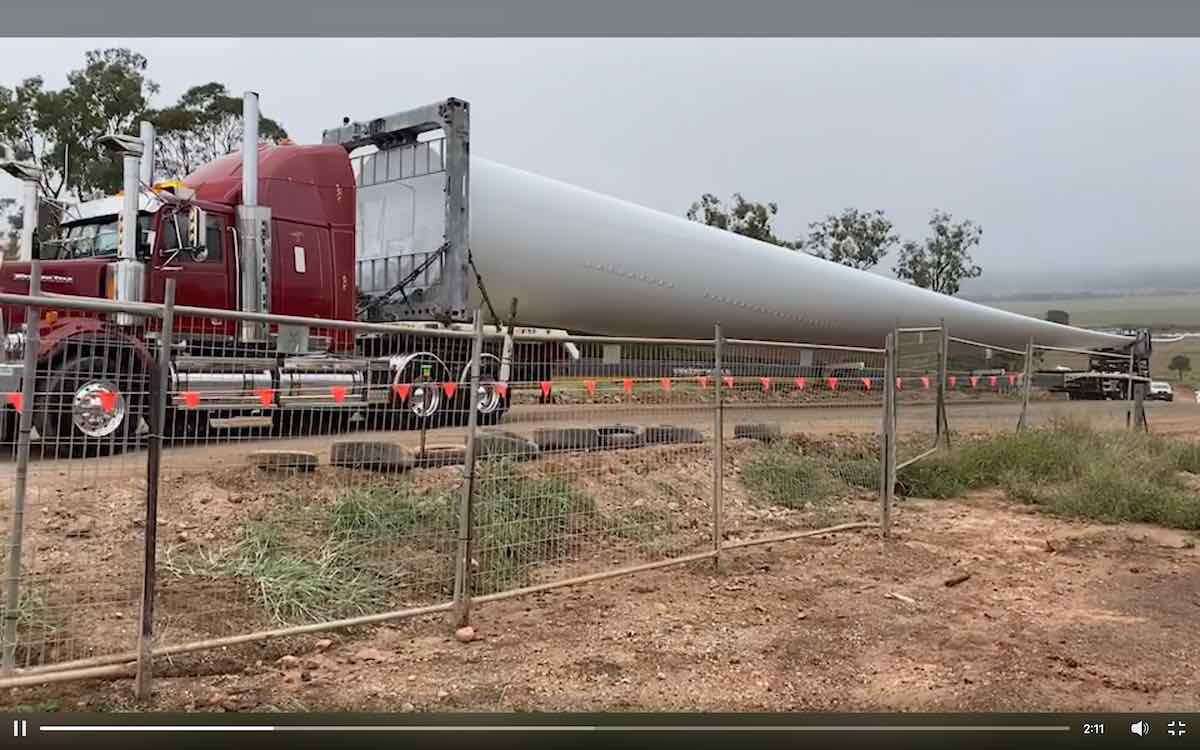
The issue of oversized and overmass (OSOM) transportation in Queensland has a longstanding history, with unresolved challenges persisting. A notable incident occurred last year when a turbine part became lodged under a bridge despite state regulations enforcing a police escort during transport.
A review conducted by the Queensland Transport and Logistics Council in 2023 recommended the establishment of corridors designed specifically for OSOM movements to circumvent obstacles like low bridges while also addressing road maintenance concerns.
The review revealed, “Both developers and local councils expressed worries over social licence.” It further noted that while project proponents might finance certain infrastructure improvements, the ongoing upkeep of expensive sealed roads ultimately falls upon councils, placing additional strain on their already tight budgets.
The newly introduced contribution by Banana Shire seems to be a direct effort to address the road damage incurred from the consistent use of local roads for the construction of wind, solar, and battery projects in the area.
Nevertheless, this financial measure may have been rendered unnecessary had successive state governments responded effectively to persistent calls for improvements to Queensland’s transport routes accommodating heavy traffic.