Portable Solar System Powers Dairy Farm, Saves $20K Annually
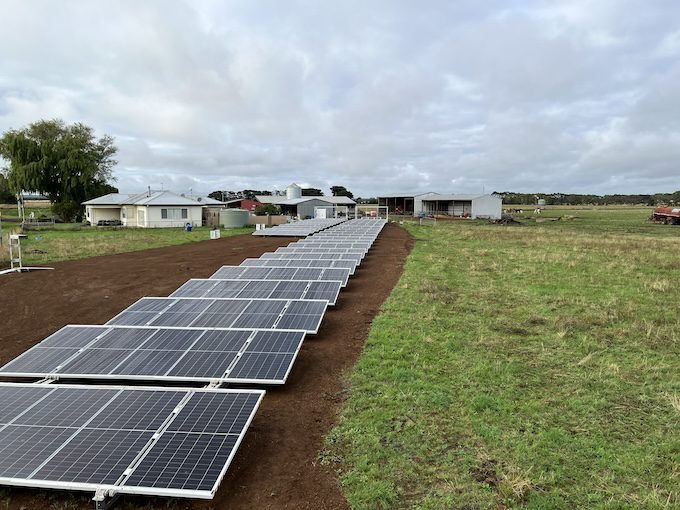
Peter Mulheron, a farmer from Colac, has recently installed a cutting-edge 105 kilowatt (kW) solar system on his property, offering him various options for its future—whether relocating it to a different paddock, selling it if he decides to retire, or simply enjoying the anticipated savings of $20,000 on his electricity bills.
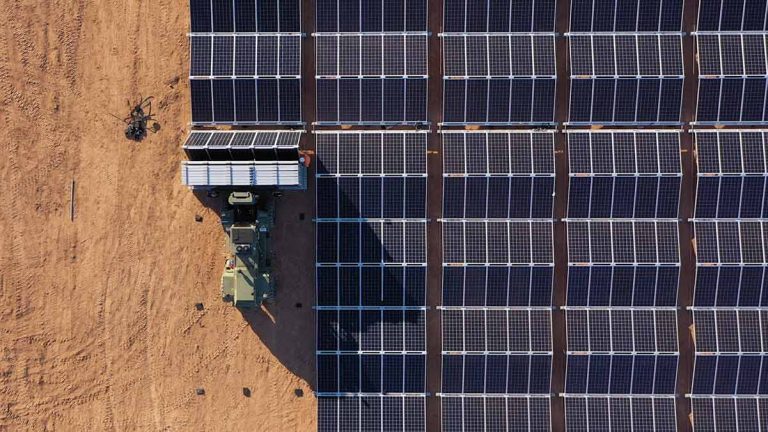
This new system signifies a pioneering commercial installation in Australia by Melbourne-based Phnxx, which operates through a unique setup that arrives in a container and unfolds like an accordion, effectively replacing diesel generators or, as in Mulheron’s case, traditional grid power.
Sustainable Energy Solutions
The solar system, combined with a 240 kilowatt hour (kWh) battery, is designed to provide energy for Mulheron’s 220-cow dairy operation during early mornings and late nights. Phnxx’s innovative portable micro-grid concept is at the core of this setup.
Quick and Easy Installation
The concept, which has been in development for the past three years, allows for swift setup, typically within hours, making it easy to relocate to a new site or transfer to a different owner, according to Phnxx’s COO Wei-Chi Lee. “Building a conventional system with roof-mounted panels and batteries would generally take around two weeks. However, we managed to set up Peter’s system in just a day,” he explained.
In contrast to traditional installations, where structural assessments and mounting frames are necessary, Mulheron’s system was simply assembled by unfurling it from its container and plugging it in, aided by a 50-metre-long buried extension cord.
Expanding Horizons
Mulheron’s farm marks Phnxx’s first installation in Australia, although Lee noted that the company has other international projects, including a system installed at a port in Singapore that powers a vertical farm. There, two systems energise 40-foot grow containers equipped with hydroponics, UV lighting, irrigation, and ventilation, all of which can be relocated as the port’s space requirements change.
In Australia, Phnxx aims to market its solar, battery, and grid-in-a-box solutions as a viable alternative to diesel generators for small mining operations, temporary construction sites, and farms needing to power bore pumps. “The cost of our container system is comparable to the installation of rooftop solutions, but this configuration offers greater flexibility,” said Lee, adding that it becomes particularly appealing when replacing diesel generators, as operational costs can be three to four times lower.
A Sellable Asset
While Mulheron’s system is expected to remain at its current location for the next 30 to 35 years, it also presents itself as a valuable asset he could sell in the future—a stark contrast to fixed rooftop solar systems that may no longer serve their purpose after a dairy farm closes down.
Ultimately, Mulheron was drawn to the system primarily for its reliability in preventing power outages. “Here in western Victoria, we usually experience outages lasting only three to five hours, which means we’ve had about 10 minor disruptions over the past year,” he explained. “With the capacity to store up to 10,000 litres of milk, a power failure could lead to losses of approximately $8,000, not to mention the additional costs linked to disposal and sterilisation.”
Phnxx has quickly gained momentum, having initiated its first pilot in July 2023 and successfully securing a $1.8 million seed funding round in March of last year, attracting notable investors such as Synertec, ENGIE Factory, and deep-tech venture capital firm Pacific Channel, among others.