Nullarbor Renewables Hub Gains Momentum with Offtake Interest
A monumental project is on the horizon in Western Australia’s Nullarbor region, proposing a 70 gigawatt wind, solar, and hydrogen hub that boasts sufficient “offtake interest” in green ammonia to support its initial launch by 2033. The lead developer, Intercontinental Energy, highlights strong interest from Japanese and Korean companies for green ammonia produced at the Western Green Energy Hub (WGEH), which is set to feature an initial facility capable of producing 1.4 million tonnes per year.
This announcement arrives just a month after the project developers partnered with several new Asian entities to conduct a feasibility study for the first phase of the initiative. This phase will incorporate 6 gigawatts (GW) of wind and solar resources, aiming to generate approximately 330,000 tonnes of green hydrogen annually. The new partners include Chinese renewable energy provider Sany, along with various unnamed companies from South Korea.
Positive Developments for WGEH
Intercontinental Energy CEO Alexander Tancock expressed optimism regarding the project’s progress, stating that “the last three months have been transformational.” He pointed to the robust interest from customers in Japan and Korea as validation of the alignment between Australia’s long-term ambitions and those of its strategic trading partners. This is seen as a significant milestone in establishing a large-scale green hydrogen industry in Western Australia.
Ambitious Scale of the Project
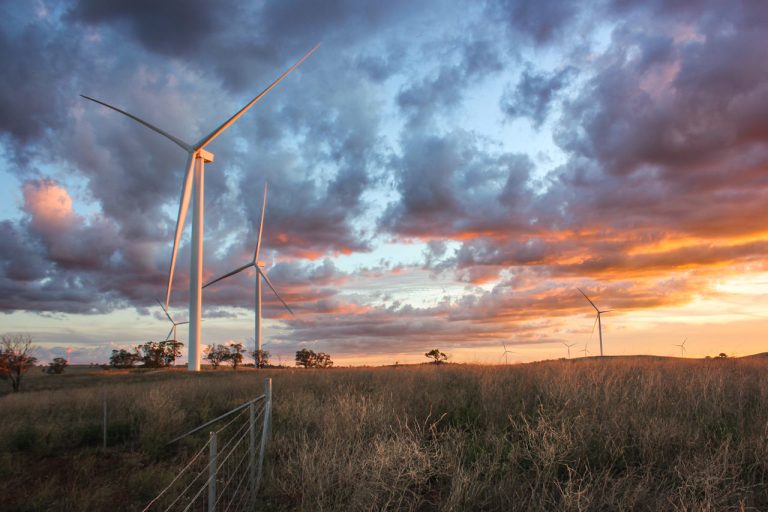
The WGEH is a collaboration involving InterContinental Energy and the international renewable energy firm CWP Global, alongside a commercial arm of the WA Mirning People Aboriginal Corporation (WAMPAC), named Mirning Green Energy Ltd (MGEL). The scope of the project is unprecedented, with plans for up to 35 “nodes” featuring between 2 to 3 GW of wind and solar energy each, paired with a 1.5 GW electrolyser and/or a data centre at each site.
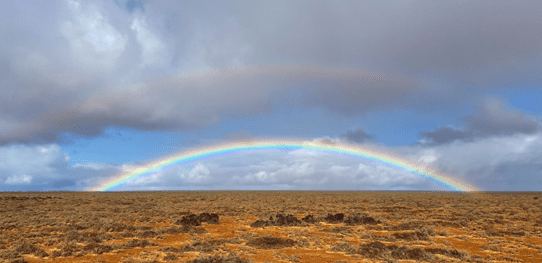
Over a span of 30 years, the development is expected to produce up to 3.5 million tonnes of green hydrogen yearly and potentially 28 million tonnes of green ammonia annually. The project will span approximately 2.3 million hectares of pastoral leases and crown land, extending hundreds of kilometres across the Nullarbor, from the north-west of Eucla, near the South Australian border, towards Cocklebiddy, and north of the Eyre Highway to the south of the Trans Australian Railway.
Regulatory Progress and Future Prospects
WGEH is in the process of navigating the EPBC assessment alongside the Western Australian Environmental Protection Authority (EPA) approvals. The project was granted federal major project status last year, facilitating a faster approval process, with a final investment decision anticipated in 2029. Provided that planning approvals progress smoothly, the projected start date in 2033, coupled with confirmed customer interest, sustains optimism for this expansive venture in an industry where others have not succeeded.
WGEH CEO Raymond Macdonald commented on the project’s potential, stating, “The Western Green Energy Hub, which will scale to be the world’s largest green e-fuels project, represents a pivotal opportunity for Western Australia to position itself at the forefront of the clean fuels sector.” He noted the significant alignment between local and international stakeholders, asserting that the growing customer interest underscores the project’s strategic importance.