New Zealand Implements Rooftop Solar Buy-Back Tariffs During Peak Demand
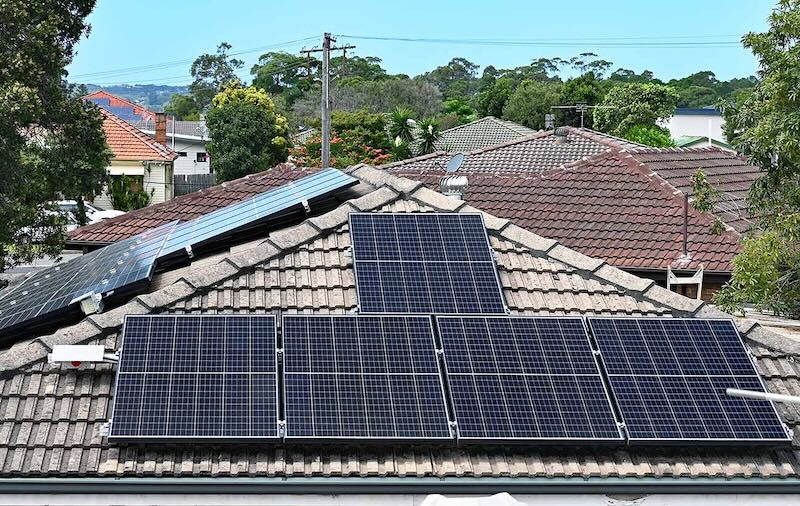
New Zealanders who supply surplus electricity from their rooftop solar systems to the grid during peak demand periods are now receiving financial incentives thanks to new tariffs introduced by distribution network companies. As of April 1, these new regulations require Distribution Network Service Providers (DNSPs) to reward small-scale energy exporters, alongside offering feed-in tariffs at various times throughout the day.
The rebate, managed through electricity retailers, will be reflected in either a ‘buy-back’ rate or as a credit on bills for households and businesses exporting up to 45 kilowatts (kW). Currently, reports from RNZ indicate that distributors are offering rates ranging from 5.24 NZ cents to 13 NZ cents (approximately 4.3 Australian cents to 13 cents) during morning peak hours from 7am to 11am, and evening peak times from 5pm to 8pm.
Valuing Peak Electricity Supply
The financial incentive acknowledges the critical role of electricity generated at peak times in alleviating pressure on the grid, which can ultimately save costs for line companies over time, as stated in reports from the Electricity Authority. DER consultant Gabrielle Kuiper has highlighted the clear regulatory objectives, showcasing a stark contrast to the mixed efforts seen in Australia regarding distributed energy resource (DER) integration.
“New Zealand is formalising export as a paid flexibility service across both distribution and system levels,” Kuiper remarked on LinkedIn. Conversely, the Australian Energy Market Commission (AEMC) is considering a model that leans more on fixed charges for network revenue, potentially undermining signals for DER investment.
Incentivising Fair Compensation
The new policies are a result of a consultation process initiated last year, aiming to enhance pricing rules that maximise the advantages of distributed generation for all New Zealanders. Essential to this initiative is the mandate for large retailers to adopt fair compensation rates for solar exports by July 1 or face increased regulation.
This endeavour for equitable solar compensation is part of a broader strategy requiring retailers to implement time-of-use pricing plans, a concept familiar in Australia but not yet widely adopted in New Zealand, thereby providing consumers with more options.
Slow Adoption of Rooftop Solar
Historically, New Zealand has lagged in adopting rooftop solar technology, primarily due to the absence of government-funded subsidies that have spurred rapid uptake in Australia. Consequently, the initial investment in solar panels remains steep for many households, with estimates suggesting a mini 3 kW system could cost around $NZ8,500 ($A7,000).
Advisory notes from the Ministry of Business, Innovation and Employment (MBIE) suggest that solar is presently the most economical energy source for households. However, without financial incentives to mitigate upfront costs, New Zealand’s regulator is tasked with illustrating the long-term benefits of solar investment for consumers.
Progressive Reforms in Electricity Authority
The NZ Electricity Authority is taking progressive steps in implementing reforms designed to promote the effective integration of DER, aiming to enhance both customer and grid value. This includes recent measures mandating large retailers to offer plans that provide more affordable rates for off-peak electricity consumption, with expectations that ‘time-of-use’ pricing will be available to most Kiwis by July 1, 2026.
This week, the Electricity Authority also announced a doubling of the export limit for rooftop solar from 5 kWh to 10 kWh, with flexibility to exceed this limit depending on local network conditions, set to take effect in May.
Tim Sparks, a manager for the Electricity Authority, explained that the previous limit was unnecessarily restrictive, resulting in higher electricity costs for Kiwis when cheaper rooftop solar was available. “We’re also enabling lines companies to implement a dynamic or flexible export limit for residential connections,” Sparks added, noting that this flexibility would adapt to changing network conditions.
Addressing Electricity Supply Challenges
New Zealand has faced significant challenges regarding its electricity supply. A critical period in winter 2024 demonstrated a combination of high demand, reduced wind generation, low hydro levels due to drought, and limited gas availability, all contributing to soaring wholesale prices and fears of an electricity shortfall.
The MBIE has projected demand growth of approximately 2 per cent annually until 2050, attributed to increasing electric vehicle usage and industry electrification as the country moves away from costly coal and gas. Currently, the connection pipeline includes 11.2 gigawatts (GW) of solar and 7.7 GW of battery storage, aiming to fill supply gaps, although large energy users still face restrictions in electrification efforts due to insufficient electricity availability.