Innovative Solar Project Uses Concrete-Free Mounting System
A substantial solar and battery initiative is currently seeking federal environmental clearance for its construction in Queensland’s South Burnett region. The project aims to incorporate a low-profile, environmentally friendly, and concrete-free panel mounting system, significantly reducing its physical and ecological impact.
The Tumuruu solar and battery energy storage system (BESS) has now entered the EPBC assessment queue, with plans to establish a 400 megawatt (MW) photovoltaic array alongside a battery system with a capacity of up to 2 gigawatt-hours (GWh) in the town of Taromeo.
Advancements in Solar Technology
Local developer, Australia Solar Enterprises (ASE), has announced the intention to utilise the easy-install PEG system developed by German company Jurchen Technology, or an alternative system with similar properties. This choice aims to minimise the project’s overall footprint while maximising production efficiency.
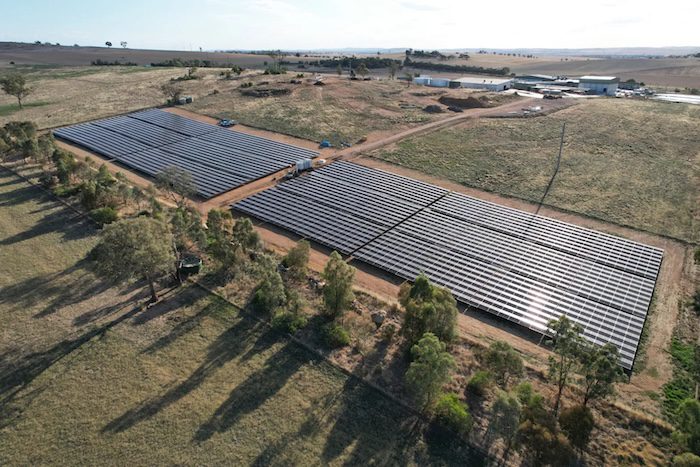
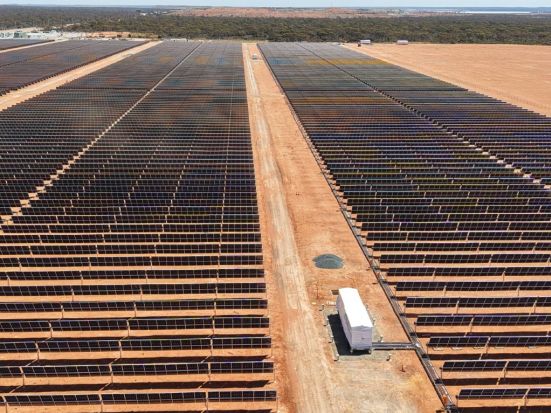
The PEG system proposed by Jurchen relies on a “self-stabilising” structure comprising steel rods and plates, positioning the solar panels in a flat, wave-like alignment that faces east-west. This system is designed to be about one metre above ground, which greatly lessens the need for concrete foundations—thus cutting down on the amount of steel required by approximately 75% when compared to traditional installations.
ASE’s CEO and founder, Chris Elder, highlighted in an email to Renew Economy that the design allows for high land utilisation, ultimately leading to a reduced project footprint. He noted that it also diminishes ground disturbance and minimises visual clutter, all while maintaining a low height profile that enables substantial energy generation per hectare.
Benefits of the PEG System
The lightweight and compact nature of the PEG system eliminates the necessity for B-double trucks and decreases transportation needs compared to traditional concrete-based technologies, as detailed in the project’s consultation report. Additionally, the PEG system promises to cut down supply, logistics, and installation times by up to 40%, making it a much more efficient option.
Another advantage of this system is its ability to be installed with basic hand tools, simplifying the process and allowing for the potential employment of a greater number of unskilled local workers.
Elder stated that the PEG system has been successfully installed in projects totalising over 500 MW globally, including more than 15 initiatives within Australia. This includes the 8.9MW (DC) Baroota project, which was set up in Port Germein in the Spencer Gulf region of South Australia in an impressively quick timeframe of just eight weeks.
Proceeding with Development Plans
Founded in 2021, ASE currently has Tumuruu as its only significant development project. The South Burnett Regional Council has approved the initiative, which has also filed its grid application with Powerlink and AEMO, aiming for a connection offer within the year.
In late 2023, state development approval was granted before the recent governmental changes and shifts in legislation regarding renewable energy projects, as explained by Elder.
ASE has commenced discussions with potential EPC contractors for equipment supply, civil works, and installation, along with securing support for the high voltage connection. Ongoing efforts are concentrated on obtaining the final permits and approvals necessary to start construction, according to information provided to Renew Economy.
Site Details and Local Considerations
The proposed Tumuruu site is situated on privately owned freehold land, leased to Australian Solar Enterprises under a commercial agreement for an initial duration of 30 years, with the option to extend for a further 20 years to correspond with the development approval period.
The location is currently cleared and primarily used for cattle grazing, intersected by two existing 275 kV transmission lines, which will facilitate the supply of energy to Brisbane and other regions in southeast Queensland.
Nearby, approximately 18 km to the west, lie the Meandu coal mine, along with the Tarong and Tarong North coal power stations. Just last month, federal energy minister Murray Watt approved an extension for Stanwell’s Meandu King 2 East open-cut coal mine, a decision met with disappointment from the Queensland Conservation Council.