Indigenous Group Criticizes NT Solar Project Consultation Process
French energy firm TotalEnergies has stirred controversy with a Northern Territory Indigenous group by initiating legal proceedings aimed at nullifying any native title claims over land designated for a significant solar and battery facility near Darwin.
The company’s subsidiary, TE H2, has requested the Federal Court to officially declare the absence of native title rights over an area roughly 48 kilometres south of Darwin, which is earmarked for a substantial solar project and battery storage.
Details of the Wak Wak Solar Project
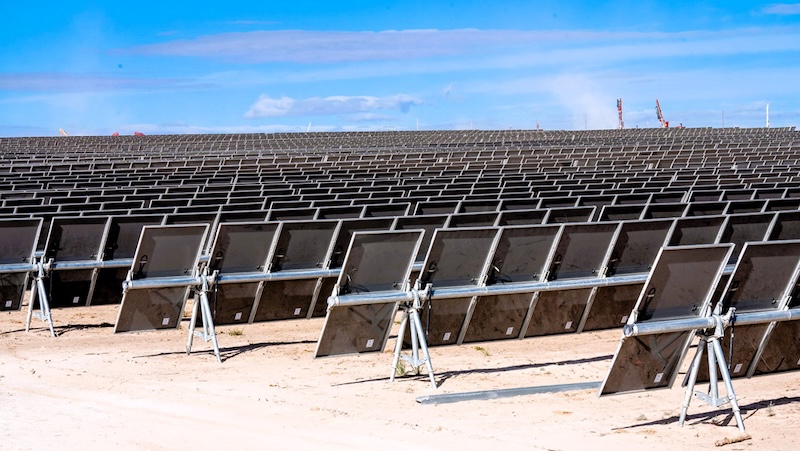
The Wak Wak solar initiative is set to feature a 2.7 gigawatt (GW) solar farm alongside a 6 gigawatt hour (GWh) battery installation situated on the Koolpinyah Station, a pastoral lease in close proximity to Humpty Doo, approximately 48km south of Darwin.
TE H2 aims to commence construction in 2028 and envisions the facility powering a hydrogen production plant in the Middle Arm industrial zone of Darwin in the long term.
Community Discontent Over Legal Action
The court application, which was submitted on November 28, has left the Wulna families residing in the vicinity dismayed, having only recently learned about it through the Northern Land Council (NLC).
These families now have a three-month period from the filing date to submit a comprehensive or interim native title claim.
The NLC, which assists Aboriginal communities across the Northern Territory in managing and acquiring their ancestral lands, has expressed disappointment at TE H2’s decision to file a non-claimant application with the Federal Court. A spokesperson for the NLC stated, “The non-claimant application seeks a Court determination that native title does not exist on the project area. This is likely to delay and undermine negotiations towards an agreement for the proposed Wak Wak Solar Farm.”
Reactions from Local Leaders
Such non-claimant applications are relatively rare in the Northern Territory, as most companies typically engage in the right protocol, according to Nigel Brown, a Wulna and Larrakia man as well as CEO of Aboriginal Investment NT.
“The simplest thing they could have done is pick up the phone,” Brown shared with Renew Economy. “Everyone was caught by surprise. Right now, they are executing a consultation process that ranks amongst the worst I’ve seen.”
TE H2, in comments to Renew Economy, asserted that it has been engaging with some members of the Wulna community regarding heritage issues for around 18 months. However, they only managed to convene a meeting with the appropriate group recently.
Path Forward and Ongoing Negotiations
While Brown suggests that the NLC proposed TE H2 withdraw the court action now that the right contacts have been identified for negotiations, the company remains steadfast in moving forward with its application.
“We have to ensure we have the correct entity for an Indigenous Land Use Agreement (ILUA),” stated Rontheo van Zyl, head of H2 development at TE H2. “This is merely a procedural measure to ascertain the correct entity we can negotiate an ILUA with. We have been interacting with the Northern Land Council for over two and a half years since mid-2023, but unfortunately, we have not come to an agreement during that period.”
While such applications are typically adopted to eliminate any native title claims on land, TE H2 contends that it is employing this method to “confirm the appropriate entities for forthcoming negotiations.” However, this stance has incensed Brown. “It’s 2025, totalEnergies has been operating in this region since 2008, yet it seems they remain oblivious to the established systems and protocols,” he remarked. “This approach displays a glaring lack of respect for the Wulna people. If this is how you wish to present renewable energy, your efforts are failing spectacularly.”
Despite claims by van Zyl of difficulty in identifying suitable negotiation partners, the court filing has tainted the project’s initial interactions with the local Wulna group considerably. Brown emphasised, “Given the manner in which they commenced this process, potentially stripping away any rights from the Wulna people concerning their lands, we are unfortunately beginning this dialogue from a severely negative position.”
“To rebuild confidence in future negotiations will require considerable effort,” Brown concluded.