Impact of Solar Trackers on PV Panel Lifespan
According to recent findings from the University of New South Wales (UNSW), ultraviolet (UV) rays could potentially shorten the operational lifespan of solar panels by seven to ten years in certain regions of northern Australia.
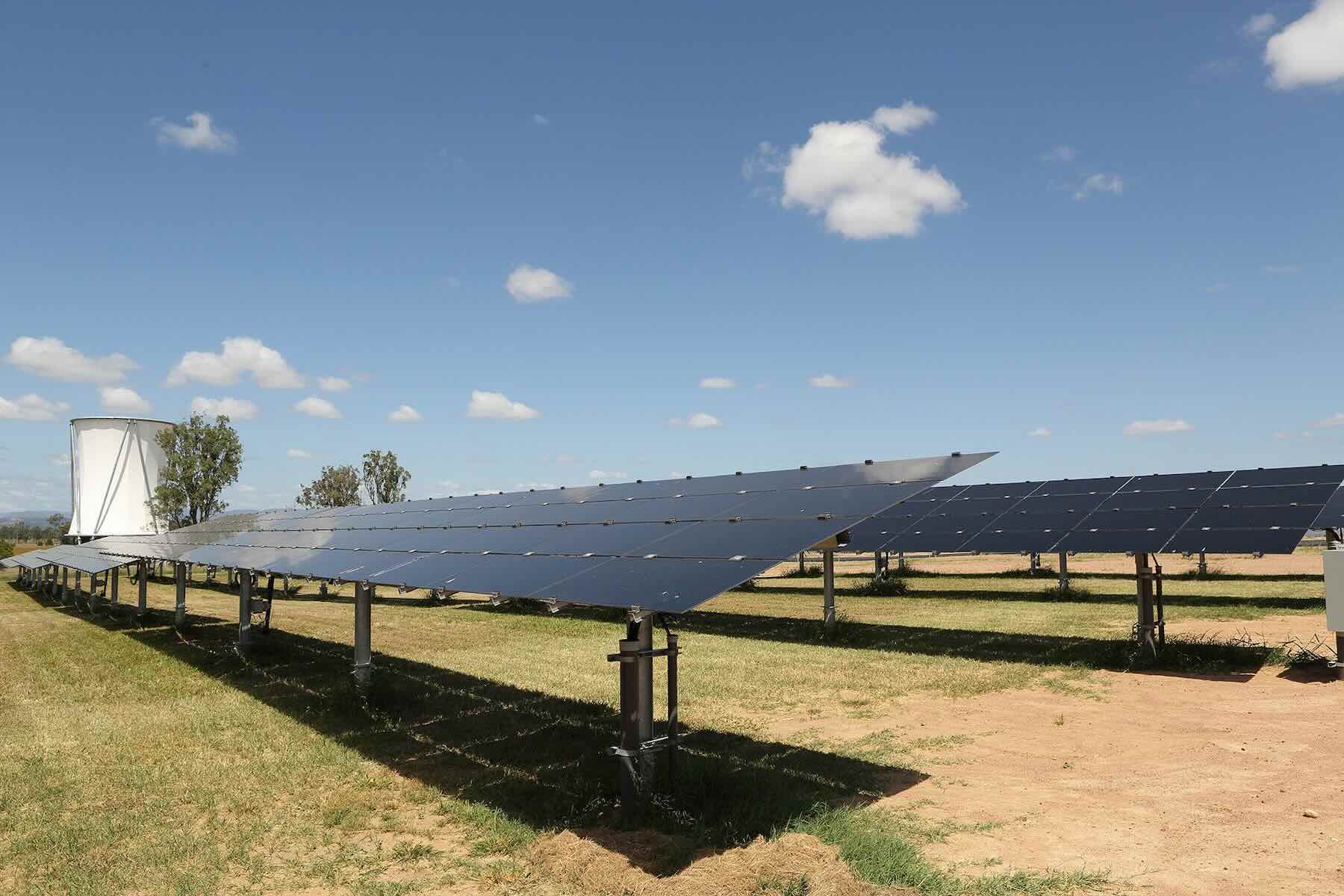
Shukla Poddar, a researcher at UNSW, has examined the degradation of solar modules due to UV exposure, discovering that solar panels tilted to capture sunlight are particularly susceptible, especially in tropical, arid, and semi-arid regions.
Understanding UV Degradation
The published research in the IEEE Journal of Photovoltaics not only uncovers how much UV radiation solar panels receive worldwide but also highlights the increased UV exposure for panels that are adjustable to track the sun compared to fixed installations. Furthermore, the study considers real-world variables like cloud cover and UV radiation scattering caused by surrounding surfaces.
Implications for Solar Panel Testing
UV rays are known to deteriorate materials more rapidly than the lower-energy infrared or visible light, which are typically harnessed by solar panels to generate electricity. Poddar suggests this new data should lead to a reevaluation of the types of solar modules implemented in areas identified as having high degradation rates.
“To achieve high-efficiency modules in the future, we must reconsider how these modules are tested, or develop more robust, climate-resistant versions,” Poddar emphasised to Renew Economy. “It may be time to adjust our manufacturing and reliability approaches to ensure we maximise the lifespan of these modules and prevent unnecessary replacement due to premature failures.”
Current Testing Protocols
Presently, solar panels are evaluated according to the IEC 61215 standard, which subjects them to a UV exposure of 15 kilowatt hours per square metre (kWh/m2) within the 280-400 nanometre (nm) wavelength range, at a temperature of 60 ± 5°C. This exposure roughly equates to just 46 days of real-world UV exposure in Arizona.
Proposed updates to this protocol suggest a UV stress test of 225 kWh/m2, yet this still only resembles around two years of UV conditions in the Arizona climate. “As it stands, our current post-manufacturing testing system accounts for approximately 55 to 60 days of exposure typical in a desert setting,” Poddar explained.
Emerging Technologies and Challenges
Advancements like Topcon, heterojunction technology (HJT), and passivated emitter rear contact (PERC) have been designed to capture a broader spectrum of wavelengths, but this has also made them more vulnerable to UV damage. Given that there is less than ten years of field data to reference, developing models that accurately predict the effects of UV radiation is crucial.
In northern Australia, the research indicates that panels can experience degradation rates of 0.15 to 0.2 per cent per year, equating to a potential loss of 3 to 4 per cent over 20 years. This degradation is attributed to high temperatures, humidity, and sunlight exposure in these regions. Notably, arid and semi-arid areas, though less humid, receive high levels of insolation and experience elevated temperatures, which further contribute to UV-induced photodegradation.
Examining Panel Orientation
Solar panels that follow the sun’s trajectory are more susceptible to UV degradation, not merely due to increased UV exposure, but also because clouds and other aerosols can absorb or scatter UV rays, while reflective surfaces can redirect additional UV to tilted panels. This suggests that relying solely on laboratory results from horizontal panel surfaces does not provide an accurate assessment of expected lifespans, as shown in the findings.
The Future of Solar Panels
UNSW researchers hope that the model developed from this study will provide the solar industry with improved insights into predicting the longevity and durability of solar technology. However, a recent study published by UNSW in January adds complexity to this picture, revealing that solar panels possess the ability to self-repair minor UV damage.
While UV exposure does cause secondary damage and breaks down essential silicon-hydrogen bonds required for electricity generation, field tests employing ultraviolet Raman spectroscopy have shown that these bonds can recover within 10 to 20 minutes of regular sunlight.
Ziheng Liu, the lead author of the earlier study, suggests this insight indicates that current post-manufacturing testing protocols may overestimate the detrimental effects of UV radiation. “It is crucial to differentiate between true long-term degradation and reversible changes,” Liu noted, highlighting the importance of accurately predicting the lifespan of solar panels.