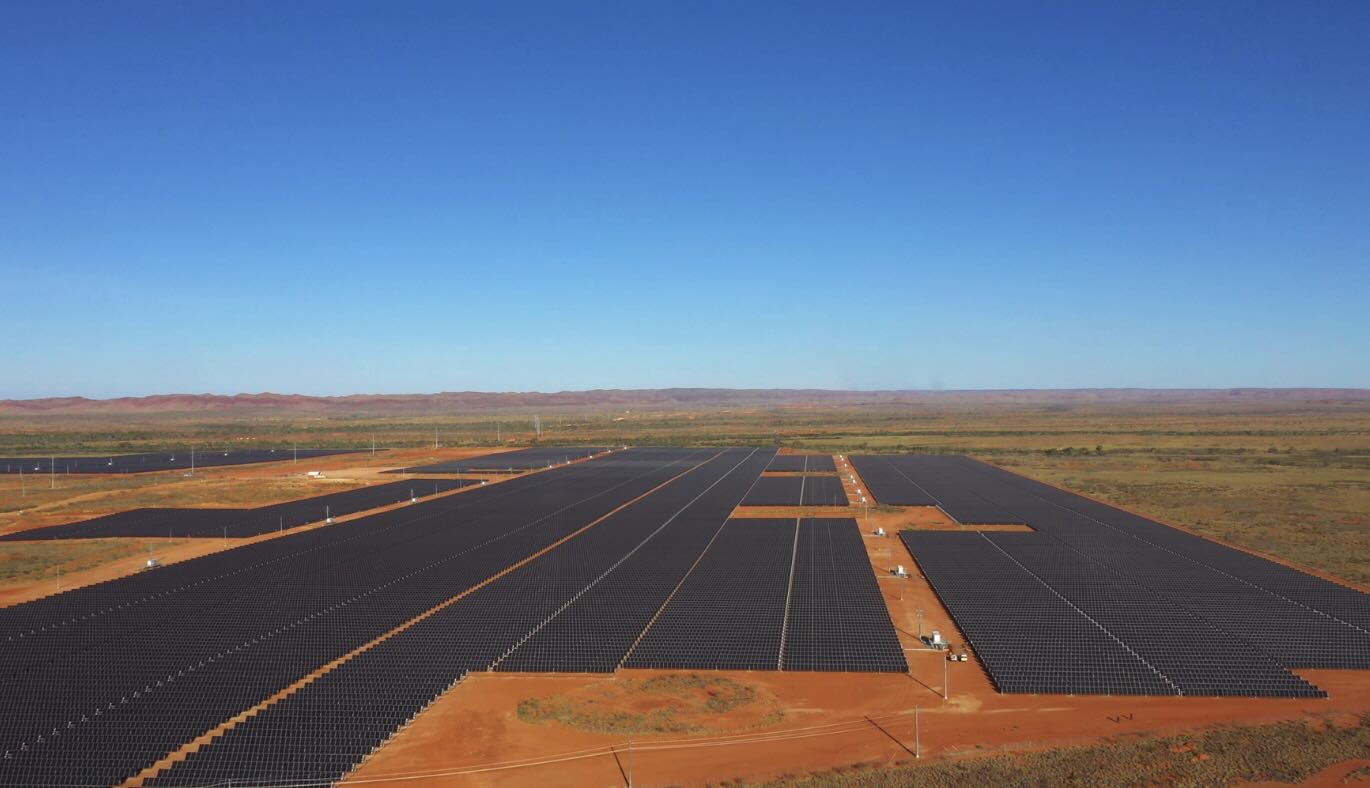
Fortescue Advances Pilbara’s Largest Solar Farm for Decarbonisation
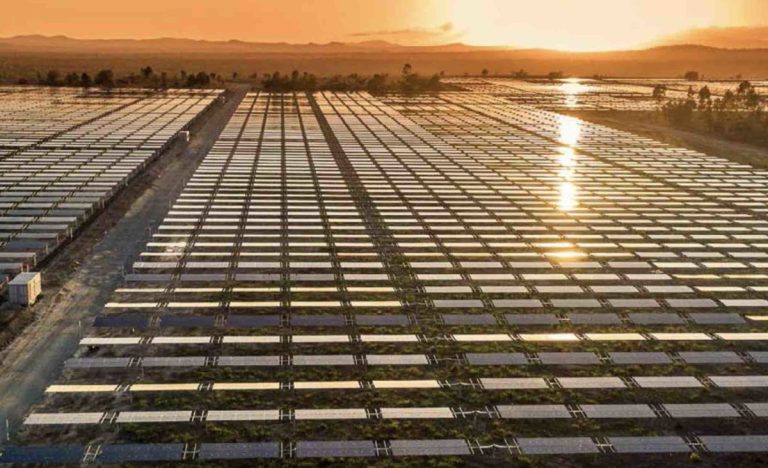
Fortescue Metals is forging ahead with its ambitious renewable energy initiatives in Pilbara, having commenced construction on what is set to be Western Australia’s largest solar farm, at least for now. This development is a key component of the iron ore giant’s extensive decarbonisation strategy.
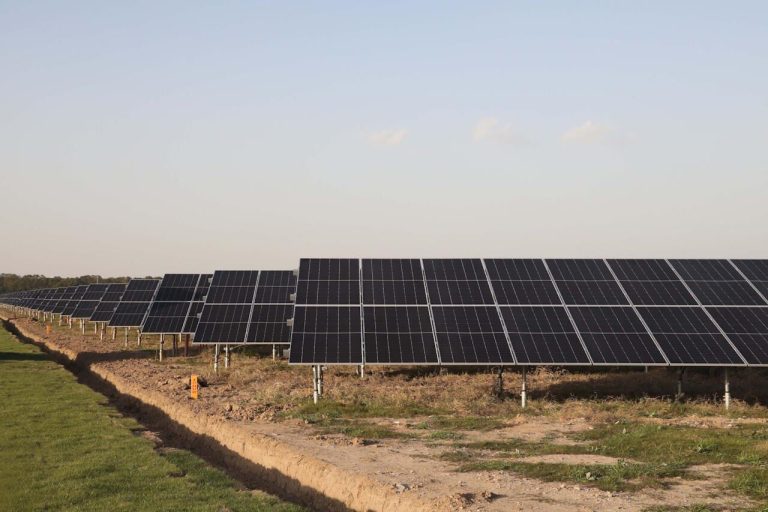
On Monday, the company announced the beginning of work on the 440 megawatt (MW) Solomon Airport solar farm, which will ultimately supply approximately one-third of the renewable energy capacity required to achieve the company’s stringent “real zero” target, a vision outlined by its founder and executive chair, Andrew Forrest.
Expanding Renewable Energy Capacity
The Solomon Airport project joins Fortescue’s existing 190 MW Cloudbreak solar farm, which is currently under construction—about two-thirds complete—in the picturesque Chichester Range of Pilbara, as well as the 133 MW Nullagine wind farm, which is also in the building phase.
Ground is expected to break later this year for a proposed 644 MW solar farm at Turner River, following its receipt of federal environmental approval in January and a recent application for state approval. Additionally, the North Star solar farm, completed in 2024 on a prior work site, represents Fortescue’s initial venture into large-scale solar energy, contributing 100 MW of capacity.
When all projects are operational, Fortescue anticipates that the Solomon, Cloudbreak, and Turner River initiatives, combined with the existing North Star solar farm, will generate around 1.3 gigawatts (GW) of solar power.
Harnessing Natural Resources
Fortescue’s chief, Dino Otranto, remarked, “Utilising the Pilbara’s abundant sun and wind, we are generating green energy for our operations.” The company is constructing solar and wind infrastructures, which will be integrated through a high-voltage transmission network, complemented by battery storage to ensure reliable power availability around the clock.
Through the Pilbara Energy Connect initiative, Fortescue has installed over 480 km of high-voltage transmission lines across the region, contributing to a renewable energy network projected to extend beyond 620 km, linking the company’s energy resources to its operations and rail infrastructure.
This collection of projects marks one of the most substantial renewable energy deployments by a heavy industry player in Australia. Coupled with the ongoing electrification of Fortescue’s heavy industrial machinery and transport systems, it demonstrates a significant shift and highlights the potential that can be realised with strong commitment.
Improving Efficiency Through Innovation
“Crucially, each sequential solar initiative is being executed more efficiently than its predecessor,” Otranto stated on Monday. “As technology advances and we scale up, our capital intensity continues to decrease, making it more economically viable to replace diesel and gas with renewable energy sources.”
Recent reports from Renew Economy noted that Fortescue’s costs for solar construction are notably low, standing at around $40 per megawatt—considerably cheaper than diesel, which ranges from $120 to $300 per megawatt. The company aims to further reduce expenses through an Arena-supported trial of robotic technologies across its solar projects.
Otranto highlighted the potential for automation in the installation processes, noting, “The next logical step in our evolution is to fully automate the installation process. Technologies already exist for automating pile drivers, attaching trackers, and installing the panels, which is quite straightforward.”
“The technological capabilities we have demonstrated with the automation of large trucks travelling over 2000 kilometres from the Pilbara make automating simpler installations a clear and sensible next step.”