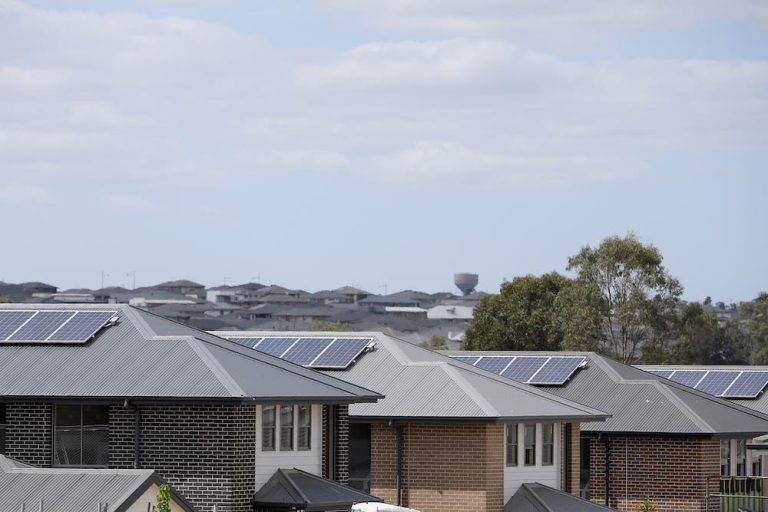
First Solar-Battery Hybrid Powers Australia’s Evening Peak Demand
The inaugural large-scale solar-battery hybrid installation has commenced feeding electricity into Australia’s primary grid, even during peak evening hours after sunset. This marks a pivotal transformation in the nation’s energy landscape.
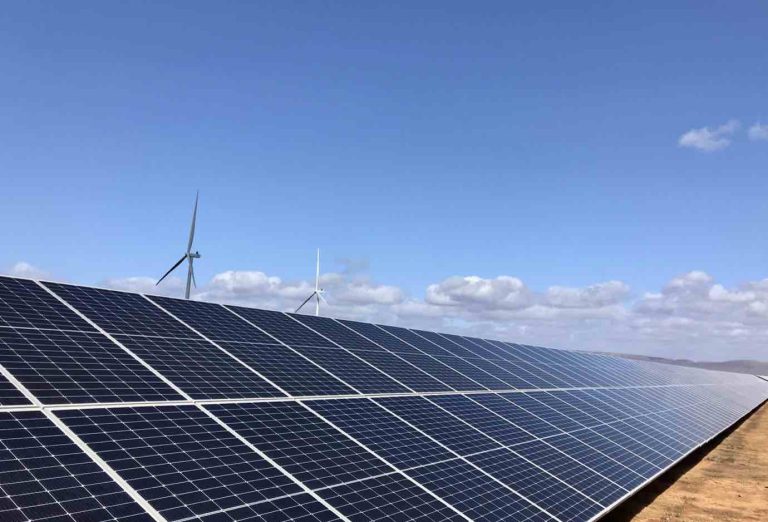
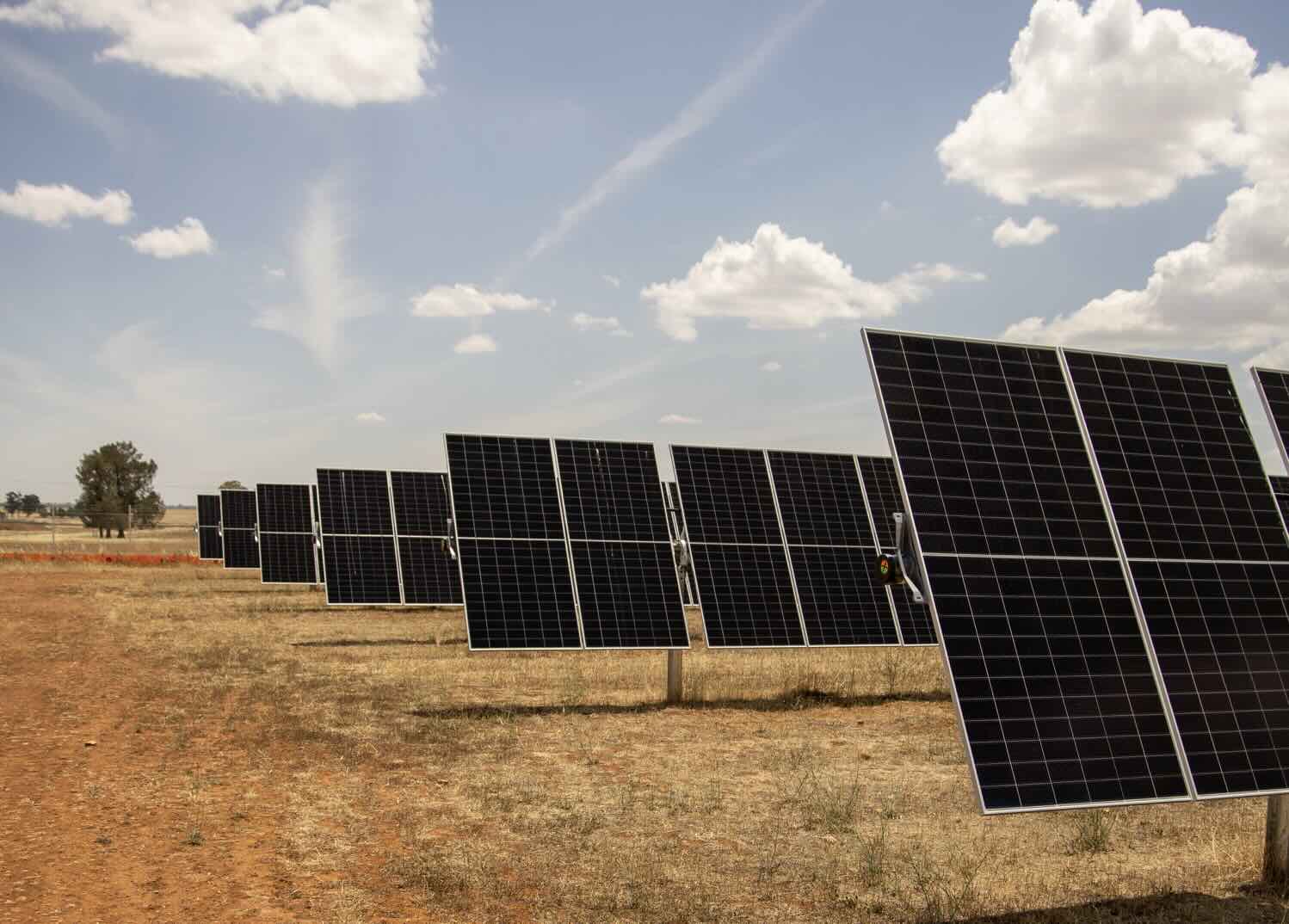
Named the Quorn Park facility and located near Parkes in western New South Wales, this $192 million project merges an 80 megawatt (MW) solar farm with a 20 MW, 40 megawatt hour (MWh) battery, all connected through a single point.
Innovative Energy Storage Solutions
This setup enables the solar energy generated to be stored instead of being curtailed or released into an oversaturated market. Consequently, it can be supplied to the grid during the more profitable evening and peak demand periods.
Currently, Quorn Park is delivering modest amounts of power to the grid as it undergoes its commissioning process, which is anticipated to extend over several months. Nevertheless, this initiative signifies the dawn of a significant shift likely to alter the dynamics of energy production and consumption in Australia.
Future Prospects and Ongoing Projects
Approximately two dozen solar-battery hybrid initiatives—many boasting over 50 times the storage capacity of Quorn Park—have secured underwriting agreements or contracts and are in various stages of construction. Numerous additional larger projects are in the pipeline, aiming to follow suit.
Driving this transformation are the plummeting costs associated with battery storage, an excess of affordable solar power during daylight hours, and challenges in advancing wind energy projects due to high expenses and stringent regulatory requirements.
Potentia Energy, which owns the Quorn Park facility, is set to commence construction on the Tallawang solar-battery hybrid project in central-western New South Wales. This project will integrate 500 MW of solar energy with a similarly sized 500 MW, 1,000 MWh battery, along with several other planned ventures.
Advancements in Energy Infrastructure
Traditionally, solar farms and battery initiatives have been established in close proximity but with distinct connection points, leading to independent operations. As a result, they had to adhere to market rates for charging (in the case of batteries) and exporting energy (for both solar and battery). The ability to operate beneath the same connection point is a result of substantial modifications to Australia’s stringent grid connection regulations, presenting as intricate challenges as the introduction of large batteries almost a decade ago and the emergence of grid-forming inverters in recent times.
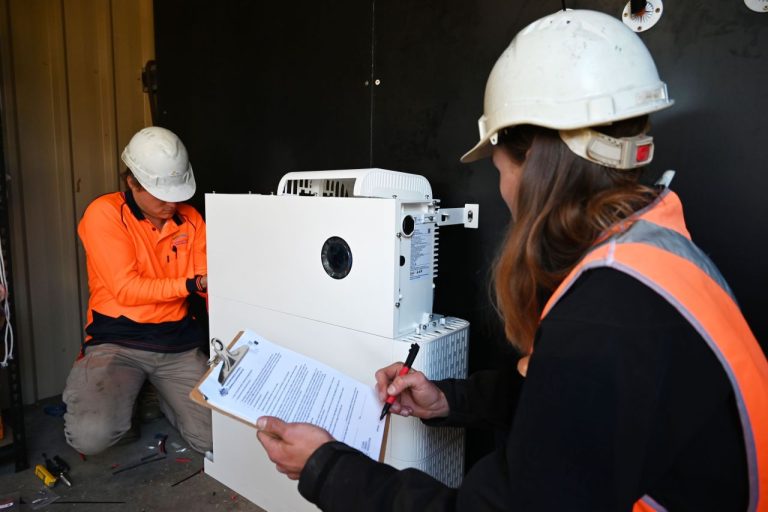
As anticipated with such an innovative project, Quorn Park is still navigating its operational challenges. A “non-compliance” notice was recently issued by the Australian Energy Market Operator, a regular occurrence that frequently affects existing coal-powered generators but is an issue that will need to be rectified as operations advance.
Shifts in Energy Demand
As of Thursday evening, Quorn Park began injecting small amounts of electricity into the grid until 8 PM (Australian Eastern Standard Time) and is expected to eventually extend its supply even later into the evening when fully operational, provided market conditions are favourable.
While the Cunderdin facility in Western Australia is recognised as the first genuine solar-battery hybrid operation—excluding remote off-grid mining—the facility is not part of the main grid. Nonetheless, it illustrates how its 100 MW solar farm effectively stores energy instead of curtailing it, sending it to the grid post-dinner when demand typically peaks. This facility often continues to supply power throughout the night, albeit at reduced rates.
This evolving pattern is set to impact traditional energy providers that rely on peak evening demand for profit, particularly coal and gas operators, as highlighted by ITK principal and co-host of the Energy Insiders podcast, David Leitch, this week.
Quorn Park contributes 20 MW and 40 MWh of storage to the growing capacity, alongside another 4,500 MW of solar power with 15,000 MWh of battery storage that has recently received underwriting agreements through the latest federal government’s Capacity Investment Scheme generation tenders.
Policy Support and Future Developments
The NSW government is actively reviewing the design of its energy schemes to ensure robust support for solar-battery hybrids, not discounting wind energy. However, policymakers and regulators increasingly acknowledge the advantages of solar-battery solutions in terms of economic viability and simpler deployment processes.
The cumulative effect of these solar-hybrid projects is poised to be substantial, influencing not only the business models of existing thermal generation but also the capacity for grid operators to phase out coal and gas plants.
For detailed insights, view Renew Economy’s Big Battery Storage Map of Australia.