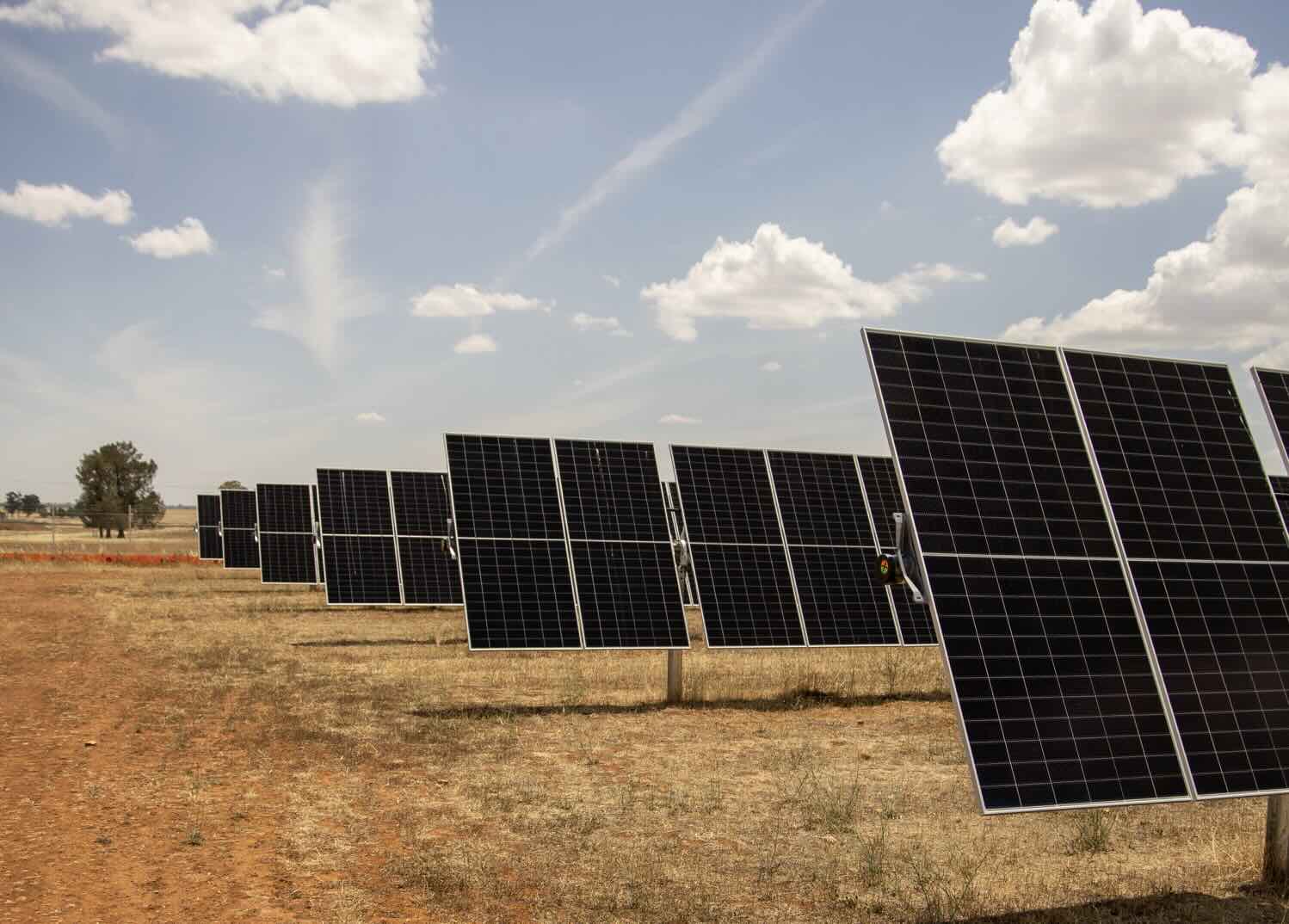
First Solar-Battery Hybrid Powers Australia’s Evening Peak Demand
The inaugural large-scale solar-battery hybrid facility has commenced its operations, contributing electricity to Australia’s primary power grid, including during peak evening hours after sunset. This marks a significant transformation in the structure and dynamics of the nation’s energy system.
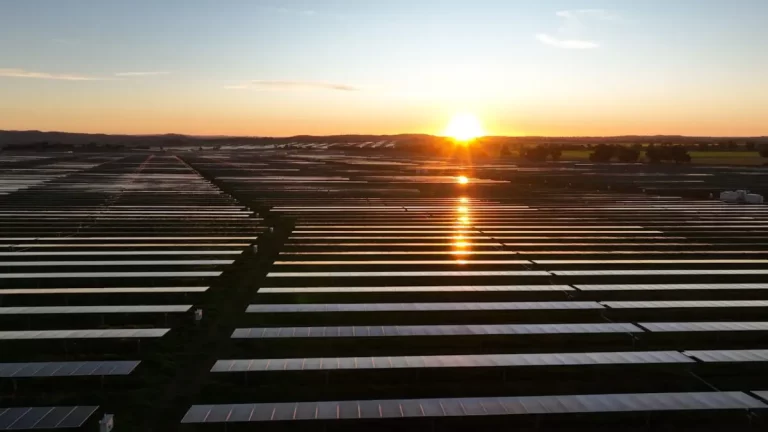
Located near Parkes in western New South Wales, the $192 million Quorn Park facility merges an 80 megawatt (MW) solar farm with a 20 MW, 40 megawatt hour (MWh) battery, functioning from a shared connection point.
Storing Solar Energy for Peak Demand
This innovative setup enables the storage of solar energy instead of wasting it during times of oversupply, allowing the electricity to be released into the grid during more profitable evening hours and other demand spikes.
Currently, Quorn Park is delivering only a modest amount of power to the grid as it undergoes its commissioning phase, which is anticipated to take several months. However, this development signals the dawn of a significant evolution in energy production and consumption within the Australian grid.
Expansion of Solar-Battery Hybrid Projects
Around twenty solar-battery hybrid ventures—several boasting over fifty times the storage capacity of Quorn Park—have secured underwriting agreements or contracts, and are either in construction or set to begin shortly. Numerous additional projects, some projected to be even larger, are hopeful of entering development soon.
This change is propelled by the rapidly decreasing costs associated with battery storage, the abundance of low-cost solar energy available during the day, and the challenges faced by wind initiatives due to their elevated costs and the complexity associated with obtaining planning permissions and social licence.
Owned by Potentia Energy, Quorn Park is poised to begin work on the Tallawang solar-battery hybrid in central west New South Wales, which will integrate 500 MW of solar energy with a 500 MW, 1,000 MWh battery, and there are additional projects planned.
Innovative Operational Connections
While solar farms and battery installations have often been developed side by side with individual connection points, they usually operate separately. This independent operation necessitates acceptance of market rates for charging the battery and for both the solar farm and the battery’s output. The ability to combine these functionalities under a single meter has been made possible through significant modifications to Australia’s stringent grid connection regulations, which have introduced both complexities and opportunities akin to the introduction of large batteries nearly a decade ago and the advent of grid-forming inverters recently.
Quorn Park is still refining its operations as expected for a project of this nature. Recently, a compliance notice was issued by the Australian Energy Market Operator, which, while not unusual given that existing coal generators also frequently encounter such notices, is a detail that still needs addressing.
Powering Through the Night
As of Thursday evening, Quorn Park began injecting small quantities of power into the grid up until 8pm (AEST), with expectations to extend its operational hours into the night once fully functional—subject to demand and market signals.
The first operational solar-battery hybrid in Australia, not including remote off-grid mines, was actually the Cunderdin facility in Western Australia. However, since WA is not linked to the main grid, it serves a different market. Yet, it demonstrates how effectively it can store energy from its 100 MW solar farm for later distribution, increasing supply during peak demand hours, particularly after dinner, often continuing to provide electricity through the night at reduced levels.
Implications for Traditional Generation
This shift is poised to significantly impact traditional energy producers, particularly coal and gas, who historically have capitalised on evening demand peaks, as noted by ITK principal David Leitch, co-host of Renew Economy’s Energy Insiders podcast.
With Quorn Park boasting 20 MW and 40 MWh of storage, an additional 4,500 MW of solar capacity backed by 15,000 MWh of battery storage has received underwriting agreements through the latest federal Capacity Investment Scheme generation tenders.
Further projects are in development, with the NSW government initiating a review of its scheme design to ensure robust support for solar-battery hybrids. While wind energy will not be excluded from future plans, it is clear that policy makers recognise the financial advantages and simplicity associated with solar-battery integration.
The overall impact of these solar-hybrid initiatives could be profound, not just for the financial models of existing thermal generators but also for the grid operators’ capacity to deactivate coal and gas facilities.
For further insights, refer to Renew Economy’s Big Battery Storage Map of Australia.