CSIRO Report: Renewables Cheaper as Battery Costs Drop and Coal Prices Rise
The latest GenCost report from CSIRO has unveiled significant reductions in the costs associated with large battery storage and a pleasing decrease in onshore wind costs. For the seventh consecutive year, the report confirms that a combination of firmed renewables remains the most economical option for Australia’s electricity sector.
CSIRO, Australia’s leading scientific agency, in conjunction with the Australian Energy Market Operator (AEMO), has produced the annual GenCost report since 2018, following its commission by the former Coalition government.
Significant Cost Reductions
The draft GenCost 2025-26 Report, made available for public review, indicates that large batteries are leading the way in capital cost reductions, boasting a projected 15 per cent drop year-on-year, complementing an earlier 20 per cent reduction noted for the 2024-25 period.
Conversely, costs for large-scale solar photovoltaic (PV) have seen an upward revision of 8 per cent for 2025-26, contrasting with an 8 per cent decline experienced in the previous year. CSIRO attributes this adjustment to cost volatility rather than a definitive trend reversal.
Positive Developments in Onshore Wind
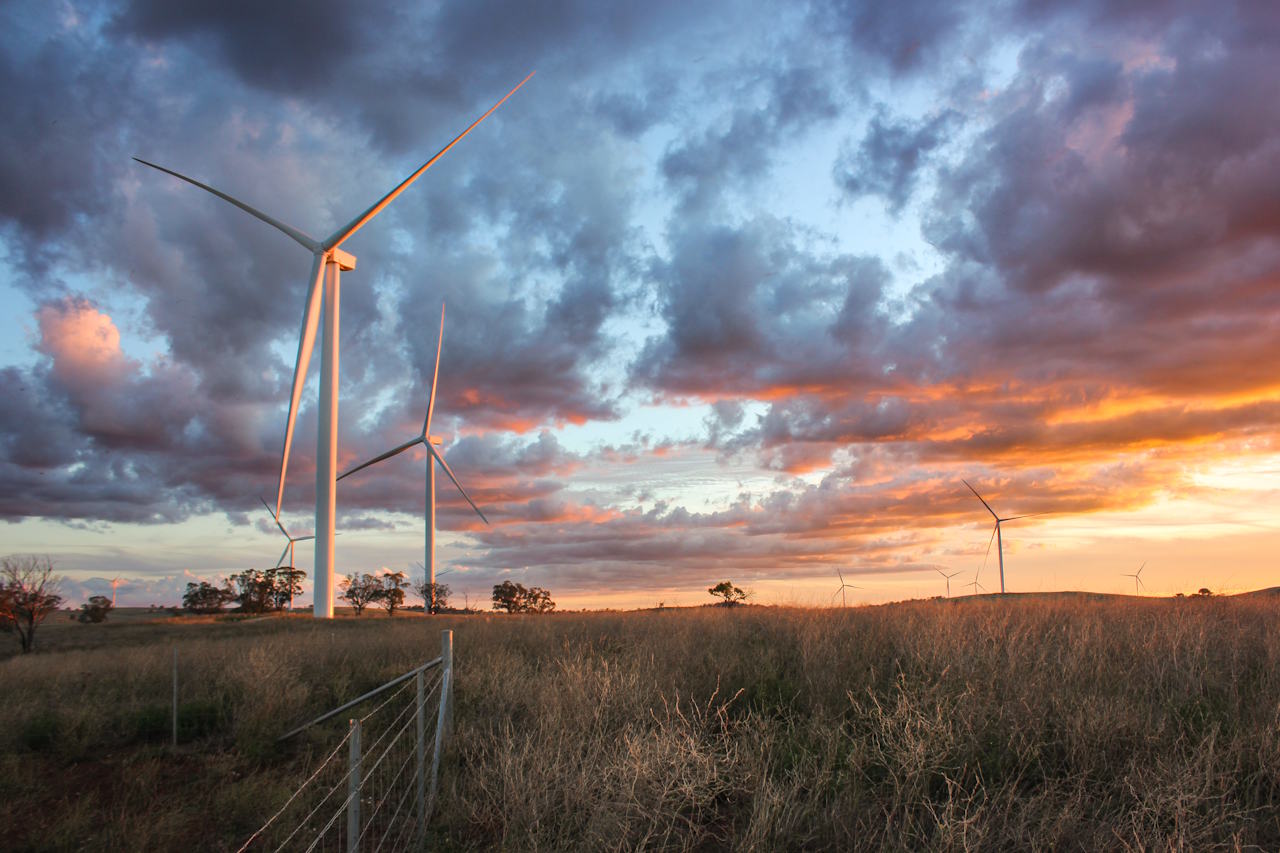
Onshore wind has exhibited perhaps the most notable change, with a 5 per cent decline in capital costs for the 2025-26 period, suggesting early signs of stabilisation after a staggering 35 per cent increase in costs during 2022-23. The report states, “As historical data shows, onshore wind has been significantly affected by recent global inflationary trends,” adding that the fresh data points towards an easing of cost pressures.
This recent development is particularly beneficial for the Australian energy sector, which has faced challenges such as ballooning costs, planning delays, and a withdrawal of major energy retailers from new projects, resulting in no new wind initiatives achieving final investment decisions in 2025.
Future Cost Projections
In contrast, standalone battery projects and solar-battery hybrids have thrived, benefiting from decreasing costs and quicker development timelines. CSIRO anticipates that by 2035, capital costs for onshore wind will align with their historical trajectory across all scenarios, suggesting modest declines rather than further increases.
However, the report highlights that coal and gas open cycle technologies have experienced the most significant cost hikes, reflecting rising expenses associated with gas and steam turbines.
Methodological Updates and Stakeholder Responses
This year’s report introduces a revised approach for calculating the levelised cost of electricity systems, a change that CSIRO implemented in response to stakeholder feedback. The adjustments aim to counter criticisms from the Coalition opposition, who have accused CSIRO of underestimating the requirements for renewable firming and transmission, selecting data that portrays renewables favourably while casting nuclear technologies in a negative light, and lacking transparency in its models.
The updated system levelised cost of electricity (SLCOE) method provides a comprehensive view of various electricity generation sources and associated costs. Unlike the previous levelised cost of electricity (LCOE) metric, which evaluated costs of individual technologies, the SLCOE framework takes into account the diverse technologies and transmission systems that yield the lowest-cost electricity across varied emission reduction scenarios through 2050.
Cost Estimates for 2030 and 2050
Excluding new technology deployments aside from renewables and their supporting systems, the 2030 SLCOE model estimates that attaining Australia’s goal of 82% renewable energy by 2030 would incur costs of approximately $91 per megawatt-hour (MWh) when factoring in transmission. For generation alone, the cost is projected at $81/MWh.
Looking ahead to 2050, the SLCOE model assesses scenarios that incorporate traditional firmed renewables or a combination of firm renewables together with floating and fixed offshore wind, coal and gas with carbon capture and storage (CCS), and both large-scale and small modular nuclear reactors. The findings indicate that utilising only mature technologies like solar PV, wind, gas, and storage presents the most cost-effective generation mix in 2050, aligning with all projected emission intensity levels.
Pressure from External Factors
In the pursuit of net-zero emissions by 2050, the estimated generation costs range between $135 and $148/MWh, including transmission, or between $114 and $124/MWh for wholesale generation costs only. Notably, this projection sits slightly below the current volume-weighted generation prices of approximately $129/MWh in the National Energy Market (NEM) for the 2024-25 period.
While CSIRO acknowledges the potential for offshore wind to become a part of the new generation mix by 2030 to 2050, it asserts that Australia is unlikely to witness offshore wind deployment prior to 2030, necessitating dependence on international offshore wind cost data during this interim.
Understanding Electricity Pricing Dynamics
The report also clarifies the connection between the fundamental costs of new electricity generation and the final prices paid by consumers. Generation currently constitutes roughly 33 per cent of retail prices, while transmission accounts for 7 per cent, and distribution makes up about 35 per cent, with the balance covering metering, retail services, and government initiatives.
Factors affecting generation prices include supply-demand imbalances resulting from inadequate deployment relative to demand growth and retirements, fluctuations in fuel prices, and the competitive landscape among suppliers. “These factors can lead to prices significantly deviating from the actual cost of the system and may take years to balance out due to long lead times in capacity deployment,” the report states.
Recent surges in gas prices, partly incited by geopolitical events, have notably contributed to soaring electricity prices observed throughout 2022, sustaining these elevated levels since.
“The evolution of GenCost signifies a transition from merely providing verifiable costs for individual technologies to encompassing systemic modelling of the future generation mix and average wholesale electricity costs,” remarks CSIRO’s chief energy economist and GenCost lead, Paul Graham. “Electricity systems require a diverse array of resources to fulfil their functions, as no single technology can cater to all system requirements, irrespective of its relative cost position.”
The draft GenCost report for 2025-26 is currently available for public input.