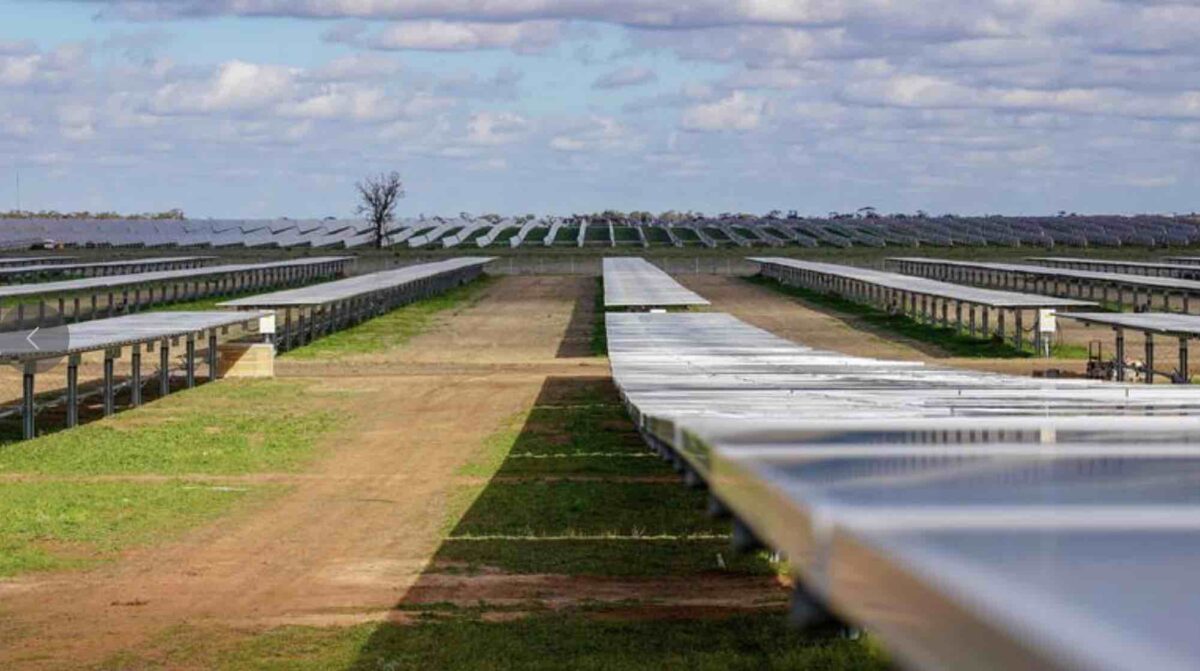
Corporate PPA Market Cools but Remains Significant
Corporate Power Purchase Agreements (PPAs) have emerged as a significant element within Australia’s renewable energy landscape. These agreements, whether directly involving electricity buyers or orchestrated through retailers, have gained traction since 2017, securing nearly 20% of the total capacity from new renewable energy initiatives.
While many of these contracts typically cover only a portion of a project’s output, they have nonetheless bolstered nearly 30% of the new renewable capacity that has been connected to the electrical grid. When factoring in agreements made with projects either financially committed or operational, Corporate PPAs account for the majority of renewable capacity at various stages in their lifecycle. They have directly contracted for about 40% of the overall capacity while supporting projects that represent around 60% of installed capacity.
2025 PPA Market Overview
Despite witnessing a decline in deal volumes in 2025, Corporate PPAs continued to dominate as the primary market segment for renewable energy contracts. This came during a slower year, characterised by a notable focus on battery storage by retailers rather than on new generation projects.
In 2025, the volume of contracted capacity through Corporate PPAs reached approximately 1.3 GW, mirroring the performance levels seen during most of the last decade, where annual deal volumes typically fluctuated between 1 to 1.5 GW. In this year, Corporate PPAs outpaced the contracting activities of private retailers involved with solar and wind farms, which have remained marginal since 2020, as well as the activities of state-owned retailers, which saw notable decreases after their significant presence earlier in the 2020s.
Comparing PPA Markets: Australia and Beyond
The Corporate PPA landscape in Australia has begun to resemble its international counterparts more closely. In the earlier stages, the Australian PPA market was distinguished by its diversity in deal sizes and buyer sectors. However, recent trends reveal a shift towards larger buyers engaging in substantial PPAs (100MW or more), mirroring patterns observed in international markets.
In the last couple of years, major players in the resources and mining sectors, such as Rio Tinto and BHP, alongside IT giants like Amazon, have emerged as key contributors to deal-making, directly signing wholesale PPAs with newly established renewable projects. A noted decrease in retail PPAs with medium-sized buyers has been attributed to the slowdown in project financial closures, which are typically associated with commissioning and operational phases.
Future Projections for the Corporate PPA Market
The Corporate PPA market has experienced a dynamic shift, oscillating between being a ‘buyers market’ and a ‘sellers market’ in recent years. Post-2020, a buyer’s preference emerged as a response to large retailers reducing contracting activity following the achievement of Renewable Energy Targets. In contrast, between 2023 and 2024, heightened demand for deals led to a sellers market.
The past 18 months, however, have been marked by a sense of stagnation. Both buyers and sellers are currently grappling with differing expectations regarding pricing, particularly as PPA costs have risen in the wake of pandemic-induced supply-chain inflation, especially for wind energy projects. The prevailing uncertainty about crucial factors affecting future prices, such as the timeline for coal plant shutdowns, has caused PPA buyers to hesitate in their decisions.
Nevertheless, there is a widespread belief that this trend is poised to shift, as companies with sustainability targets set for 2030 will need to secure contracts in the approaching years. Buyers are faced with the complex decision of acting now in an uncertain market or waiting, hoping that an increase in supply will bring down prices.
Insights on Corporate PPAs and Project Pathways
Currently, there are three primary segments within the Corporate PPA market:
- Large Wholesale PPAs: These are negotiated outside the Competitive Integrated Solutions (CIS) framework, allowing substantial buyers to secure long-term agreements with quality projects at favourable rates.
- Retail or Wholesale PPAs with CIS Integration: Some contracts are part of CIS bids to make offers more appealing, or for buyers looking to establish agreements prior to financial closure.
- Retail PPAs Post-Financial Closure: While the CIS is intended to facilitate new project offtakes through retail PPAs, this pathway has not yet realised its potential.
Releasing the impediments to project transitions from CIS to financial closure, along with revitalising the retail PPA market, will be crucial for the future trajectory of the Corporate PPA sector in Australia.