Construction Begins on Major Solar-Battery Hybrid Project in Australia
Construction has officially commenced on one of Australia’s largest DC-coupled solar battery hybrid projects, a move set to reshape the profile of solar energy generation by extending the availability of photovoltaic (PV) power into evening peak demand hours.
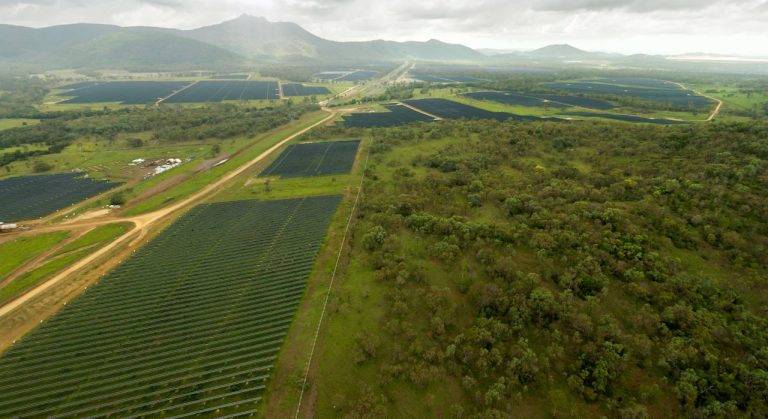
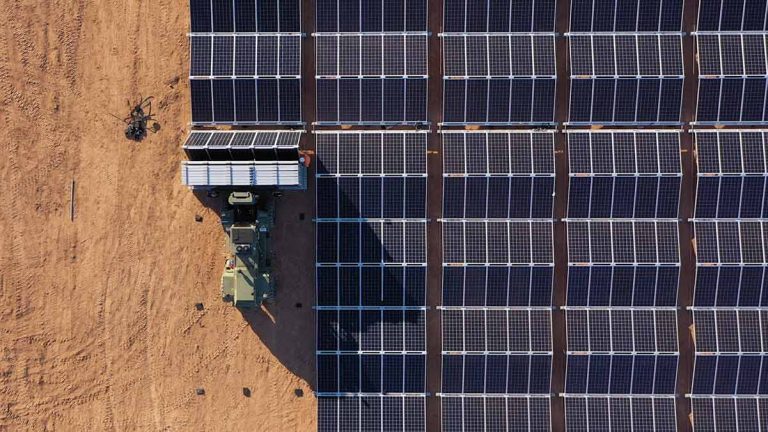
The Blind Creek project, spearheaded by Octopus Australia and situated approximately 30 km north-east of Canberra, will integrate 300 megawatts (MW) of solar power with a 243 MW, 486 megawatt-hour (MWh) battery energy storage system (BESS) that is co-located and DC-coupled.
Construction Milestone Celebrated
The project’s $900 million milestone was announced on Tuesday by the New South Wales government, with Premier Chris Minns alongside Octopus Australia to ceremonially mark the start of construction.
Octopus Australia has termed Blind Creek a “bankable energy product” designed to enhance grid reliability while facilitating the gradual retirement of coal plants in the state. The project will connect through a new substation to the key transmission network linking Sydney and Canberra.
Job Creation and Local Impact
During peak construction, the solar-battery hybrid project is expected to generate up to 300 full-time equivalent jobs, drawing a significant portion of its workforce from the local Bungendore and Monaro areas.
Premier Minns commented on the project’s significance, stating, “The Blind Creek project is creating local jobs and will contribute to the sustainable energy that households and businesses depend on. This is precisely the type of initiative New South Wales requires to modernise its ageing energy infrastructure, ensuring we keep the lights on, maintain affordable prices, and support our regional communities.”
Collaboration with Local Farmers
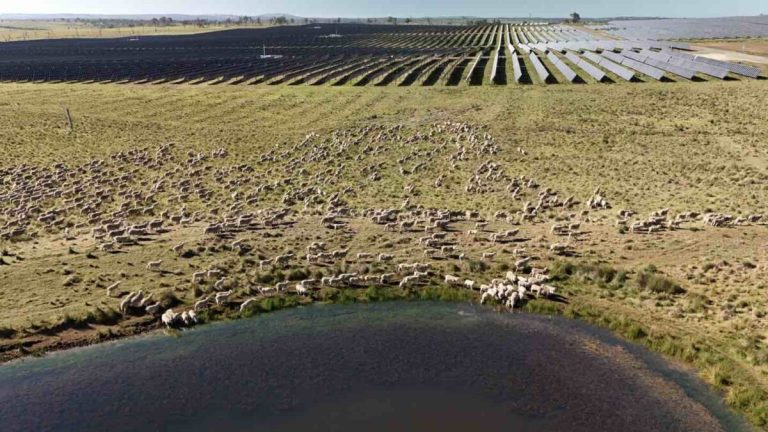
Octopus Australia has collaborated with local sheep farmers in the development of Blind Creek, ensuring that agricultural production can continue alongside the renewable energy project, which is also expected to enhance the land’s grazing potential.
Funding for the initiative has been secured from prominent Australian super funds such as Hostplus and Rest, the federal government’s green bank, the Clean Energy Finance Corporation (CEFC), as well as Westpac, one of the Big Four Australian banks, and Dutch pension firm APG.
Aligning Interests for Clean Energy
Reynolds, an Octopus Australia representative, remarked, “This project exemplifies the convergence of global capital, Australian superannuation, and regional farming families all supported by stable government policies. It results in tangible infrastructure, clean electricity, and job creation.” He further emphasised that Octopus Australia’s strategy is specifically designed to align long-term investments with regional community needs and deliver reliable projects.
Expanding Australia’s Renewable Energy Footprint
Blind Creek will be Octopus’s second DC-coupled solar battery hybrid project in Australia. The company is also in the midst of developing a smaller facility in Victoria, featuring 80 MW of solar power and 64 MW with 128 MWh of battery storage.
The $850 million Blind Creek venture is poised to supply electricity to the equivalent of 120,000 homes. Its innovative configuration allows solar energy harvested during the day to be stored at low prices and utilized during peak evening demand when energy prices are at their highest, thereby maximising returns for investors.
For those interested in staying updated on clean energy developments, over 29,000 readers have already subscribed to receive the latest news directly to their inbox through the free daily newsletter.