Can Big Batteries Replace Spinning Machines in Grid Management?
Whenever you come across a document from the Australian Energy Market Operator (AEMO) that mentions “load shedding”, it’s pretty easy to anticipate the ensuing discussions.
This scenario unfolds almost every year with AEMO’s annual Electricity Statement of Opportunities, detailing its decade-long demand and supply forecasts. It was once again evident this week with the release of its significant Transition Plan for System Security, outlining strategies to maintain power supply as the grid shifts towards renewables.
Warnings of Blackouts
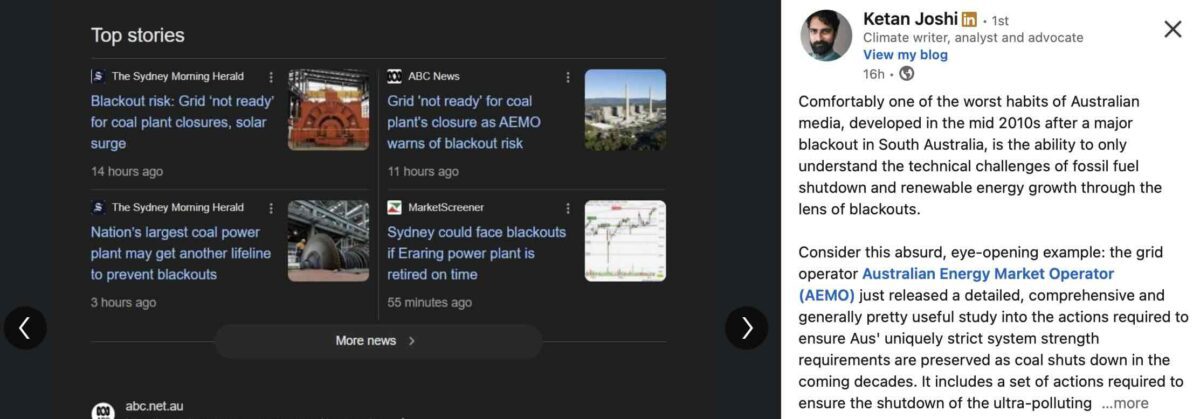
The Australian Financial Review reported on Monday that AEMO has cautioned about potential blackouts in New South Wales if the Eraring power station shuts down in 2027. The Sydney Morning Herald echoed this with a headline indicating that the grid is “not ready” for the impending closures of coal plants amidst a surge in solar energy.
Consequently, the Coalition seized the opportunity to argue that this situation demonstrates the impracticality of renewable transitions, suggesting that coal should remain operational for a more extended period, or perhaps indefinitely.
Misinterpretations of AEMO’s Findings
The Australian reported on assertions from Coalition spokespersons who described Labor’s energy strategy as “unacceptable”, especially in light of AEMO’s blackout warnings. Sky News further highlighted the situation, suggesting that Environment Minister Bowen now finds himself in a precarious position following these revelations from AEMO.
Ketan Joshi, in a recent LinkedIn post, pointed out that AEMO’s extensive 160-page report provides a far more nuanced view than the sensationalist headlines imply. The core issue is not whether the transition to renewable technology can occur, but rather the timing and management of that transition.
South Australia’s Success
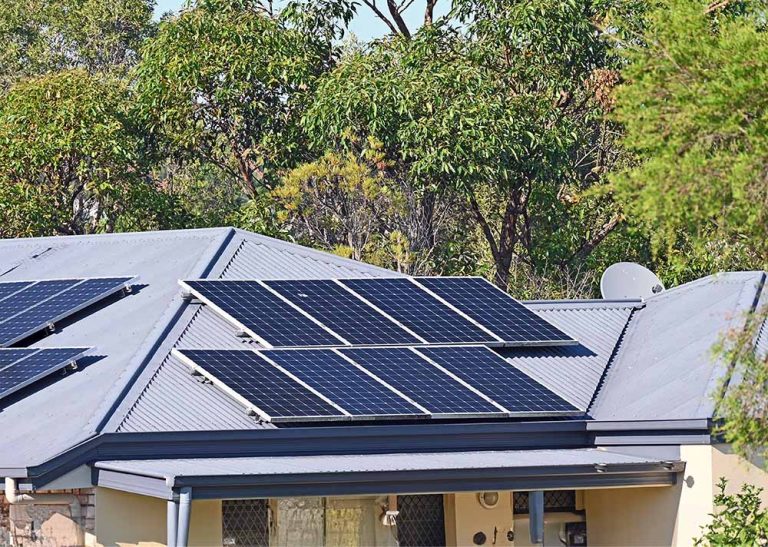
As discussed in our previous report, South Australia stands as a prime example that the technology for a renewable shift is effective. The AEMO report widely acknowledges this fact, noting that the state leads Australia in numerous aspects of the green energy transition, including a significant share of wind and solar power, the highest penetration of rooftop solar panels, and being home to major battery projects.
South Australia arguably boasts the most reliable state grid in the country, though it still imports and exports energy as required. AEMO noted that it uniquely does not face a shortfall in essential grid services such as system strength, having closed its final coal-fired generators nearly a decade ago and adapted its grid management accordingly.
Challenges for Other States
Other regions have procrastinated despite being informed about their coal shutdowns. They are currently hindered by a global supply shortfall, which implies that the necessary equipment, such as synchronous condensers (syncons) and gas turbines, may not be available for years and now come at a higher price due to escalating costs.
The introduction of grid-forming battery inverters, touted as a potential alternative to traditional syncons, poses further confusion for decision-makers. Proponents of this technology argue that they provide the same grid services faster and at a fraction of the cost. However, AEMO and the transmission companies remain hesitant to fully endorse this technology without further proof.
Understanding the Transition Report
AEMO’s latest Transition Plan has received widespread acclaim from the energy sector for its comprehensive and transparent assessment of the risks involved in the transition and what missteps could entail. Experts commend AEMO for this detailed analysis, but they also seek a commitment to further trials to ascertain how grid-forming inverters can fulfil their promises.
This situation is likened to changing the engines on a plane while airborne—a complex operation. AEMO appears inclined to maintain at least one conventional engine while simultaneously being urged to advance studies like “digital twins” to understand how the new inverter technologies can work under various conditions.
Balancing Innovation and Caution
This Transition Report builds upon prior studies, including a significant consultancy review highlighting the capabilities of grid-forming batteries in handling fault levels. Even though AEMO’s findings indicate potential issues with GFM responses, experts suggest these are manageable if addressed proactively.
Tesla, a leading provider of batteries and grid-forming technology in Australia, has released a new White Paper asserting that its grid-forming battery inverters can provide essential grid services more effectively and at lower costs compared to traditional synchronous systems.
Expert Opinions on Technology
Bruce Miller, a highly respected power engineer, has expressed scepticism towards syncons, stating they are beneficial for specific applications, particularly in raising fault levels at HVDC junctions—but not ideal for inertia or frequency control, where batteries excel. He notes the need for the industry to adapt to new technologies and learn to prevent potential issues such as grid oscillations.
Miller believes that once the industry becomes accustomed to these changes, a shift away from traditional generating methods will become feasible. He cites smaller grids, like those powering mining operations, as evidence that such transitions are possible.