Can Australia Meet Its Renewable Energy Targets by 2030?
In recent times, it has become a common practice among consultancy firms and industry experts to speculate on how far Australia will miss its ambitious goal of achieving renewable energy targets by 2030. At least this speculation is a shift from the usual forecasts of blackouts.
Predictions vary significantly, with some suggesting that the country might attain anywhere from 60% to nearly 80% of its target. Others approach the target from a temporal angle, indicating that the aim of 82% renewable energy penetration may not materialise until 2032, 2035, or even not at all.
Latest Insights from BloombergNEF
The most recent findings are part of BloombergNEF’s annual country report on Australia, a leading energy analytics organisation globally. Although no specific renewable percentage is provided for 2030, the analysis underscores the urgent need for Australia to enhance its efforts if it is to meet its goals on schedule. Current forecasts suggest the country may struggle to generate enough new wind and solar capacity in time.
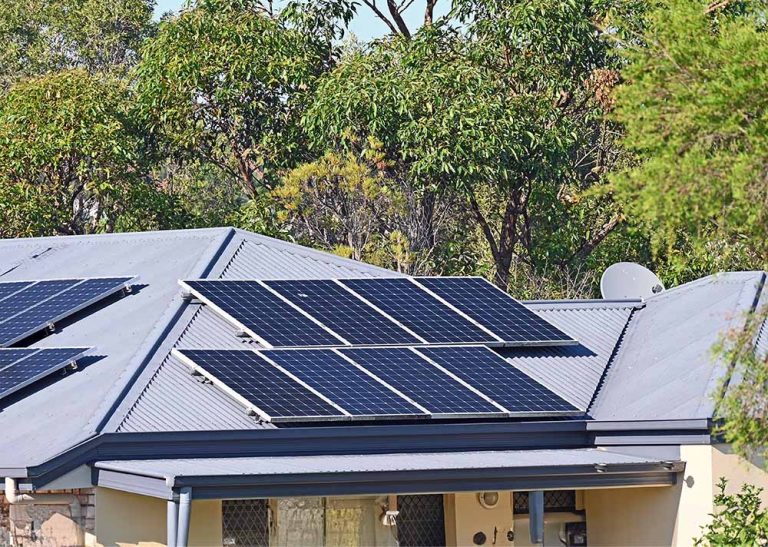
According to the report, “More needs to be done, and faster, for Australia to achieve its target for 82% renewable energy penetration by 2030.” It estimates that approximately 41 GW of new large-scale wind and solar power, vital for reaching the 82% mark, may not be ready until 2035. Moreover, it posits that the installation of rooftop solar has likely peaked, even though an additional 22 GW could be deployed over the next decade.
Encouraging Trends in Battery Storage
On a positive note, the report indicates that the markets for both grid-scale and household battery storage are projected to meet or even exceed expectations. The rapid decline in battery cell costs, coupled with simplified planning processes and logistics, has made grid-scale storage a leading force in recent investment trends.
Currently, there are 9.9 GW of utility-scale batteries under construction, with forecasts suggesting total capacity could amount to 23.1 GW by 2035. In the residential sector, household battery installations are soaring, fuelled by an expanded federal rebate scheme. BloombergNEF now anticipates that behind-the-meter battery capacity could rise to 35.8 GWh by 2035, a substantial increase from the 6.5 GWh estimated for 2025.
Challenges Ahead in New Generation Capacity
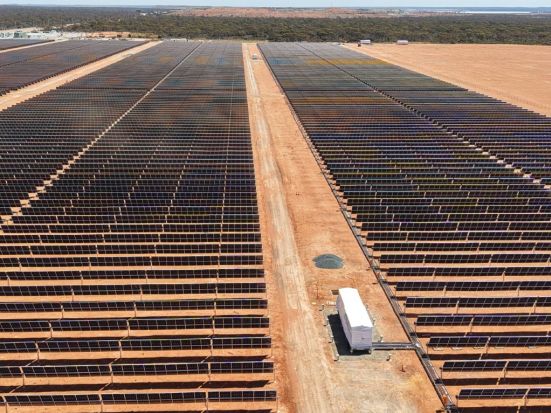
Despite these optimistic developments in battery storage, the outlook for new generation capacity appears less promising. BloombergNEF predicts that just 8.8 GW of new large solar facilities will come online by 2030, alongside 13 GW of wind power—figures that fall well short of what is necessary to achieve the 82% renewable target, particularly as slow progress in Queensland hampers advancements elsewhere.
Even the rooftop solar sector seems to be losing momentum, with the analysis forecasting a notable decrease in installations in the years to come. The significant uptick in wind energy is expected to occur post-2030, primarily due to longer project lead times.
Offshore Wind Projections
Furthermore, the outlook for offshore wind is rather bleak, with BloombergNEF predicting no significant developments in this area before 2035. This forecast hinges on the state government of Victoria postponing its delayed auction until after the forthcoming election later this year. Nonetheless, the state has already proposed to initiate the tender process as early as August.
In spite of these challenging predictions, Minister Bowen maintains a degree of optimism, believing that Australia will either meet its targets or be close enough not to make a significant difference if a few percentage points are missed. He recently highlighted a substantial pipeline of 64 GW of projects identified by AEMO in its latest Connections Scorecard.
In a recent LinkedIn post, Bowen addressed the criticisms surrounding the transition, stating, “There’s a lot of noise out there on the internet and in certain newspapers saying that the transition is off track and we can’t possibly hit our 82% renewable energy target. There’s a big issue with that – it ignores what’s actually happening.”