Australia’s Solar PV Recycling Program Paused After Pilot Suspension
Australia’s ambitions to establish a national solar photovoltaic (PV) recycling programme are currently stalled, following the quiet suspension of the pilot project in May. The Department of Climate Change, Energy, Environment and Water (DCCEEW) has put the initial phase on hold due to a complaint concerning the procurement process for the programme’s administrator.
Since this announcement, stakeholders and businesses within the industry have been left in the dark, as reported by Renew Economy. The pilot, which carries a budget of $24.7 million, was unveiled in January alongside a compelling report from the Productivity Commission emphasising the urgent need to develop a strategy for handling increasing quantities of end-of-life solar panels.
Details of the Recycling Pilot
The initiative aims to establish 100 collection sites nationwide to evaluate the logistics of collecting, transporting, and financing the disposal of waste solar panels. This data is intended to contribute to the formulation of a mandatory stewardship scheme. However, following the closure of tenders for the pilot’s procurement on April 26, the DCCEEW announced the suspension three weeks later.
The letter from DCCEEW, which was shared with Renew Economy, stated, “We wish to advise you that this procurement has been suspended… while a procurement complaint is being investigated. Accordingly, the evaluation process will not progress until the suspension is lifted.” A spokesperson for DCCEEW refrained from commenting on the status of the complaint process, citing the ongoing investigation but reassured that the government remains committed to the pilot.
Industry Sentiments Amid Delay
The ongoing lack of updates over the past nine weeks has left many in the industry feeling disheartened. For years, they have advocated for government action concerning solar panel waste. James Petesic, founder of PV Industries, expressed concern, stating that a protracted delay could prove detrimental for the emerging sector, which has already experienced numerous business failures over the last five years.
Petesic highlighted, “The biggest issue for our industry is securing feedstock… Part of the stewardship scheme is that our services will be offered at no cost, alongside a landfill ban, which would accelerate solar recycling. Without feedstock, we cannot attract investment, and without investment, growth is stymied.”
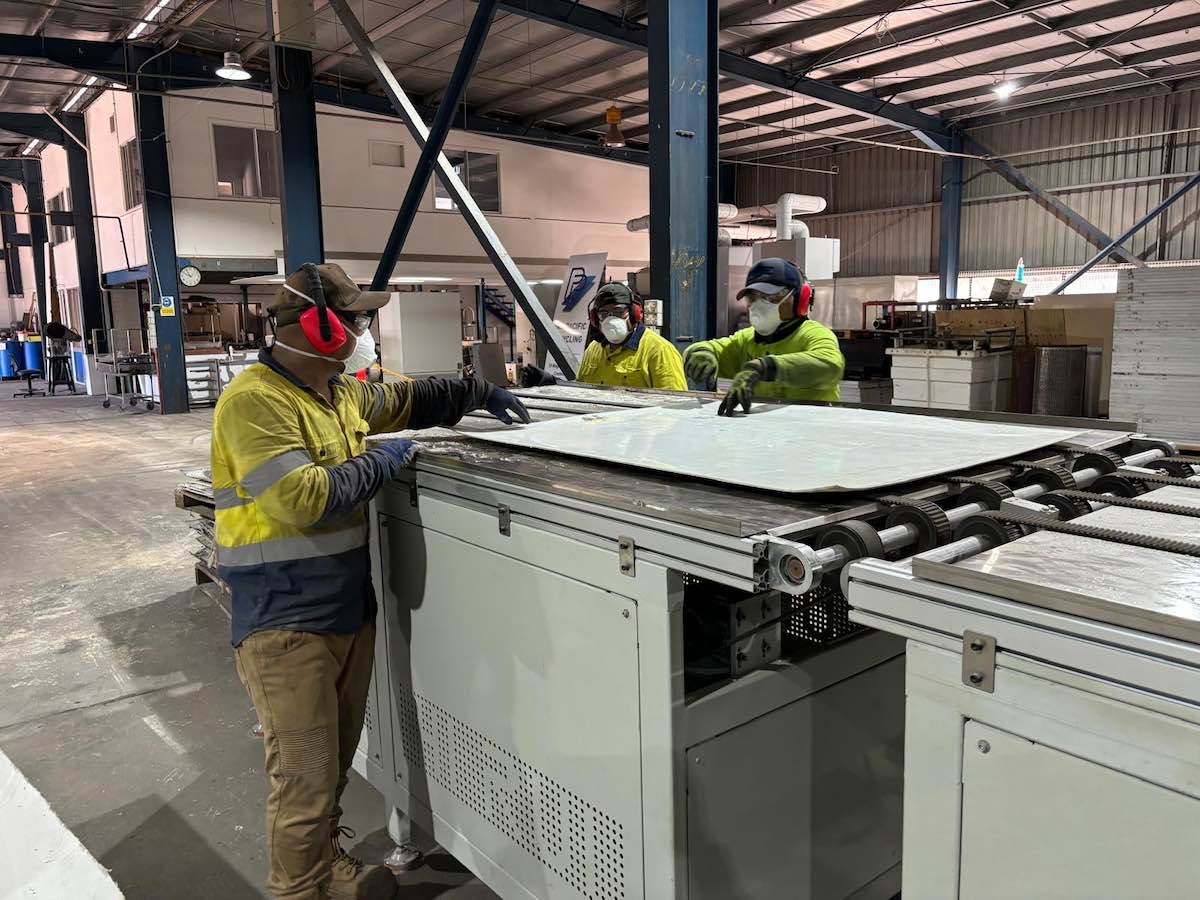
In Brisbane, John Hill, founder of Pan Pacific, echoed Petesic’s concerns, describing the current situation regarding feedstock as “pretty bloody severe.” He noted that some companies are hoarding panels for free with the expectation of selling them to the government pilot, creating an environment of competition that hampers their revenue model.
Concerns from the Smart Energy Council
The Smart Energy Council has voiced concerns, identifying the estimated 91,165 tonnes of solar panel waste projected for 2030 as “a $6.5 billion opportunity” to recover valuable materials such as aluminium, glass, copper, silver, and silicon. Suzanne Toumbourou, chief of the Australian Council of Recycling, remarked on the potential ripple effects detrimental to the industry due to the pilot’s delay, stating that they had anticipated the project to commence around a month ago.
She added, “Solar panel recyclers desperately need support to handle the end-of-life solar panels effectively, and we’re astonished by the delay and the absence of information. It’s unsustainable for this uncertainty to persist indefinitely.”
Impact on State Initiatives
The suspension will also affect state-level recycling efforts that hinge on the pilot’s data. New South Wales is currently spearheading a regulatory impact statement intended to inform both the national scheme and the first SEC-supported trial in Queensland, expected in 2024. The goal is to design the national recycling scheme set for implementation in 2026 and 2027.
Additionally, in June, Western Australia earmarked $13 million in its budget to initiate a collection system for end-of-life solar panels from households and solar farms. There are rising doubts within the industry regarding the DCCEEW’s capability to execute the pilot, particularly following previous unsuccessful stewardship attempts in packaging, plastics, and clothing.
The department’s own Capability Review, published in June, raised questions about its operational abilities, categorising it as “developing” concerning strategy and implementation and “emerging” in terms of review and evaluation. The report indicated that there is a significant lack of consistent capability and foresight, as well as limited learning from other initiatives.