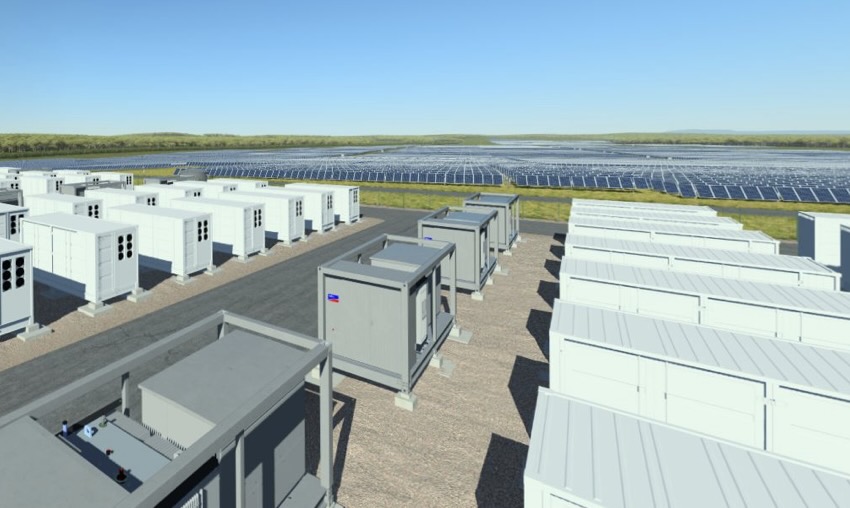
Australia’s Largest Solar-Battery Hybrid Project Expands Power Capacity
Exciting developments are underway for what is set to be Australia’s largest solar-battery hybrid initiative. Plans have been refined to nearly double the power capacity of the battery component, while slightly reducing the area designated for solar panels.
Located in Myrtle Creek, within New South Wales’ Northern Rivers region, Ark Energy’s Richmond Valley Solar Farm is currently pursuing federal government approval, after having secured the necessary planning consent at the state level and backing through NSW Labor’s long-duration storage tender.
Project Enhancements and Capacity Boost
Initially, Ark Energy sought assessment under the EPBC Act for a project comprising 500 megawatts (MW) of solar power coupled with a 275 MW, 2,200 megawatt-hour (MWh) battery energy storage system (BESS). However, they received approval last week to implement several small yet significant modifications.
The updates entail an overall decrease in the project’s development area, which includes adjustments to accommodate upgrades to roads and intersections, changes in transmission line placements, enhanced security fencing, and alterations to the BESS and solar panel set-ups.
One of the most notable changes is the increase in the proposed installed capacity of the BESS from 275 MW to 475 MW, a move Ark Energy states aims to improve synergy with the solar farm.
These amendments align the EPBC referral with the project’s state planning approval, which permits a solar farm of up to 435 MW (AC) alongside a battery of up to 475 MW and 3,148 MWh.
Adjustments in Layout and Footprint
As a result of the recent changes accepted by the EPBC, the battery component’s footprint will expand from 5 hectares to 9 hectares due to the addition of 80 inverters.
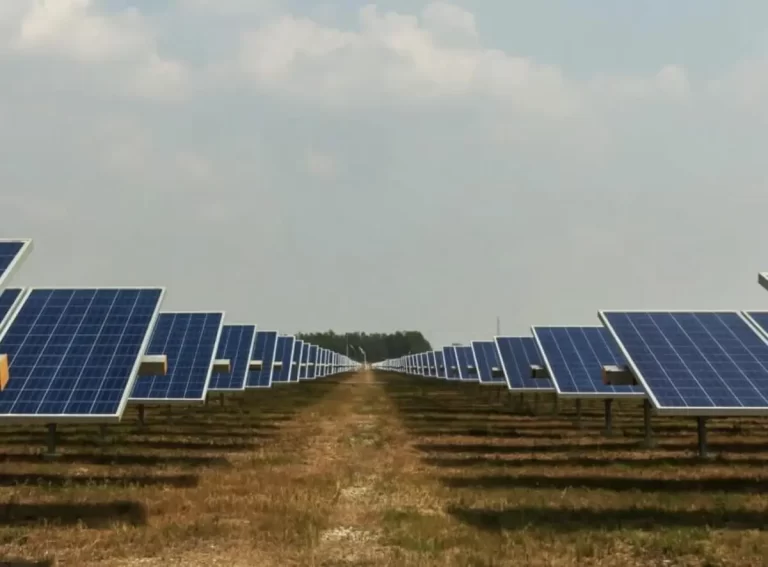
For the solar aspect of the project, modifications related to the fence line, adjustments to the transmission connection point, and considerations regarding certain identified plant species have resulted in a reconfigured panel layout, ultimately reducing the total footprint by 14 hectares.
Ark Energy, a subsidiary of Korean Zinc focused on renewable and storage solutions, has been proactive in establishing renewable sources for its Queensland smelter and other projects nationwide.
Future Prospects and Community Engagement
The Richmond Valley project marks Ark Energy’s second state-approved venture in NSW, with final approvals still pending for the 335 MW initial phase of the Bowmans Creek wind farm in the Hunter-Central Coast Renewable Energy Zone. This wind farm received state planning approval last year from the Independent Planning Commission.
A Spanish firm, Elecnor, has already been engaged as the early works contractor for the Richmond Valley solar-battery hybrid project, with construction slated to commence early next year. The initiative is expected to generate 327 jobs during the building phase, alongside up to 15 permanent roles once operational.
Additionally, the project is set to benefit the local community with a potential $11 million Voluntary Planning Agreement with Richmond Valley Council. This agreement could help support various community initiatives, including funding for halls, sports facilities, libraries, parks, and playgrounds.