Australia’s Home Battery Market Experiences Healthy Reset Amid Rooftop Solar Growth
The home battery sector in Australia is seeing a significant “healthy reset,” as new data reveals a nearly 30 per cent drop in monthly installations, with systems now being optimally sized between 20-30 kilowatt-hours, a decrease from the previous average of around 50 kWh.
According to solar industry analyst SunWiz, a total of 1.07 gigawatt-hours (GWh) of home batteries were recorded in June, marking a 28.3 per cent decline from the total installed in May.
Market Insights from SunWiz
Warwick Johnston, managing director of SunWiz, noted that although the decline in June brought market growth below the 12-month trendline, the current numbers still surpass the figures from early 2026 and are approximately three times higher than the levels recorded one year ago, shortly after the federal rebate’s introduction.
Johnston commented, “This is a healthy reset following the rebate-driven surge. It is more of a controlled reset than a significant structural downturn, with late registrations likely to bolster the final tally.”
Impact of Federal Rebate Adjustments
This reset coincides with the adjustments made on May 1 to the federal Labour government’s Cheaper Home Batteries rebate, which limits access to the full discount to the first 14 kWh of a battery system’s usable capacity. The structure offers a 60 per cent discount for capacity between 14 kWh and 28 kWh, and a mere 15 per cent discount for systems from 28 kWh to 50 kWh.
The aim of these changes was to temper the rapidly expanding market and ensure that the government-funded subsidies were not predominantly absorbed by oversized systems rated at 50 kWh or more.
Current Trends in System Sizes
Johnston emphasised that despite the overall figures, the market is optimally adjusting, moving away from excessively large systems toward more mid-range 20-30 kWh storage solutions. The oversized 40-50 kWh category has nearly halved its installations (-46% month-on-month), while the 10-20 kWh bracket saw a decrease of 42%. In contrast, the 20-30 kWh segment experienced a remarkable 114% increase, establishing itself as the new focal point of the market, even as the 40-50 kWh systems continue to lead in absolute volume.
“While growth is evident in the 20-30 kWh range, uncertainties surrounding installation dates complicate the conversion of small-scale technology certificates into kWh, making it likely that many of these installations were 40 kWh systems submitted for registration post-May 1,” added Johnston.
Overview of Photovoltaic Trends
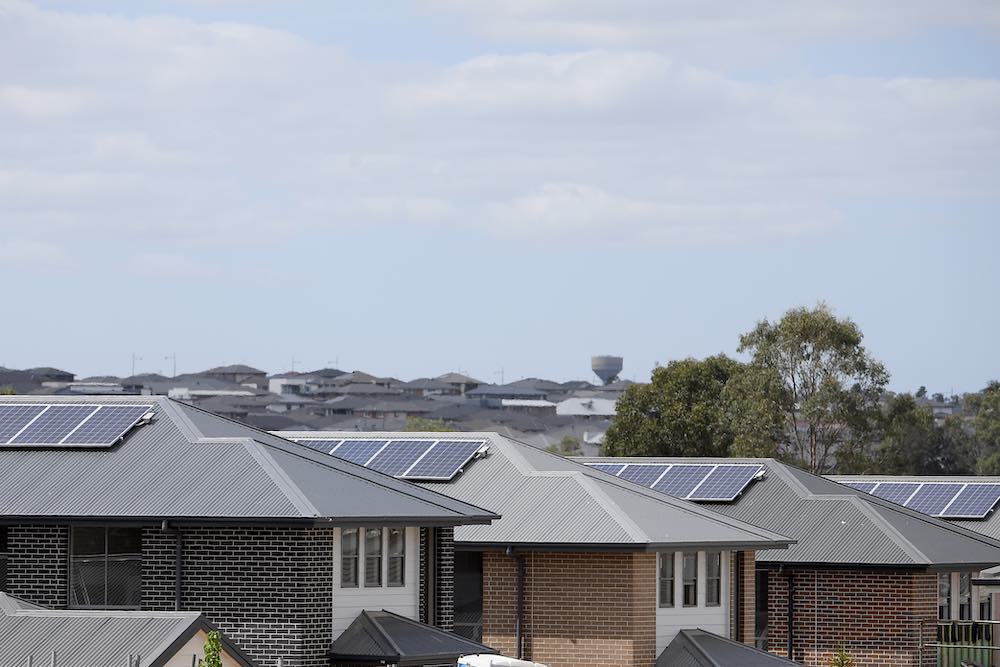
The rooftop solar sector is concurrently enjoying an unprecedented boom, with figures for the first half of the year showing a 41 per cent increase compared to the same timeframe in 2025. Following a surge in battery-related installations in April, June saw the registration of 322 megawatts (MW) of new rooftop solar capacity, reflecting a 4 per cent drop month-on-month and a 26 per cent decline from April’s remarkable 435 MW.
Johnston observed, “The boost from battery installations has significantly lifted rooftop solar figures, with June 2026 showing a clear improvement over the same month in previous years, making it the strongest June on record despite cooling from April’s exceptional figures.”
While smaller systems, specifically in the 0-15 kW category, experienced a slight uptick (+2% month-on-month), all larger categories saw declines, notably the 20-30 kW segment (-31%) and the 15-20 kW group (-16%). The 10-15 kW category remains robust, representing around 118 MW or approximately 37% of the market.
National Average System Size Decline
Johnston pointed out that the majority of the national decline stemmed from the 15-100 kW segment, which significantly contributed to the spike in April. The national average system size fell to a 12-month low of 10.01 kW, down from 10.47 kW in May and a peak of 11.32 kW in April.
For those interested in receiving the latest clean energy updates directly to their inbox, joining over 29,000 subscribers is the perfect option. Subscribing to the free daily newsletter is simple.
Support for independent media and accurate information is crucial. Consider making a one-off donation or becoming a regular supporter of Renew Economy if you can. Your contribution is greatly valued.