Australia to Reach 82% Renewables Target by 2034, Says Battery Developer
Akaysha Energy, a prominent developer in the Australian battery storage sector and the creator of the nation’s largest battery, forecasts that Australia will achieve its goal of 82% renewable energy, albeit not until 2034—four years beyond the current schedule.
This insight comes from Akaysha’s latest briefing on the battery storage landscape in Australia. The firm, which is backed by BlackRock, is in the process of constructing the Waratah Super Battery, boasting an impressive capacity of over 6 gigawatts.
Drivers Behind Battery Storage Growth
Battery storage has emerged as a pivotal component in the transition to green energy, spurred on by sharply decreasing costs, relative ease in planning and execution, and the major utilities’ desire to invest in advanced battery solutions to maintain their market dominance.
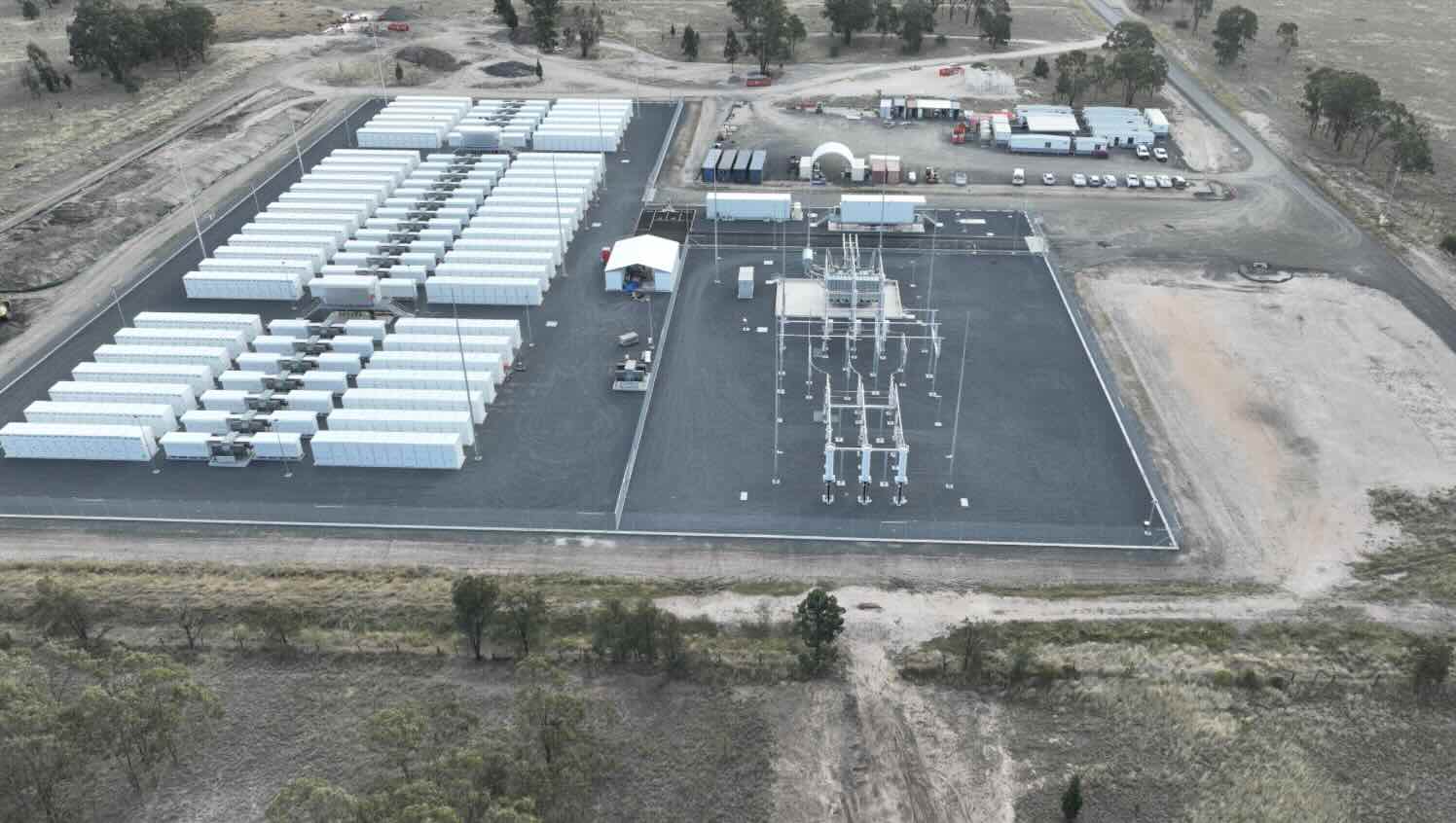
Akaysha has rapidly gained prominence, securing the contract for the Waratah battery in 2021 after emerging from relative obscurity. The company has also successfully completed the Ulinda Park battery in Queensland and is close to fully commissioning the Brendale battery, while currently constructing the substantial Orana battery in New South Wales.
Delays and Current Operations
However, completion of the Waratah battery, with a capacity of 850 MW and 1680 MWh, has faced setbacks. Initial delays were caused by weather issues affecting the timeline initially set for May of this year. A significant transformer failure in October further postponed completion, now expected to be pushed back to May next year.
The battery is presently operational at about half its intended capacity and has been utilised to fulfil essential roles during recent weather extremes and coal plant outages.
Current Shortcomings and Future Projections
In a report titled “Batteries Included”, key Akaysha figures, including managing director Paul Curnow and head of policy Emma Fagan, indicate that Australia is “off-track” from meeting the 2030 renewable target. They highlight that the rate of large-scale renewable installations is currently only reaching 2-3 GW annually, which falls short of the necessary 10 GW.
The report suggests that with the expected closure of 11 coal plants across the National Electricity Market (NEM), it is more realistic to anticipate that Australia will meet its renewable target in 2034.
Capacity Requirements and Future Growth
To transition away from traditional “baseload”, a notable increase in renewable capacities will be needed: wind capacity must rise from 14 GW to 68 GW by 2040, solar capacity from 20 GW to 65 GW, and battery capacity from 7 GW to a remarkable 52 GW. Furthermore, it is projected that underlying electricity demand will increase by 85% by 2045.
Akaysha’s analysis indicates a projected renewable energy mix of approximately 65% by 2030 compared to a little over 40% today. This forecast is optimistic compared to the Australian Energy Market Operator’s constrained estimate of 75%, and more cautious projections predicting below 60%. Nonetheless, the federal government maintains that achieving 82% remains a feasible outcome.
The Shift towards Commercial Viability
According to Akaysha, battery storage will become the primary type of capacity, with 17 new projects expected to connect to the grid by 2025. The duration of storage capacity is anticipated to shift from two to four hours, with economic feasibility for six-hour storage likely within the next five years.
Four-hour Battery Energy Storage Systems (BESS) are strategically positioned to take advantage of price variances throughout the day, charging at lower prices during midday and returning energy to the grid during peak evening times. Looking ahead, six-hour BESS will increasingly fulfil roles as price spreads widen in the early 2030s.
Need for Investment Signals
While initial investments in battery projects were largely driven by government funding and contracts, Akaysha observes that declining costs and increasing value have shifted the focus towards commercially viable projects, including capacity swaps and agreements for virtual and physical tolls.
Utilising state and federal underwriting programmes, Akaysha intends to “revenue stack” projects such as Orana in NSW, Deer Park in Victoria, and the expanded Ulinda Park in Queensland. The firm asserts that these arrangements are vital for rolling out an adequate battery capacity to offset coal plant closures, emphasising that the new market design proposed by the Nelson Review will play a crucial role in this endeavour.
As the authors suggest, a substantial increase in battery storage is crucial for the long-term security and reliability of the NEM. Nevertheless, the current energy-only market structure is proving effective yet insufficiently incentivising the investment required for new capacity development. Without these signals, coal plant closures could be delayed, adversely affecting the overall progress in capacity builds.