Australia Launches National Solar Panel Recycling Pilot Program
The federal government has unveiled a $25 million pilot programme aimed at creating up to 100 collection sites nationwide to tackle the escalating issue of discarded rooftop solar panels, as well as future concerns surrounding household batteries. This announcement was made on Friday in the wake of a report from the Productivity Commission that was actually completed last August, which advocated for such a scheme in light of the increasing volume of rooftop photovoltaic (PV) panels and the imminent need to manage end-of-life batteries.
The initial focus of this programme will be on solar panels, which are at a critical juncture; in certain states, over a third of new installations are replacing older solar systems. The government emphasises that these panels contain valuable materials and strategic minerals, including copper, aluminium, and silicon, essential for supporting the renewable energy sector. However, they also contain hazardous substances that must not be carelessly disposed of.
Recycling Challenges and Opportunities
As Environment Minister Murray Watt stated, “Currently, only a small percentage of end-of-life solar panels are recycled. The majority are either stockpiled, sent to landfill, or exported for reuse.” He added, “We believe the materials in solar panels are too valuable to discard. They can be repurposed to aid the clean energy revolution and mitigate landfill waste, which in turn enhances our natural environment.”
At present, a mere 17 per cent of rooftop solar panels find their way into recycling processes, while the Productivity Commission’s report estimates up to $7.3 billion in potential benefits through reduced waste and material reuse.
Industry Response and Future Prospects
The announcement has been positively received by the Smart Energy Council, which cautions that four million solar panels are decommissioned yearly, with only a fraction being recycled. John Grimes, the SEC’s chief executive, expressed support for the government’s initiative, stating, “We recognise the desire for change, and the industry is primed to address the issue.”
Despite such enthusiasm, the quest to establish a robust industry has faced challenges. Previous efforts to create new businesses and enforce regulations designed to combat the random dumping of used panels have not significantly improved the situation. Last year, the SEC rallied industry leaders to warn that solar recycling companies were nearing collapse, calling for a mandatory national policy on PV reuse and recycling.
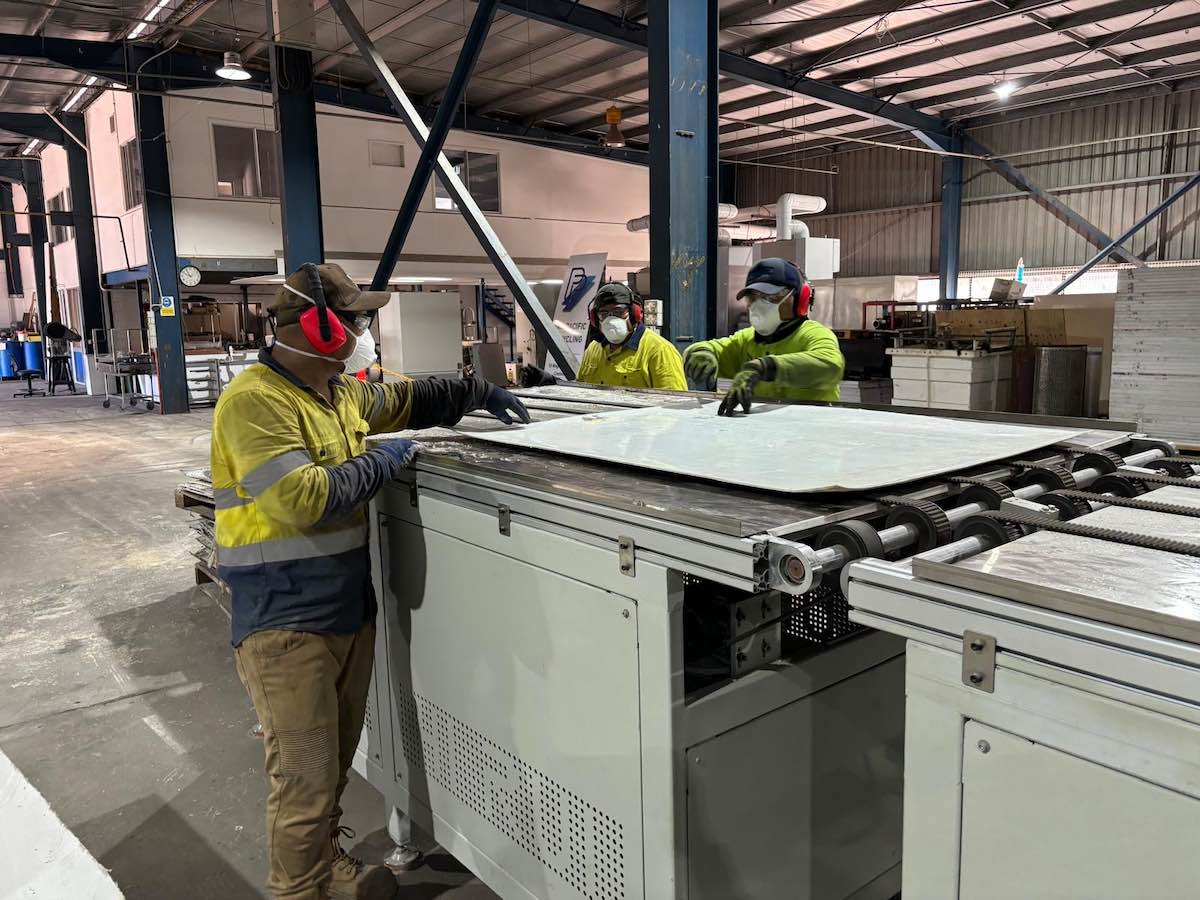
This crisis was starkly illustrated by the demise of Sircel, Australia’s largest established e-waste recycler, which had unveiled a cutting-edge facility for processing photovoltaic panels in Parkes, New South Wales, but entered voluntary administration last October. This followed the failure of Reclaim PV, an Adelaide-based enterprise that went bankrupt this year, leaving only seven active solar PV recycling firms, many of which are struggling to stay afloat, according to the SEC.
Cost and Collection Solutions
One significant hurdle identified by the SEC is the expense associated with transporting rooftop panels from rooftops to recycling facilities. They hope that establishing collection points will offer a practical and economical solution for installers needing to dispose of their products, thereby diminishing one of the main barriers facing the recycling sector.
Darren Johannesen, the SEC’s head of sustainability, opines that recycling—or “urban mining”—can play a crucial role in addressing expected supply shortfalls for vital materials, particularly copper. “We anticipate that a national stewardship scheme will follow the pilot, sparking an urban mining boom and generating new opportunities for smart energy investment and job creation,” Johannesen remarked.
Recommendations for Sustainable Management
The Productivity Commission’s report advocates for the introduction of a stewardship scheme that would enhance the design of solar panels and incentivise the industry to recycle these items effectively, as well as future electric vehicle batteries. The report notes, “Currently, neither solar PV systems nor EV batteries are managed consistently or thoroughly after being deemed end-of-life.”
In Australia, the majority of discarded PV systems either end up in landfill or are treated as waste in shredder floc, with some panels dumped illegally in rural areas or along roadsides. Although some private recycling options exist (e.g., Sircel, PV Industries, Ecoactiv), only 17% of solar panel components—including the aluminium frame and junction box—are recycled, leaving 83% of valuable materials treated as waste.
This issue largely stems from the prohibitive costs of recycling solar panels, which can be up to six times higher than simply sending them to a landfill. Nonetheless, the Productivity Commission asserts that a stewardship scheme could yield an estimated net economic benefit of $7.3 billion when considering present value terms.