Australia Achieves 50% Renewables; Western Australia Hits 55% with Wind and Solar
In November, Australia celebrated exceeding a 50 per cent share of renewable energy for the second consecutive month, driven by an influx of new connections and favourable spring conditions. Western Australia, however, surpassed this achievement, reaching an impressive 55 per cent share of renewables within the world’s largest isolated grid.
The National Electricity Market reported a renewable share of 50.1 per cent for the month, while Western Australia’s primary grid relied entirely on wind and solar sources, with no hydro energy utilised. This remarkable performance was largely attributed to the surge in rooftop solar installations and the integration of new large-scale batteries, which effectively diminished the need for curtailment.
Celebrating State Achievements
This new benchmark was acknowledged by Western Australia’s Premier Roger Cook, Energy Minister Amber Jade Sanderson, and Energy Co-ordinator Jai Thomas. Their acknowledgement followed a recent milestone where wind and solar generation produced enough energy to entirely satisfy domestic demand, highlighting a significant advancement in renewable energy capabilities.
During this period, sufficient power was stored in batteries to maintain operation of certain coal and gas generators, thus ensuring a stable supply of synchronous power within the grid.
Outstanding Performances in Wind and Solar
Western Australia also emerged as the home of the nation’s best-performing wind and solar farms for the month, as noted by Rystad Energy analyst David Dixon. The top three wind projects in the country were situated in Western Australia, with Badgingarra leading the charge with a capacity factor of 51.7%, followed by Flat Rocks at 50.4% and Yandin at 49.2%.
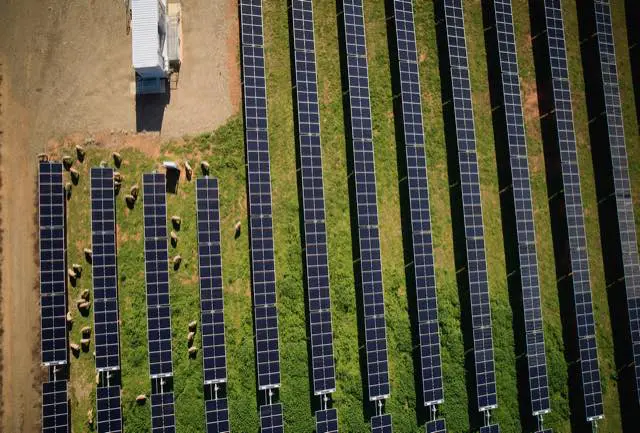
Additionally, the highest-performing utility solar asset for November was the Merredin facility, boasting a capacity factor of 38.5%. It was trailed closely by another solar farm at Greenough River (38% CF), and the relatively new Wellington North facility in New South Wales at 37.0% CF.
Record Generation Figures
November proved to be a record-breaking month, as Australian utility PV and wind installations produced 5,271 gigawatt hours (GWh), marking a notable 28% increase from the previous year’s 4,107 GWh. When including rooftop PV systems, the month recorded a total generation of 9,030 GWh, representing the second highest of all time within the National Electricity Market (NEM).
Dixon pointed out that this month recorded the third lowest gas generation figures since January 2011, attributed to the increasing influence of both utility-scale and residential battery storage. Additionally, November also marked the third lowest coal generation figures since the NEM’s inception.
This period also saw an unprecedented number of hours with negative prices across NSW (214 hours), South Australia (346 hours), and Victoria (320 hours), with both South Australia and Victoria averaging more than 10 hours of negative pricing daily throughout the month.
For those interested in staying updated, over 28,000 subscribers receive the latest in clean energy news directly to their inbox. Sign up for the free daily newsletter for updates delivered to you.