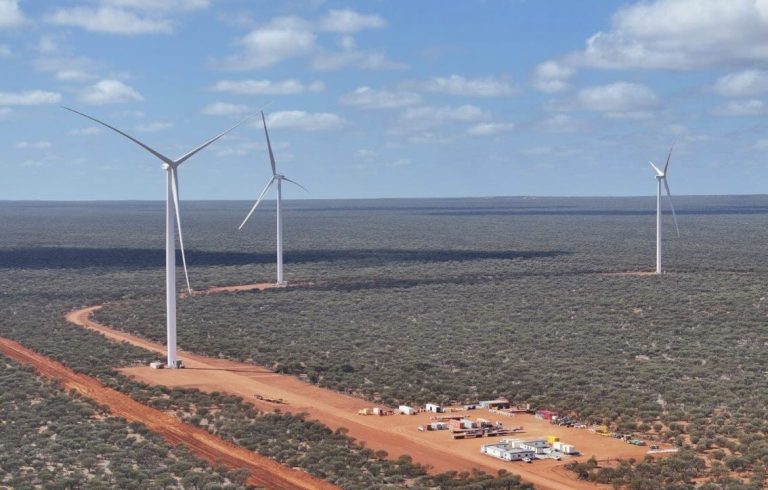
Atmos Renewables Acquires Wind and Solar Projects from European Developer
Atmos Renewables, an Australian developer specialising in renewable energy and storage, has acquired a significant portfolio of wind and solar projects from European developer BayWa r.e., who has chosen to concentrate on its primary markets.
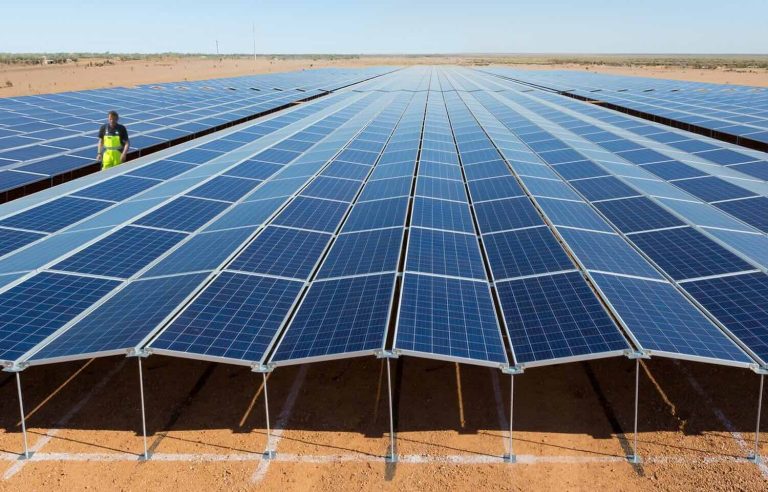
On Friday, Atmos announced the purchase of operational solar farms at Yatpool and Hughenden, along with the advanced Bullawah wind and battery project, in addition to a series of other early-stage development initiatives.
Boosting Operational Capacity
This acquisition enhances Atmos’s operational portfolio, which now boasts 19 wind, solar, and battery energy storage assets, elevating its total operational and in-construction capacity beyond 2GW. This positions Atmos as one of Australia’s leading owner-operators within the renewable energy sector.
This recent transaction adds to a particularly active period for Atmos, which successfully secured financing earlier this month for the 400 MW, 1,600 MWh Teebar battery project in Queensland, as well as the 470 MW Parron Maam Marang wind farm in Western Australia, the largest wind project in Australia to obtain financial backing in over two years. The company is also in the process of constructing the Merredin battery project in Western Australia.
Strategic Importance of Acquired Projects
According to Nigel Baker, the CEO of Atmos Renewables, although the purchase price remains undisclosed, the acquisition of BayWa’s assets fortifies the company’s existing portfolio, which includes the Hornsdale wind farms in South Australia, two wind farms located in Tasmania, six wind farms and a solar farm in Victoria, as well as four solar farms in Queensland.
The Yatpool solar farm, with a capacity of 106 MW, is situated near Atmos’s Karadoc solar farm in Victoria, which was also acquired from BayWa in 2024. Yatpool holds a long-term power purchase agreement with retailer Flow Power.
The 20 MW Hughenden solar farm has its own power purchase agreement with CS Energy. Meanwhile, the Bullawah wind project, which has received planning approvals from New South Wales and has secured grid access rights to the new south-west renewable energy zone, aims to become Atmos’s inaugural wind farm in that state.
Located approximately 40 kms south-east of Hay, the Bullawah project has the potential for a total capacity of 800 MW, including a 359 MW, 2-hour battery. However, for now, it has access rights only for a 262 MW wind component.
Baker commented on the significance of the Bullawah project, stating, “Bullawah has already reached important development milestones, but there is still substantial work ahead. Our focus will be on carefully progressing the project through the remaining planning and development phases, with an aim to prepare it for investment readiness by 2027. We are committed to working closely with landowners, First Nations partners, local communities, and government.” He added that the project holds the potential to provide significant new generation and storage capacity in New South Wales, while also creating jobs and delivering long-term benefits for the communities in the Riverina region.
BayWa’s Strategic Shift
BayWa announced earlier this year that it would implement “far-reaching” restructuring measures in response to the challenging conditions facing the renewable energy market. “We will focus on specific core markets in Europe,” stated Hans-Joachim Ziems, BayWa’s Chief Risk Officer, in March.
Dr. Daniel Gäfke, BayWa’s Chief Operating Officer, indicated that this transaction exemplifies BayWa’s capability in identifying and managing risks associated with large-scale renewable energy projects, providing value for partners while aiding Australia’s transition to renewable energy sources. “The successful transfer to Atmos Renewables underscores the appeal of high-quality, investment-ready assets in renewable energy infrastructure,” he noted.
Baker confirmed that Atmos and BayWa r.e. are collaborating closely to ensure a seamless transition, with a commitment to honour existing power purchase agreements, landowner arrangements, and stakeholder commitments.